
Loading, please wait...


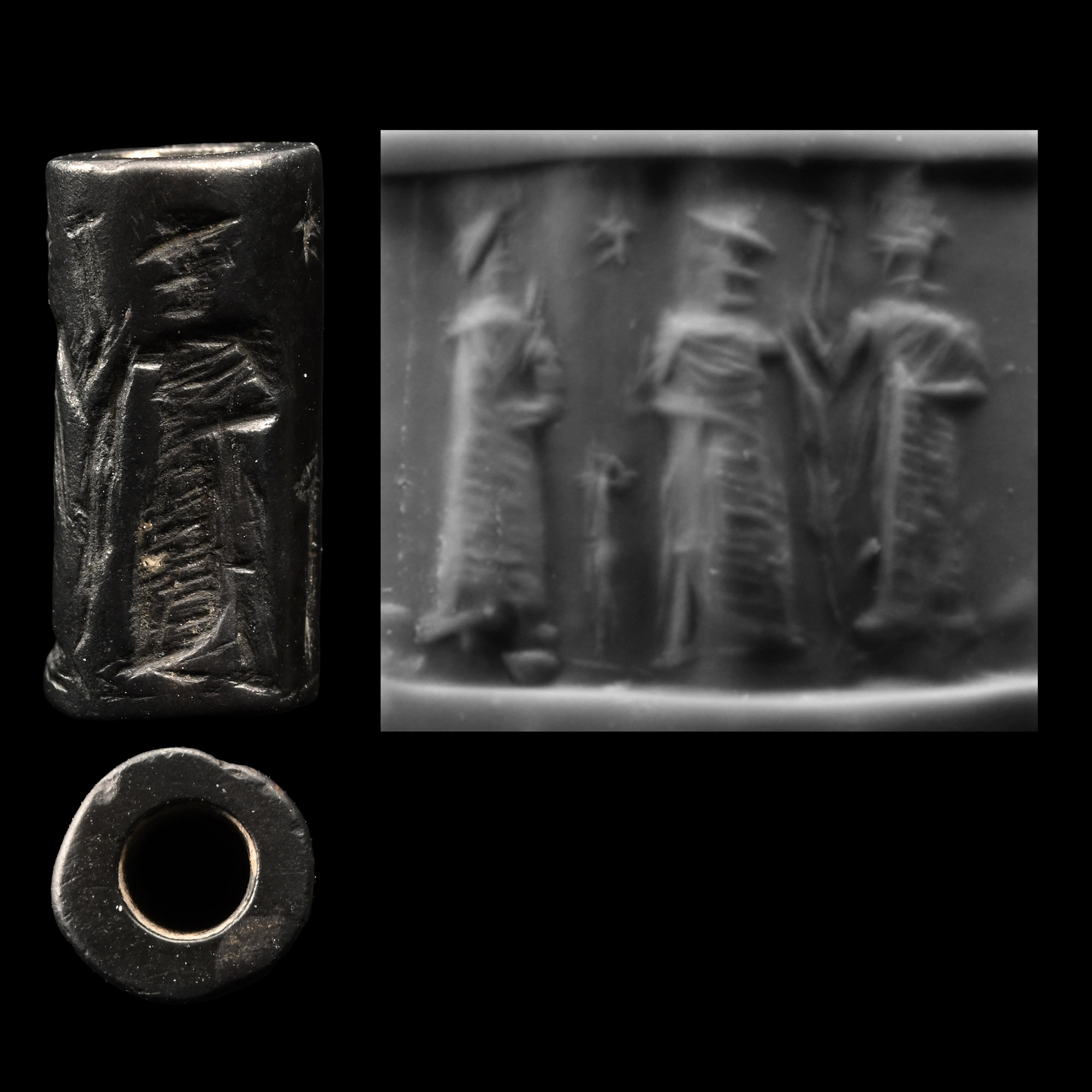
LOT 1239
Old Babylonian Haematite Cylinder Seal
EARLY 2ND MILLENNIUM B.C.
1/2 in. (1.98 grams, 14 mm).
With frieze of three standing figures wearing floor-length robes with starburst and post between.
ProvenanceAcquired 1980-2015.
Ex Abelita family collection.
TimeLine Auctions follows a vetting process to ensure the authenticity and legality of all items, reinforcing our commitment to integrity and responsible trading. Each antiquity, antique, and coin lot undergoes thorough examination by a vetting committee of at least ten external specialists, professional trade association members, scientists, and archaeologists: Our Vetting Process
AUCTIONS:
TimeLine is a leading auction house specialising in antiquities, ancient art, collectables, natural history, coins, medals, and books. Our auctions offer museums, collectors, historians, and enthusiasts the opportunity to acquire unique and historically significant pieces.
LOT 1239
Old Babylonian Haematite Cylinder Seal
Estimate £300 - 400€350 - 460 (for guidance only)$410 - 540 (for guidance only)
-
.jpg)
Mesopotamian Stone Cylinder Seal for Shamash-ili, son of Nirgal-gamil
Circa 2nd-1st millennium B.C.Sold for (Inc. bp): £546
Engraved with a frieze composed of human figures and columns of text: 'Shamash-ili, son of Nirgal-gamil (?), servant of (the god) Sakkud'; drilled vertically for suspension. 9.16 grams, 28 mm
From an important London, UK, collection, 1970-1990. Examined by Professor Wilfrid George Lambert FBA (1926-2011), historian, archaeologist, and specialist in Assyriology and Near Eastern archaeology, in the late 1980s and early 1990s. -
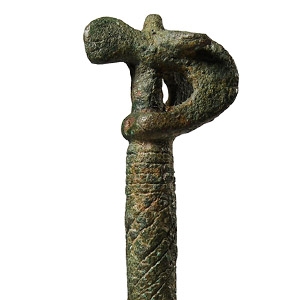
Large Western Asiatic Bronze Animal-Headed Cloak Pin
1st millennium B.C.Sold for (Inc. bp): £143
With barrel-shaped upper and tapering body, modelled with coil detailing around the upper body, tiered rings above and finial of an ibex's head with horns returned to form a collar; mounted on a custom-made stand. 347 grams total, 25.5 cm including stand
From a collection acquired on the UK art market from various auction houses and collections mostly before 2000. From an important Cambridgeshire estate; thence by descent. -
.jpg)
Jemdet Nasr Haematite Cylinder Seal
Circa 3100-2850 B.C.Sold for (Inc. bp): £234
With drilled and incised geometric design. 5.7 grams, 32 mm
Acquired 1970s-1996. Property of a North American collector, collection no.12. London collection, 2016.
