
Loading, please wait...


LOT 1300
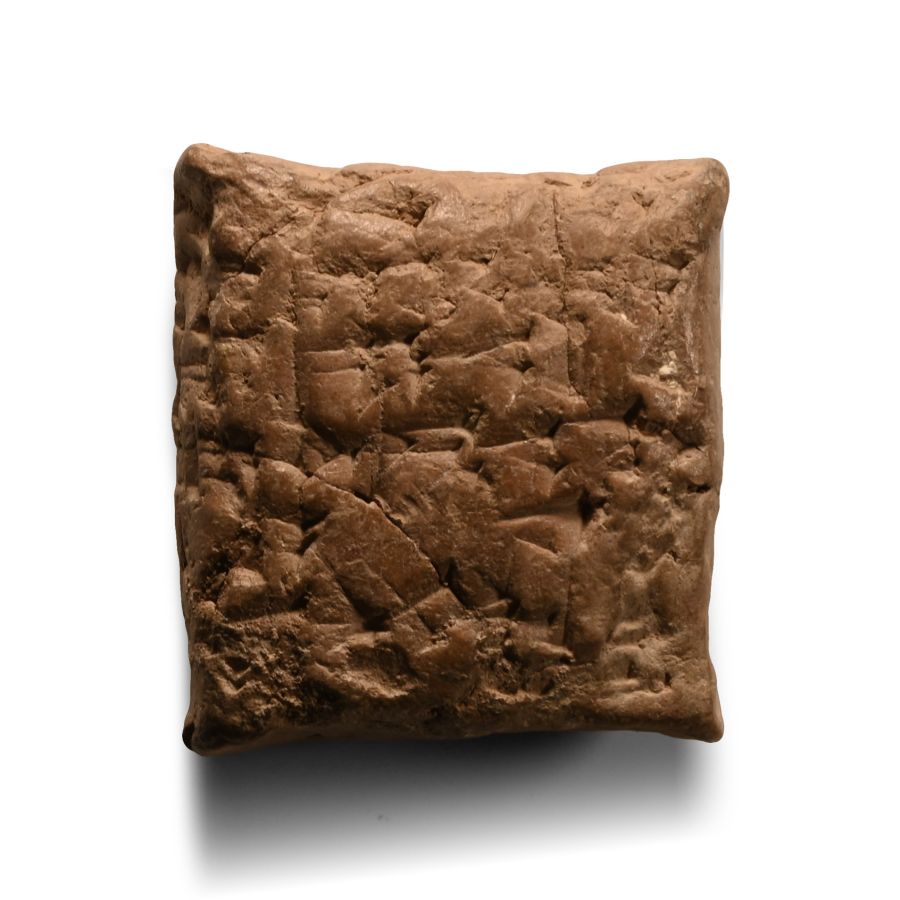
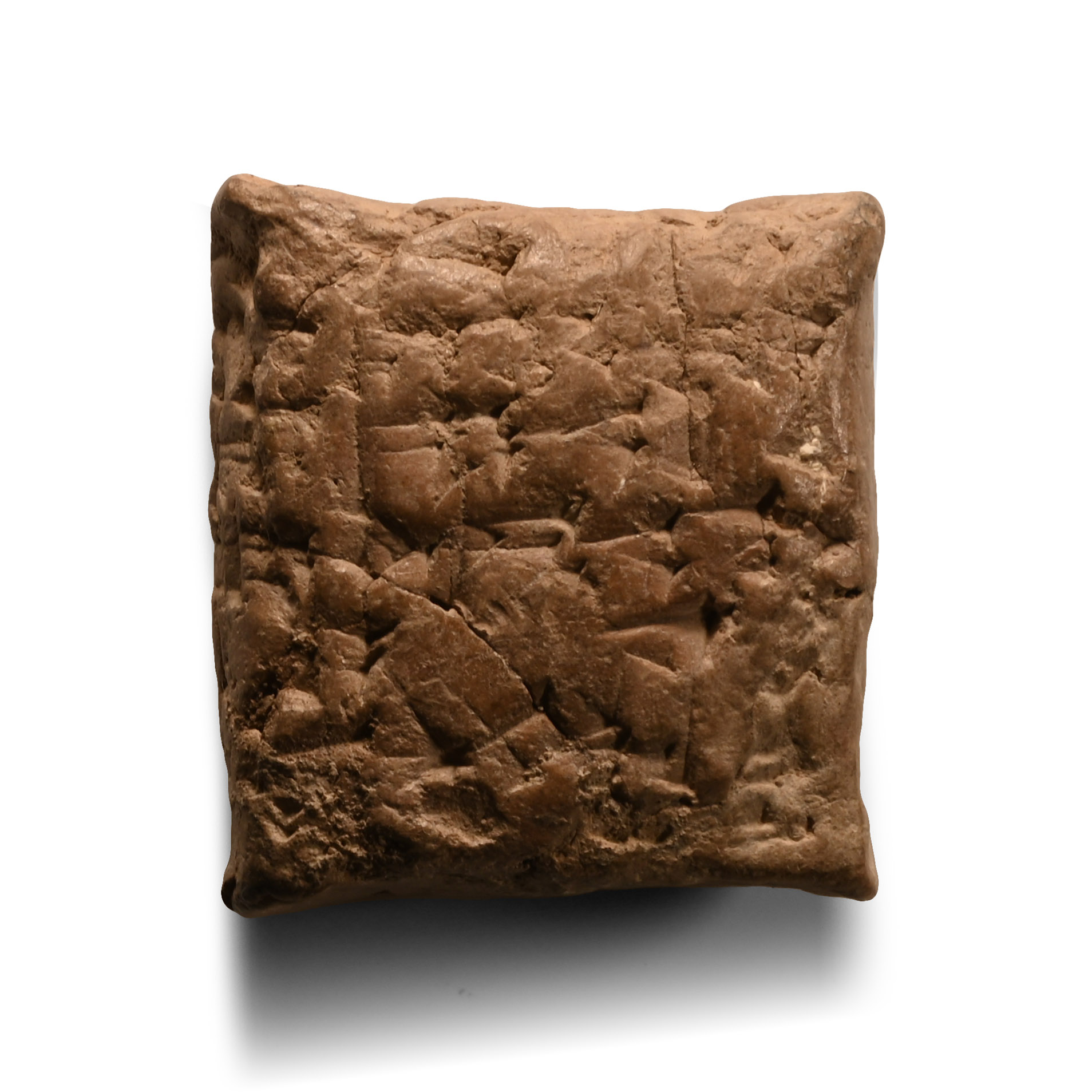
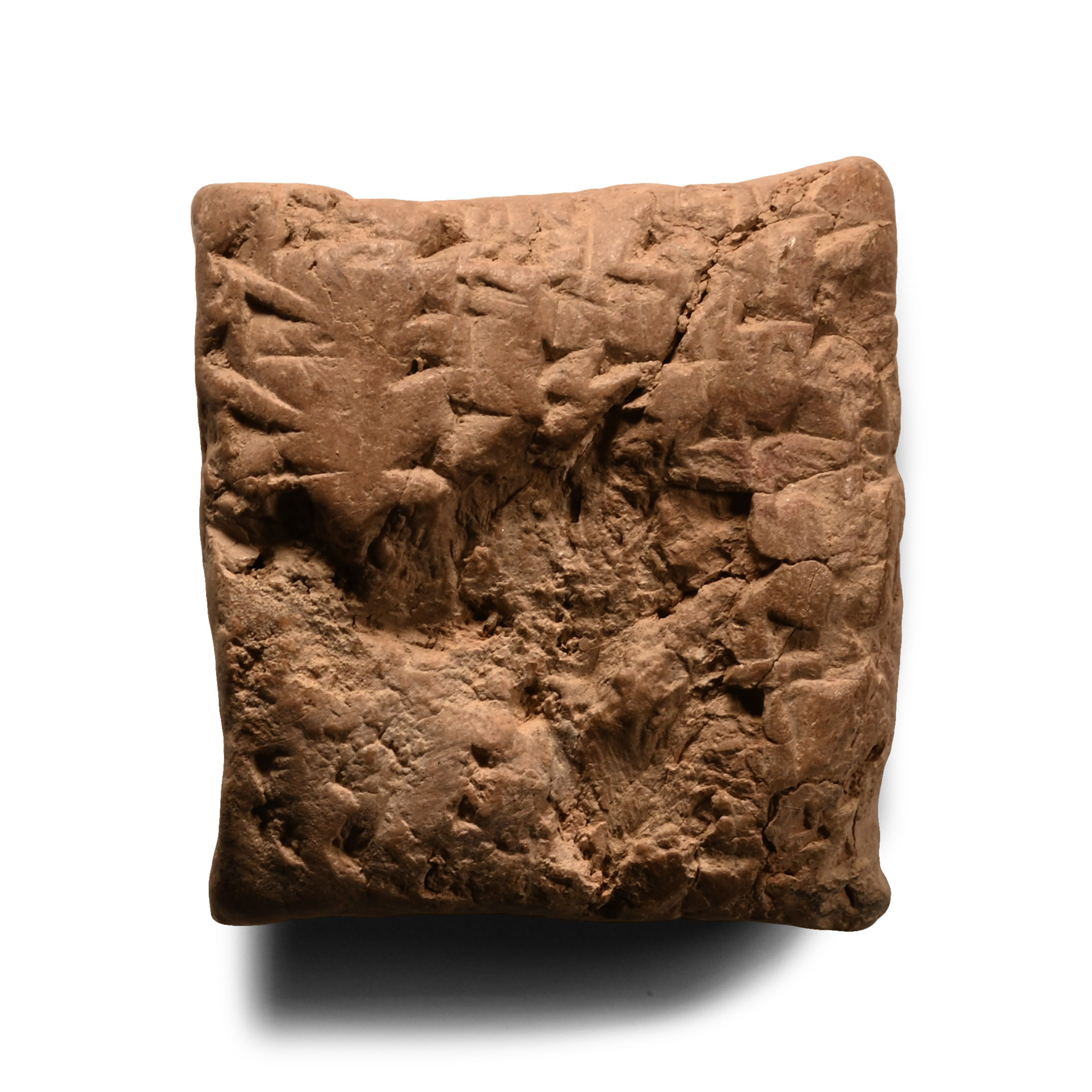
Old Babylonian Cuneiform Tablet of a Contract
2ND MILLENNIUM B.C.
2 1/4 in. (58 grams, 58 mm).
Pillow-shaped with cuneiform text to both broad faces and one long edge; part of one face absent. [No Reserve]
ProvenanceFrom specialised collection of cuneiform texts, formed in the 1950s-1990s.
The property of a London gentleman and housed in London, thence by descent to family members.
Examined by Professor Wilfrid George Lambert FBA (1926-2011), historian, archaeologist, and specialist in Assyriology and Near Eastern archaeology, in the late 1980s and 1990s.
The collection is exceptional for the variety of types, including some very rare and well preserved examples.
Cf. cuneiform text from Babylon now in the Metropolitan Museum of Art, New York, under accession no.86.11.282.
CONDITIONTimeLine Auctions follows a vetting process to ensure the authenticity and legality of all items, reinforcing our commitment to integrity and responsible trading. Each antiquity, antique, and coin lot undergoes thorough examination by a vetting committee of at least ten external specialists, professional trade association members, scientists, and archaeologists: Our Vetting Process
AUCTIONS:
TimeLine is a leading auction house specialising in antiquities, ancient art, collectables, natural history, coins, medals, and books. Our auctions offer museums, collectors, historians, and enthusiasts the opportunity to acquire unique and historically significant pieces.
-
Western Asiatic Bronze Ring with Stag
Mid 1st millennium B.C.Sold for (Inc. bp): £26
With broad shank and ellipsoid bezel, incuse profile stag within a cartouche. 6.90 grams, 27.45 mm overall, 18.22 mm internal diameter (approximate size British P 1/2, USA 7 3/4, Europe 16.86, Japan 16)
UK private collection before 2000. Acquired on the UK art market. Property of a London gentleman. -
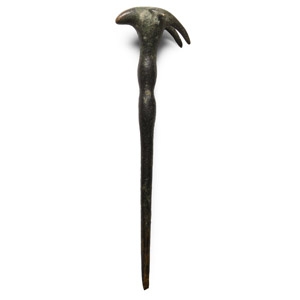
Hasanlu Bronze Pin with Ram's Head Finial
9th-8th century B.C.Sold for (Inc. bp): £130
With a tapering round-section shank, finial topped with a ram's head. 110 grams, 16.5 cm
From the collection of late George Withers, UK. Acquired from Dore and Rees, UK. Property of Mr A.B., an American collector.
The corpus of pins from Hasanlu includes simple plain pins, pins with lion's head and other zoomorphic pins. The zoomorphic pins were either cast onto a bronze shank or the pin was inserted into a hollow of the head. A third category was that of the pins cast in one piece, like our specimen, representing a goat or mouflon, an animal often depicted in the North-West Persian material culture. -
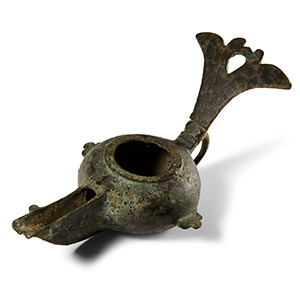
Western Asiatic Bronze Oil Lamp
12th-14th century A.D.Estimate: £200 - 300 (+bp*)
Opening Bid: £100
Comprising an oblate body with lateral trilobe ledge handles, raised rim to filler hole, long nozzle rectangular in plan with lip at forward edge, loop handle to rear and pierced leaf-shaped reflector. 143 grams, 15 cm
Private UK collection. Acquired in the 1980s. Property of a Cambridgeshire gentleman.
