
Loading, please wait...
LOT 0287
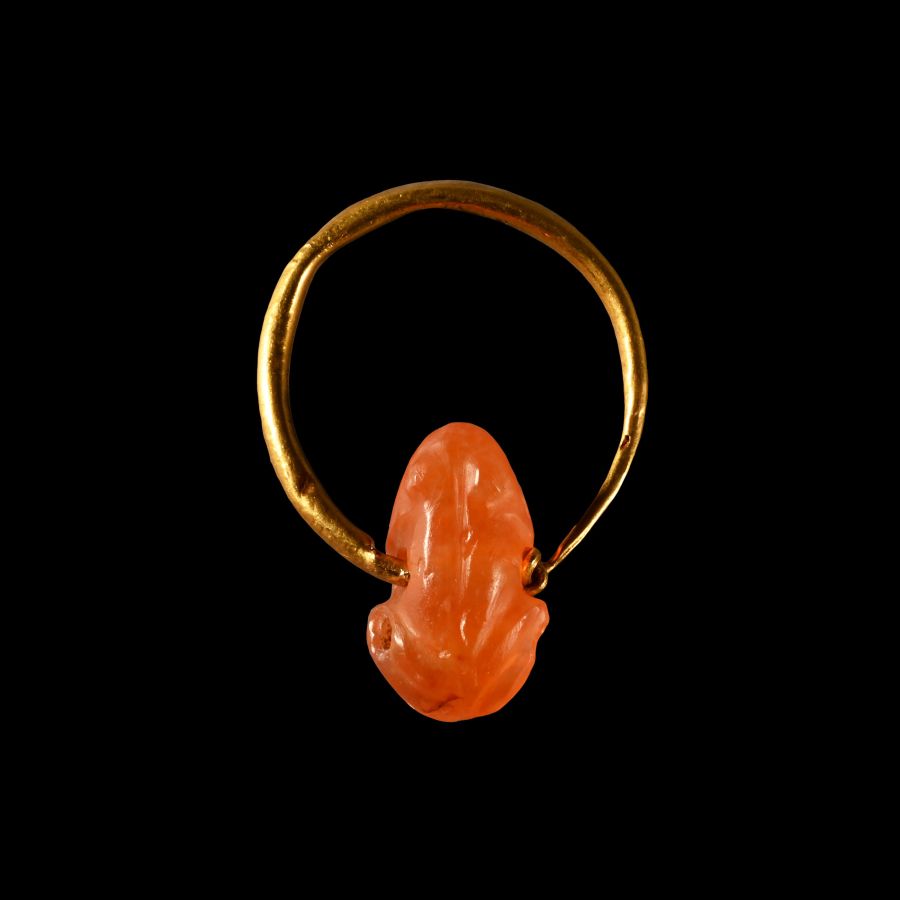
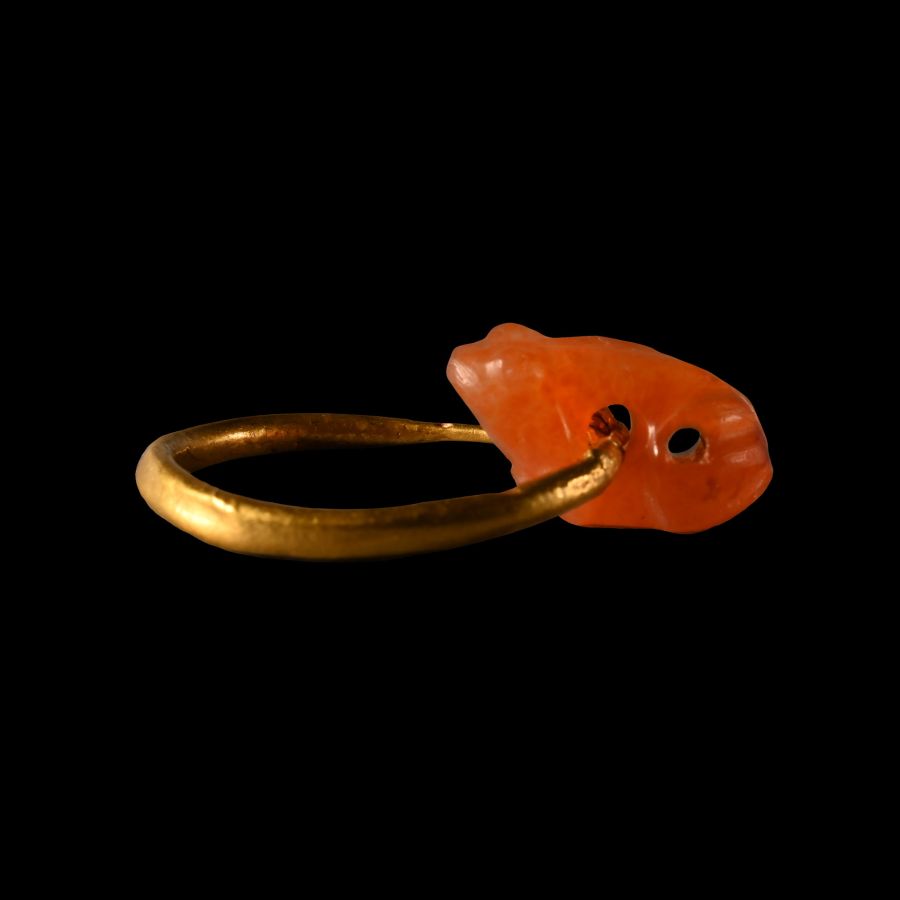
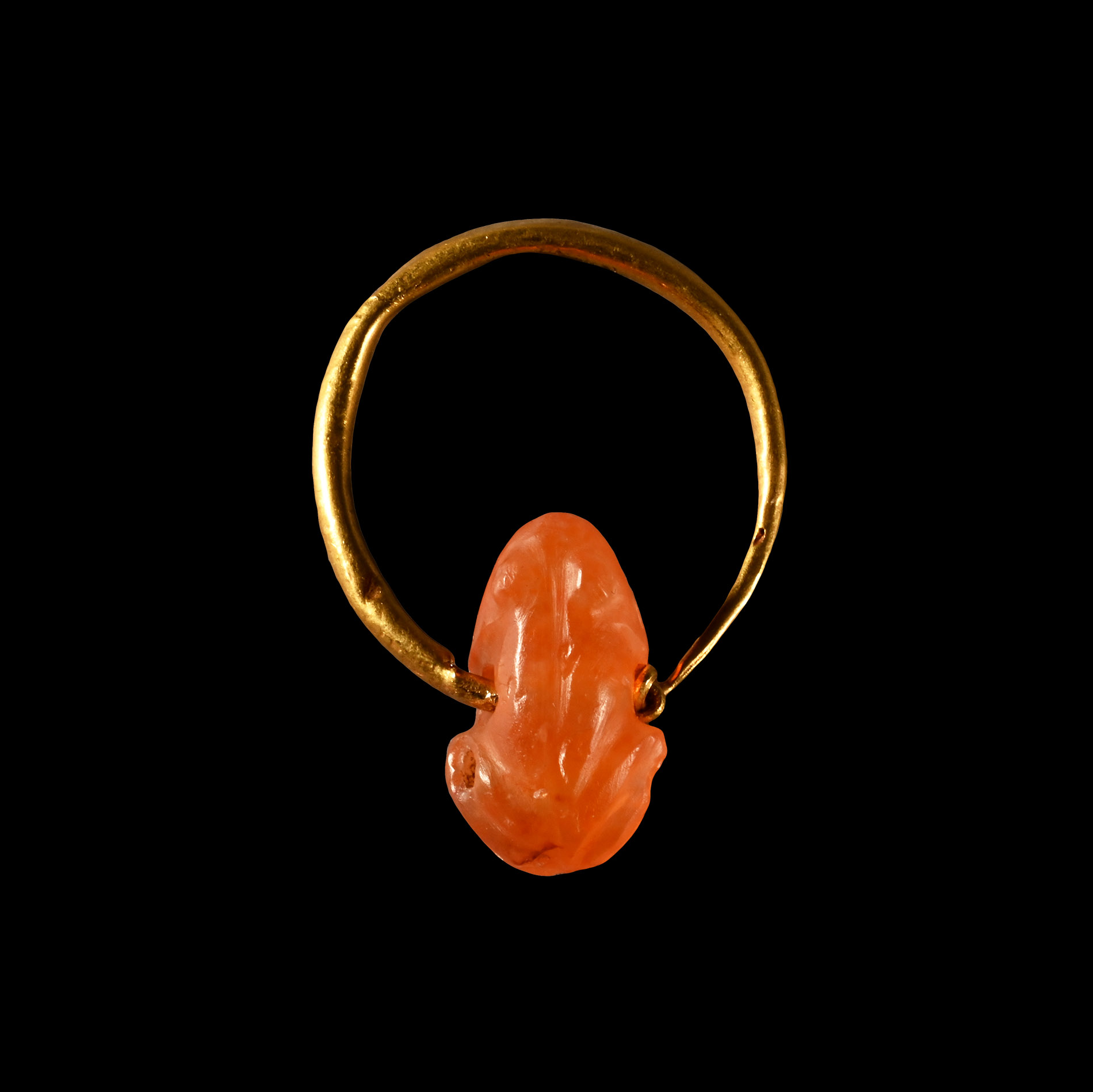
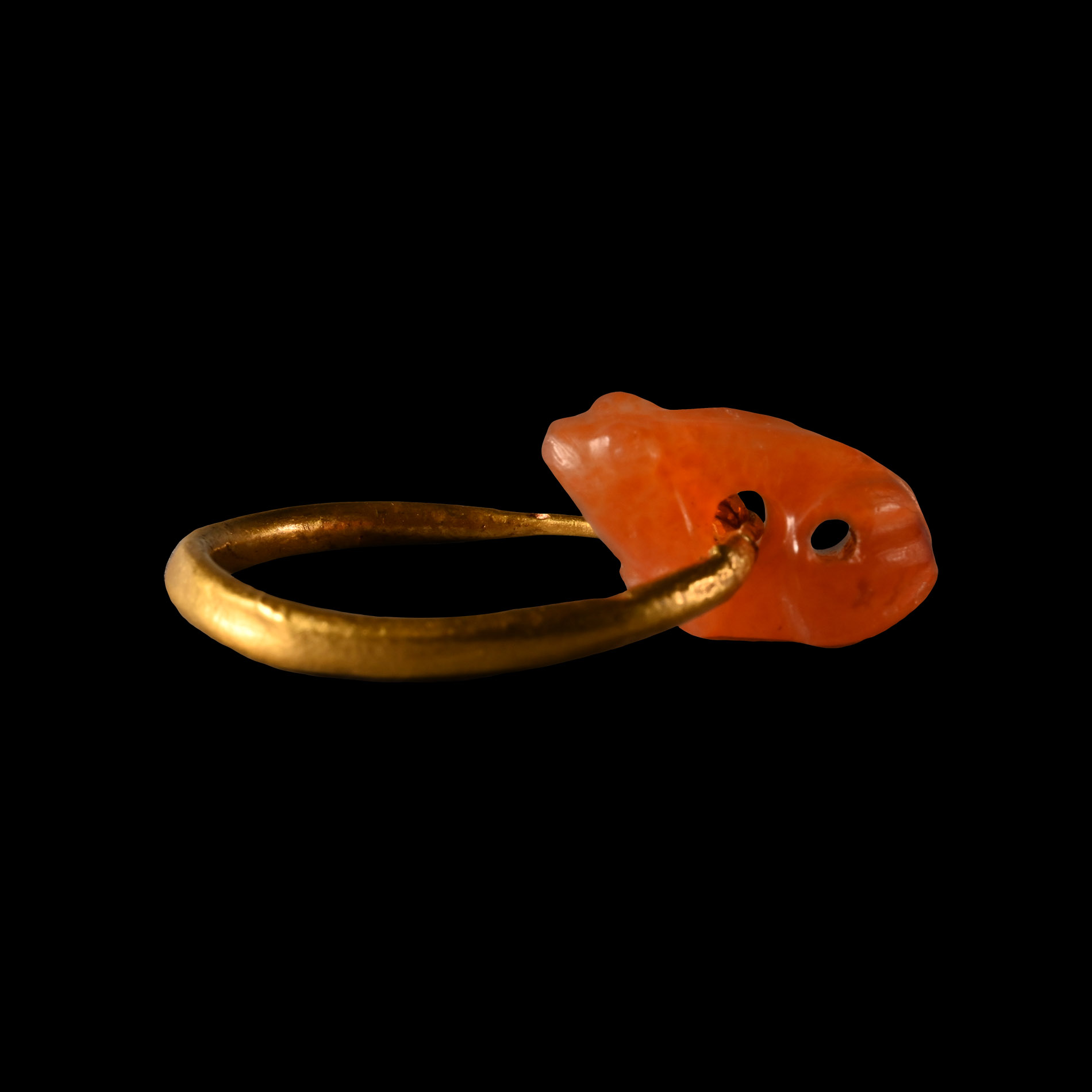
Old Babylonian Carnelian Frog Amulet on Gold Earring
20TH-16TH CENTURY B.C.
1 1/8 in. (2.45 grams, 29.30 mm).
The frog modelled in the round, pierced at the middle and mounted on an asymmetrical gold hoop, possibly a marriage.
ProvenanceEx K.J. collection.
Acquired on the North American art market, 1999.
European private collection.
TimeLine Auctions follows a vetting process to ensure the authenticity and legality of all items, reinforcing our commitment to integrity and responsible trading. Each antiquity, antique, and coin lot undergoes thorough examination by a vetting committee of at least ten external specialists, professional trade association members, scientists, and archaeologists: Our Vetting Process
AUCTIONS:
TimeLine is a leading auction house specialising in antiquities, ancient art, collectables, natural history, coins, medals, and books. Our auctions offer museums, collectors, historians, and enthusiasts the opportunity to acquire unique and historically significant pieces.
LOT 0287
Old Babylonian Carnelian Frog Amulet on Gold Earring
Estimate £1,500 - 2,000€1,740 - 2,320 (for guidance only)$2,030 - 2,700 (for guidance only)
-
South Arabian Bowl with Hunting Scene and Inscription
Circa 3rd century B.C.-2nd century A.D.Estimate: £10,000 - 14,000 (+bp*)
Opening Bid: £5,000
Hemispherical with thickened rim; repoussé frieze of two armoured warriors wearing scale armour and a type of spangenhelm, each shooting a bow at a gryphon attacking a fleeing deer, and a lion attacking an ibex, scorpion and running animals in the field, rosette to the centre; four incised characters to the outer rim 'Π Ϲ ϕ ο'; another inscription in over the body of the gryphon. 278 grams, 15.2 cm diameter
Perfectly preserved, very good condition.
Saleh family collection, Germany, formed prior to 1972. Accompanied by an academic report by Dr Raffaele D’Amato. This lot has been checked against the Interpol Database of stolen works of art and is accompanied by search certificate number no. 12018-213619. -
Neo-Babylonian Jasper Duck Weight
Circa 600 B.C.Sold for (Inc. bp): £124
Formed as a duck with the head and neck laid along the spine, design to the underside of sunburst and crescent. 4.15 grams, 19 mm
Ex Simmons gallery, London, UK. Ex North London collection, 1990s. -
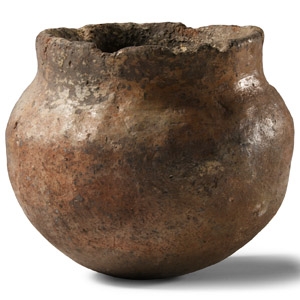
Holy Land Pottery Cup
Bronze Age, 16th-14th century B.C.Sold for (Inc. bp): £46
With rounded bottom and carinated profile, thick rim. 398 grams, 99 mm
From a collection acquired on the UK art market from various auction houses and collections mostly before 2000. From an important Cambridgeshire estate; thence by descent.
