
Loading, please wait...
_900x900.jpg "Old Assyrian Haematite Cylinder Seal with Presentation Scene")
_200x200.jpg "Old Assyrian Haematite Cylinder Seal with Presentation Scene")
.jpg "Old Assyrian Haematite Cylinder Seal with Presentation Scene")
LOT 1174
Old Assyrian Haematite Cylinder Seal with Presentation Scene
CIRCA 2000-1750 B.C.
3/4 in. (5.92 grams, 20 mm).
With incised frieze of a seated figure with hand extended to a figure in floor-length pleated garment, second figure behind him in a fringed robe, blank panel to the rear. [No Reserve]
ProvenanceAcquired 1970s-1996.
Property of a North American collector; collection no.05.
London collection, 2016.
Cf. Teissier, B., Ancient Near Eastern Cylinder Seals in the Marcopoli Collection, Berkeley, 1984, item 97, for type.
CONDITIONTimeLine Auctions follows a vetting process to ensure the authenticity and legality of all items, reinforcing our commitment to integrity and responsible trading. Each antiquity, antique, and coin lot undergoes thorough examination by a vetting committee of at least ten external specialists, professional trade association members, scientists, and archaeologists: Our Vetting Process
AUCTIONS:
TimeLine is a leading auction house specialising in antiquities, ancient art, collectables, natural history, coins, medals, and books. Our auctions offer museums, collectors, historians, and enthusiasts the opportunity to acquire unique and historically significant pieces.
LOT 1174
Old Assyrian Haematite Cylinder Seal with Presentation Scene
Sold for (Inc. bp): £975
-
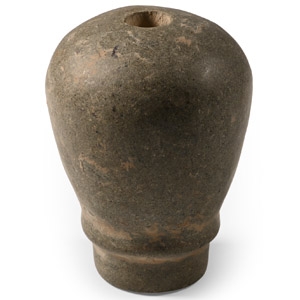
Western Asiatic Stone Macehead
2nd millennium B.C.Sold for (Inc. bp): £182
Tubular in form with tapering profile and collar above the socket. 493 grams, 89 mm
Ex London, UK, gentleman's collection, 1990s. -
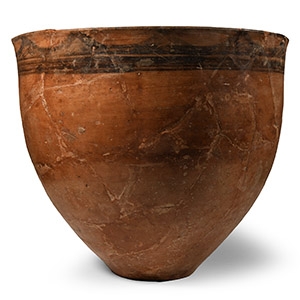
Very Large Elamite Terracotta Storage Vessel
3rd millennium B.C.Estimate: £1,000 - 1,400 (+bp*)
Opening Bid: £450
Krater or jar with bell-shaped profile; horizontal painted bands below the rim with undulating upper edge; repaired and restored. 5.05 kg, 40.5 cm
with a London, UK gallery, 1971-early 2000s. -
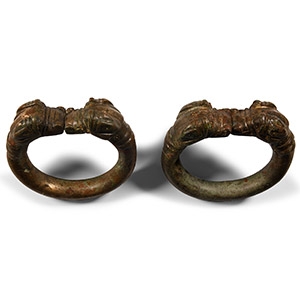
Large Luristan Bronze Armlet Pair with Animal Terminals
2nd millennium B.C.Estimate: £1,500 - 2,000 (+bp*)
Opening Bid: £675
Each armlet composed of a substantial round-section penannular hoop with terminals formed as stylised opposed animal heads, ring-and-dot motifs representing the eyes and highlighting other anatomical detailing, together with dashes, dimples, chevrons and crescents. 1.19 kg total, 13-13.1 cm
with a London, UK gallery, 1971-early 2000s. This lot has been checked against the Interpol Database of stolen works of art and is accompanied by a search certificate number no.12265-220622.
