
Loading, please wait...
LOT 1770
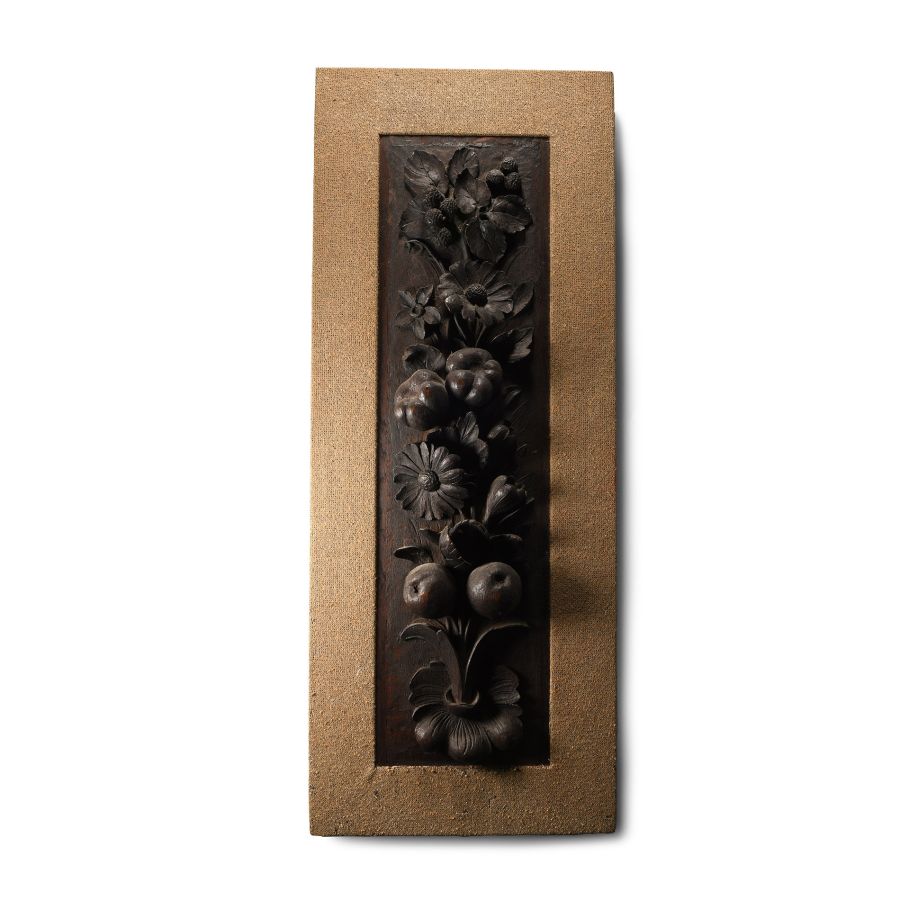
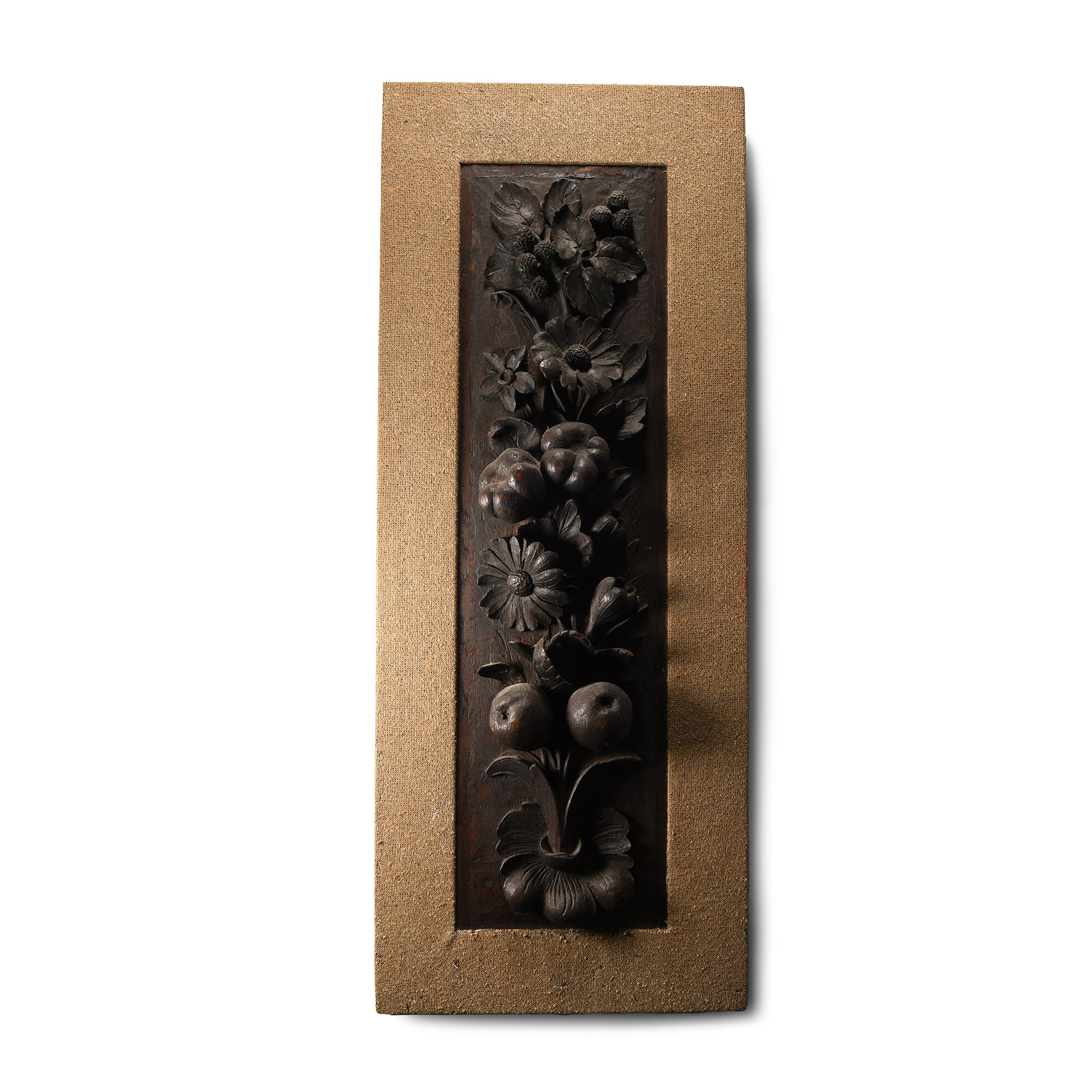
Oak Wainscot Panel with Carved Foliage in the Manner of Grinling Gibbons
EARLY 18TH CENTURY A.D.
29 1/4 in. (2.1 kg, 74.5 cm).
Rectangular panel with carved design of flowers, berries and fruit; all modelled in high relief with gentle curvature and deep undercuts; mounted on a fabric-covered backing board. [No Reserve]
ProvenancePrivate collection, London, UK.
FootnotesGrinling Gibbons (4 April 1648 – 3 August 1721) was an Anglo-Dutch wood-carver who became famous for his work in Windsor Castle, St Paul's Cathedral and some other London churches, and various major buildings of the time. He was born in Holland to English parents, and his father was a merchant while Gibbons himself became a member of the Drapers' Company of London. He is usually regarded as the finest wood-carver of his day in England.
CONDITIONTimeLine Auctions follows a vetting process to ensure the authenticity and legality of all items, reinforcing our commitment to integrity and responsible trading. Each antiquity, antique, and coin lot undergoes thorough examination by a vetting committee of at least ten external specialists, professional trade association members, scientists, and archaeologists: Our Vetting Process
AUCTIONS:
TimeLine is a leading auction house specialising in antiquities, ancient art, collectables, natural history, coins, medals, and books. Our auctions offer museums, collectors, historians, and enthusiasts the opportunity to acquire unique and historically significant pieces.
LOT 1770
Oak Wainscot Panel with Carved Foliage in the Manner of Grinling Gibbons
Sold for (Inc. bp): £286
-
Roman Style Oil Lamp with Face
20th century A.D.Sold for (Inc. bp): £13
With palmette to the reflector, mask to the discus and loop to the reverse; after the antique. 35 grams, 88 mm
Collected from 1969-1999. From the collection of the late Mr S.M., London, UK. -
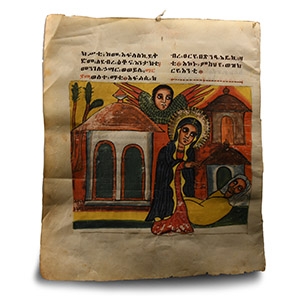
Ethiopian Manuscript Page for Miracle of the Virgin Mary
Circa 1680 A.D.Sold for (Inc. bp): £845
Vellum leaf with pricked guidelines for placement of two columns of red-ink and black-ink text in Ge'ez script with red detailing; recto with two columns of text above a polychrome painted miniature showing a nimbate Mary beside a recumbent bearded figure among buildings with a winged angel above; verso with twenty-two lines of text in two columns. 89 grams, 35.5 x 30 cm
Previously in the David Buxton collection (1910-2003), until the late 1990s.
The scene should represent the miracle of the Virgin Mary to Damianus the scribe: Damianus wrote the name of the Virgin Mary with gold and silver instead of with common black ink. The Virgin Mary appeared to Damianus on his death bed and promises to write his name upon a pillar of gold in the Kingdom of Heaven. -
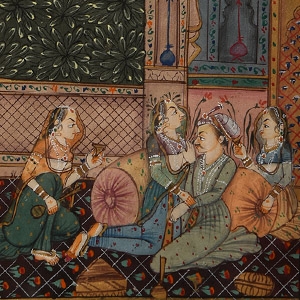
Framed Watercolour Painting with Harem Scene
Persia, 20th century A.D.Sold for (Inc. bp): £26
With kneeling nobleman and three kneeling females within a courtyard; panels of nastaliq text above and below; mounted in a glazed wooden frame. 1.2 kg, 42.7 x 38 cm
Very fine condition.
Acquired on the UK art market, 1980s-1990s. The Woodbridge collection of Indo-Persian art.
