
Loading, please wait...


LOT 2280
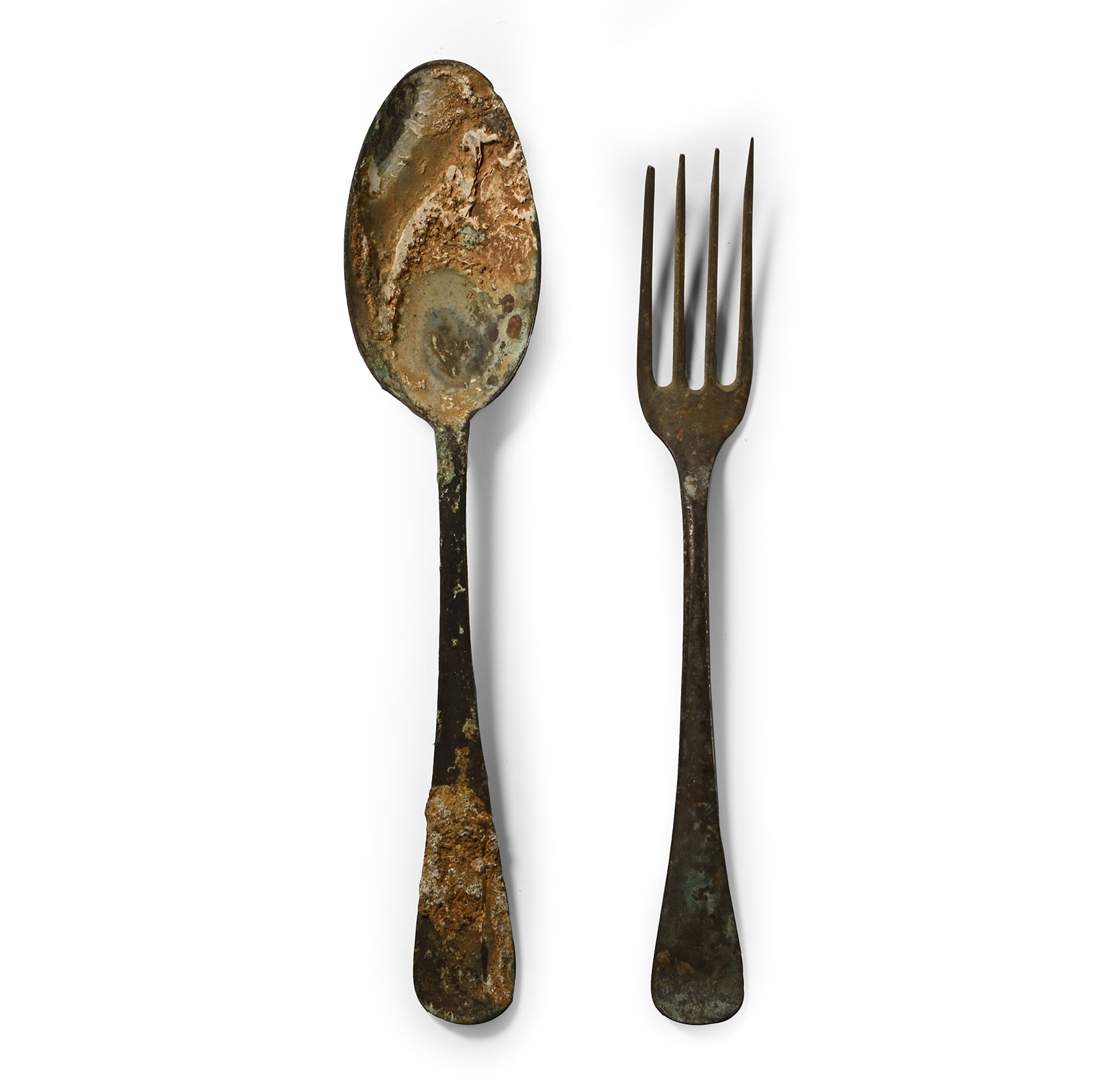
'Nuestra Senora de la Luz' Shipwreck Spoon and Fork Set
EARLY 18TH CENTURY A.D.
6 3/4 - 7 1/4 in. (69 grams total, 17-18.5 cm).
Both with rounded finial curved at the end. [2, No Reserve]
ProvenanceSalvaged by Ruben Collado Amatriain in 1992.
Accompanied by original signed declarations in both English and Spanish from Ms Mariana Faine Collado, daughter of Mr Ruben Collado Amatriain.
Exhibited at the museum 'Museo de los Naufragios y Tesoros' in Punta del Este, Uruguay, from 2003-2004 and then in Colonia del Sacramento, Uruguay until 2005.
CONDITIONTimeLine Auctions follows a vetting process to ensure the authenticity and legality of all items, reinforcing our commitment to integrity and responsible trading. Each antiquity, antique, and coin lot undergoes thorough examination by a vetting committee of at least ten external specialists, professional trade association members, scientists, and archaeologists: Our Vetting Process
AUCTIONS:
TimeLine is a leading auction house specialising in antiquities, ancient art, collectables, natural history, coins, medals, and books. Our auctions offer museums, collectors, historians, and enthusiasts the opportunity to acquire unique and historically significant pieces.
-
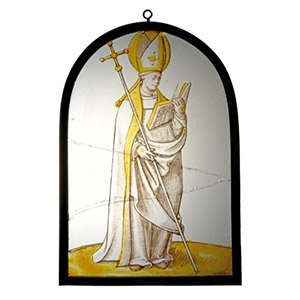
Renaissance Stained Glass Panel of a Bishop Saint Reading From the Bible
Northern France, circa 1520-1540 A.D.Sold for (Inc. bp): £572
Tongue-shaped panel with polychrome figure of a bishop standing wearing a mitre, alb and chasuble, holding a processional cross in one hand and a large book in the other, head tilted forward and eyes lowered in the act of reading; lead cames with loop to the apex; cracked and repaired. 222 grams, 20 cm
De Baecque Vente aux enchere, 8 June 2023, no.511 (part). Ex central London gallery. -
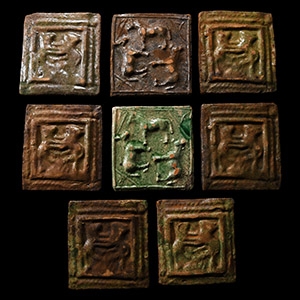
Post Medieval Glazed Ceramic Tile Group
17th-18th century A.D.Sold for (Inc. bp): £52
Comprising two designs in relief: three horses in an enclosure; two felines grappling with each other. 1.24 kg total, 9.4 x 10 - 9.5 x 10.4 cm
Acquired 1990s-early 2000s. East Anglian private collection.
The tile production increases in the second half of the sixteenth century and during the following centuries. The fragments discovered from various localities (pot-tiles, rectangular, triangular and trapezoidal panels, open-work crest tiles) were all produced in regional workshops, from the end of the 15th century or at the beginning of the 16th century. They all had diverse decorative motifs, mainly animals and geometrical or vegetal combinations, almost all of them singular finds for this study area. -
.jpg)
Renaissance Stained Glass Armorial with Flowers
Circa 1600 A.D.Sold for (Inc. bp): £286
Panel in frame of lead cames with painted heraldic design in elaborate style, the shield divided per pale with gules a fleur-de-lys or and argent a rosette gules; scroll below with partial text '[H]enrich Volse[...]'. 126 grams, 15.5 cm
with De Baecque Encheres, 5 March 2022, no.49.
