
Loading, please wait...
LOT 0240
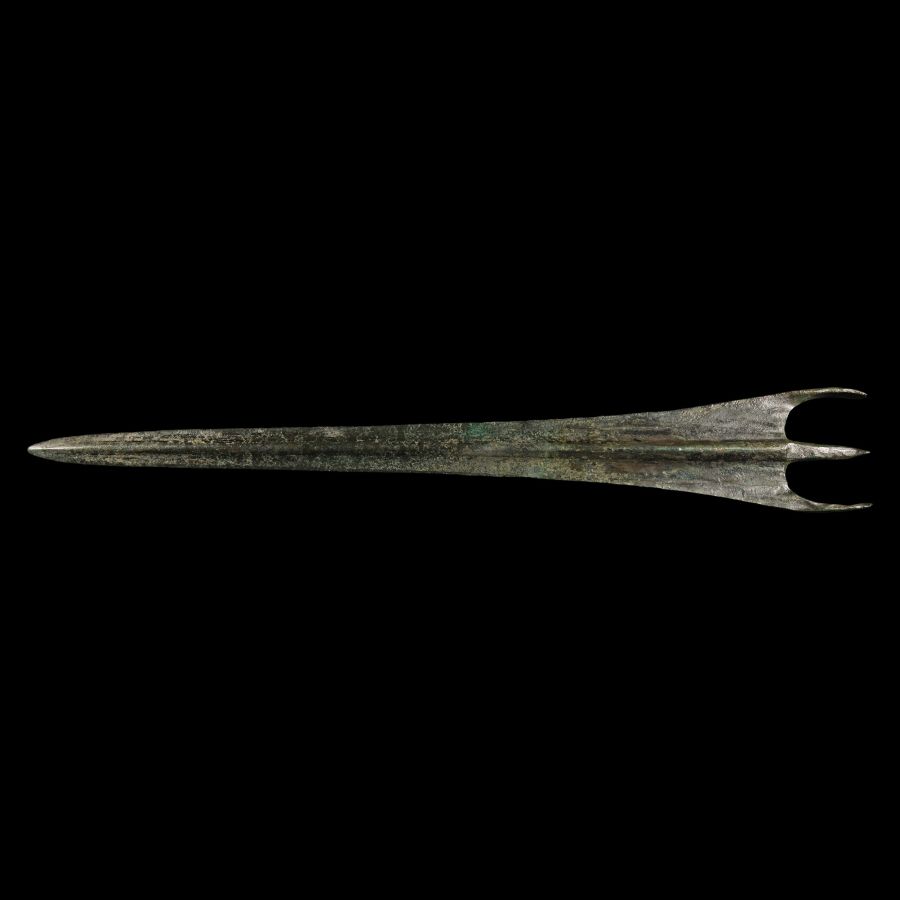
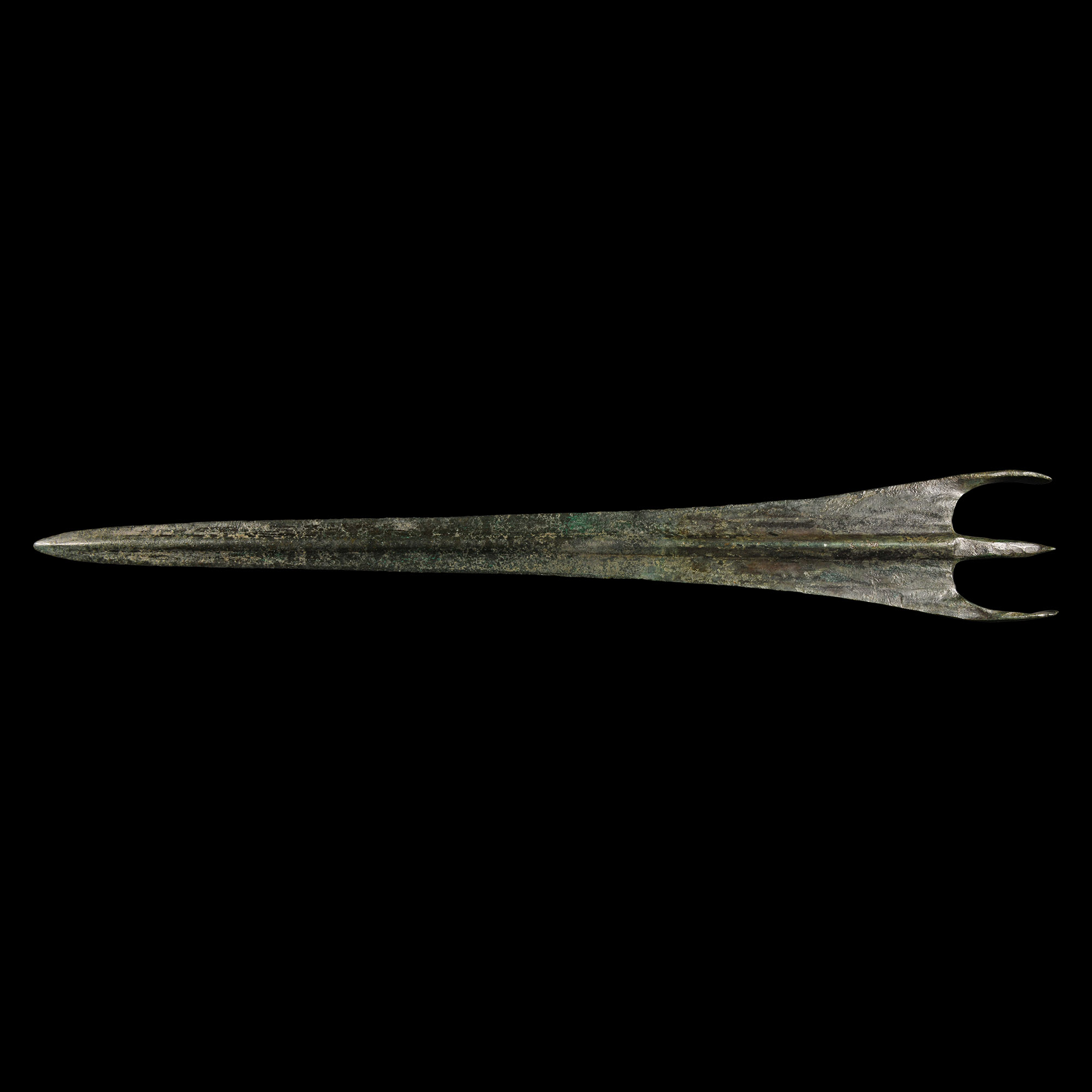
North-Western Bronze Short Sword
2ND-1ST MILLENNIUM B.C.
17 1/8 in. (346 grams, 43.5 cm).
Featuring a prominently curved guard extending out from the ricasso of the blade and partly framing the hilt, thick midrib extending slightly above the ricasso.
ProvenanceAcquired 1980-2015.
Ex Abelita family collection.
See Muscarella, O.W., Bronze and Iron Ancient Near Eastern Artifacts in the Metropolitan Museum of Art, New York, 1988, pp.99-100, for similar.
FootnotesThe hilt of such swords was made separately, and unfortunately is nearly always missing from the archaeological records. Similar excavated examples have been recorded from the South Caspian area from Tomadjan and Ghalekuti.
CONDITIONTimeLine Auctions follows a vetting process to ensure the authenticity and legality of all items, reinforcing our commitment to integrity and responsible trading. Each antiquity, antique, and coin lot undergoes thorough examination by a vetting committee of at least ten external specialists, professional trade association members, scientists, and archaeologists: Our Vetting Process
AUCTIONS:
TimeLine is a leading auction house specialising in antiquities, ancient art, collectables, natural history, coins, medals, and books. Our auctions offer museums, collectors, historians, and enthusiasts the opportunity to acquire unique and historically significant pieces.
-
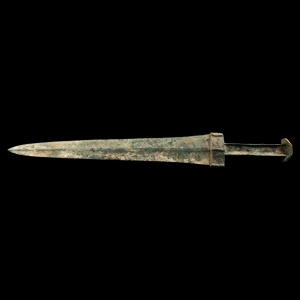
Luristan Bronze Dagger
2nd-1st millennium B.C.Estimate: £300 - 400 (+bp*)
Opening Bid: £160
Comprising a narrow double-edged blade, triangular in profile with raised midrib, rectangular guard with flanges, rectangular grip with lateral flanges to accept an organic grip, curved integral finial. 312 grams, 43 cm
Ex German collection, Cologne, 1980-1990s.
This weapon is typical of the cemeteries dating to the local Late Bronze Age (1300-1000 B.C.). The blade is still triangular but the crescentic pommel is reduced and flanged to be filled with organic material such as bone or wood. -
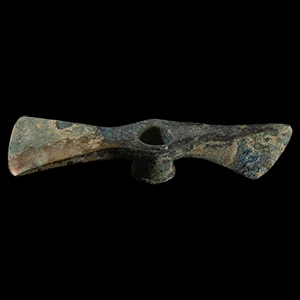
Large Western Asiatic Bronze Adze-Axehead
2nd-1st millennium B.C.Sold for (Inc. bp): £117
Composed of a central cylindrical socket with collar to base and gently triangular flanges to upper face, a wedge-shaped adze-head to one side and a wedge-shaped axe head to the other, both with gently convex cutting edges. 1.1 kg, 25 cm
Acquired 1980-2015. Ex Abelita family collection. -
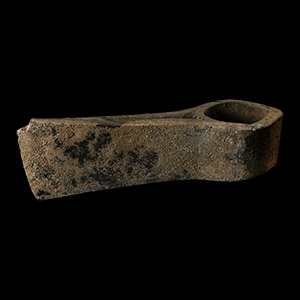
Luristan Bronze Axehead
12th-11th century B.C.Estimate: £100 - 140 (+bp*)
Opening Bid: £40
With elliptical socket and slightly flaring cheeks with cutting edge. 939 grams, 17.5 cm
Acquired 1990s-early 2000s. East Anglian private collection.
The axe corresponds to the Maxwell-Hyslop Type 20A, similar to specimens from Ordu and purely Asiatic in inspiration. An axe from Giyan has a distinct shaft tube which is not present on the Ordu axe, but the shape of the blade is similar and it is probable that smiths travelling over the Eastern Anatolian and Persian trade routes were responsible for making these typologies of axes.
