
Loading, please wait...
LOT 1381
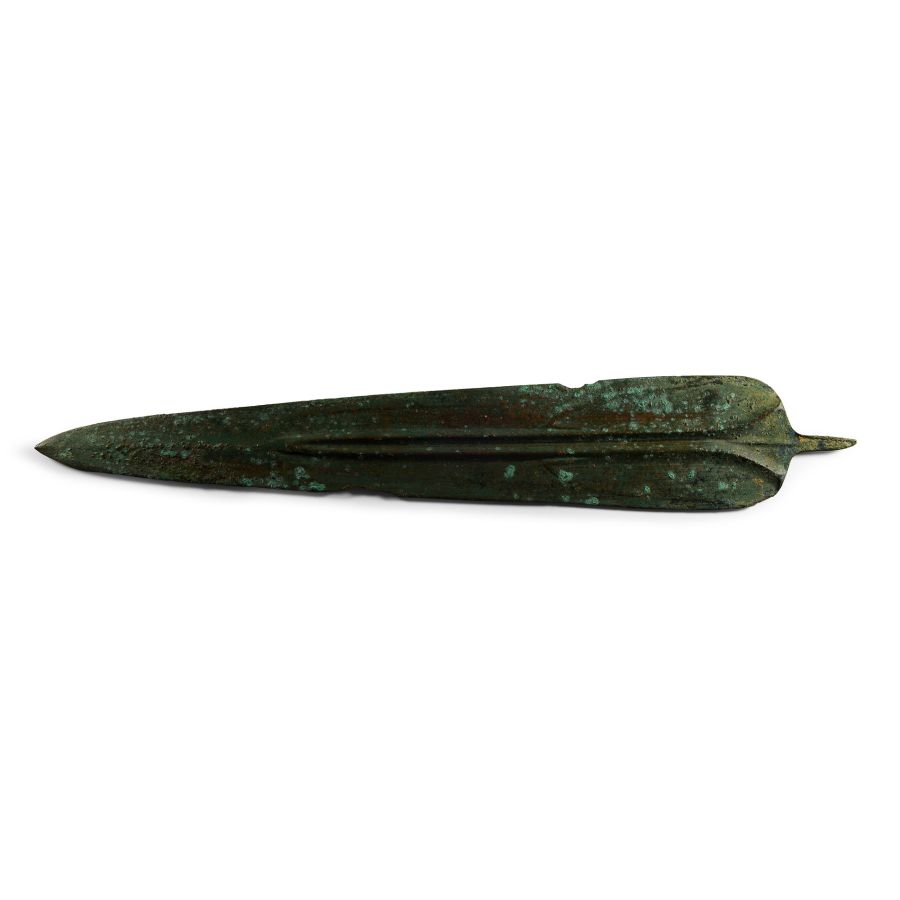
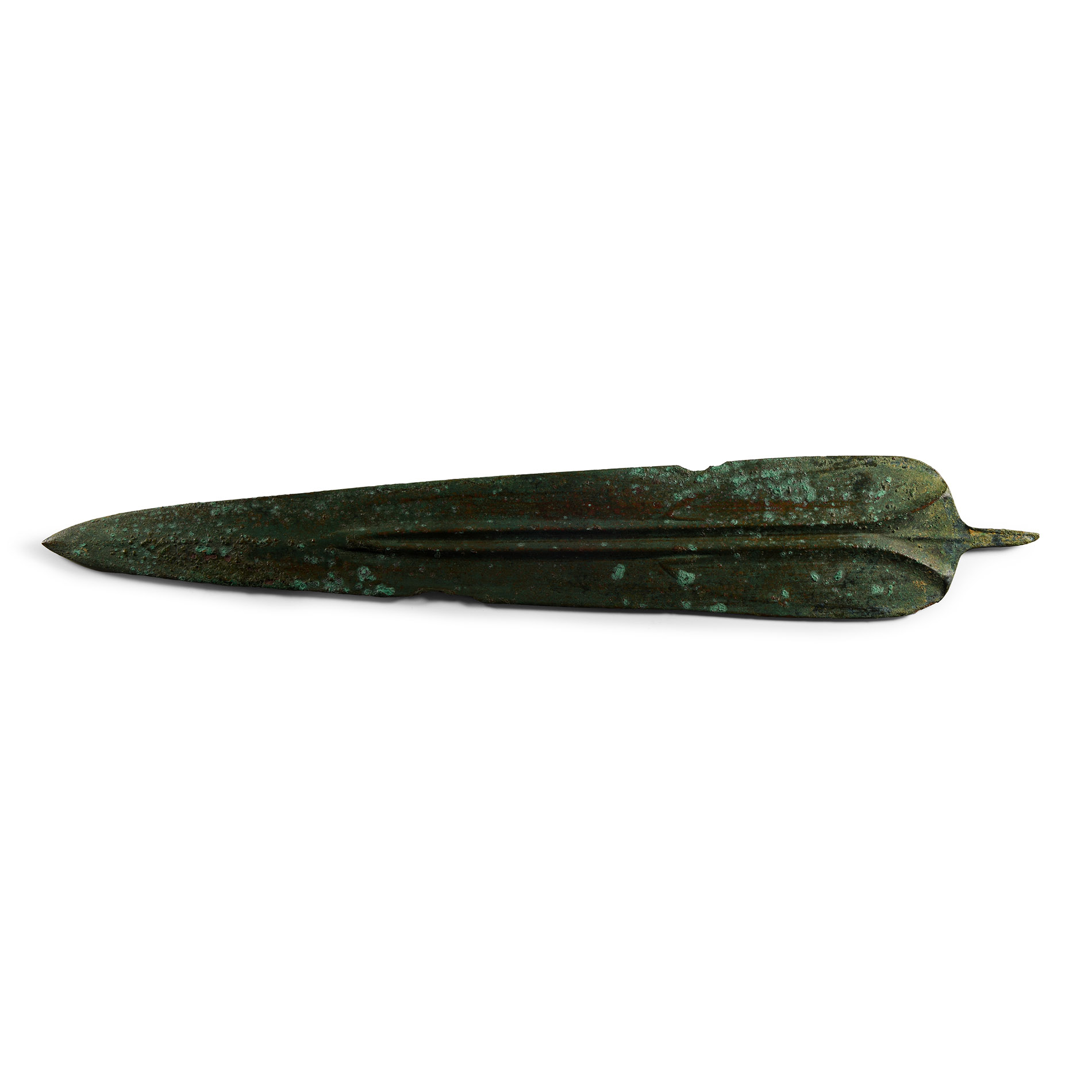
North West Persian Short Sword with Blood Channels
2ND-1ST MILLENNIUM B.C.
15 in. (288 grams, 38cm).
Broad leaf-shaped blade with rounded shoulders and short tang, grooved spine with curved ends extending to the shoulders. [No Reserve]
ProvenanceEx Abelita family collection, 1970s-2000s.
LiteratureCf. Christie's, The Axel Guttmann Collection of Ancient Arms and Armour, part 2, London, 2004, item 36, p.33.
CONDITIONTimeLine Auctions follows a vetting process to ensure the authenticity and legality of all items, reinforcing our commitment to integrity and responsible trading. Each antiquity, antique, and coin lot undergoes thorough examination by a vetting committee of at least ten external specialists, professional trade association members, scientists, and archaeologists: Our Vetting Process
AUCTIONS:
TimeLine is a leading auction house specialising in antiquities, ancient art, collectables, natural history, coins, medals, and books. Our auctions offer museums, collectors, historians, and enthusiasts the opportunity to acquire unique and historically significant pieces.
-
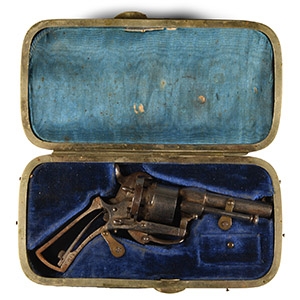
Belgian Lady's Purse Revolver
19th century A.D.Sold for (Inc. bp): £546
A Belgian-made six-shot, 5mm double action Lefaucheux type pinfire purse revolver with 52mm rifled barrel, loading gate and extractor rod to right of frame, nickel plated, folding trigger, grip scales absent; Liege proof marks to cylinder; contained in the original leather-covered twin hinged compartment purse case, one side velvet lined and moulded to receive revolver, the other with leather compartments to receive lady's accessories. 143 grams, 14cm long
Fine condition; some wear to plating and case loose. Scarce.
Acquired from J. C. Militaria. Ex property of a Kent collector.
Sold as an exempt item under Section 58 (2) of the Firearms Act, 1968, to be held as a curiosity or ornament. No license required but buyer must be over 18 years of age. -
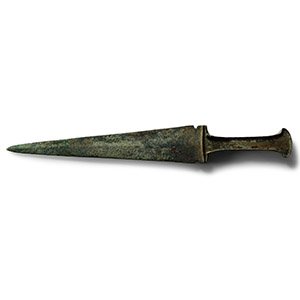
Luristan Bronze Dagger
13th-7th century B.C.Sold for (Inc. bp): £338
Triangular blade with rib below the shoulder connected to the grip with lateral flanges and integral pommel, recessed to accept an organic insert 228 grams, 34 cm
Ex Abelita family collection, 1988. -

Luristan Socketted Bronze Cudgel
13th-7th century B.C.Sold for (Inc. bp): £260
A cudgel or handle of an axe or mace reinforced at both ends by raised moulding, the handle adorned with a double spiral in relief. 473 grams, 15.5 cm wide
Fine condition.
Private family collection formed in London, mid 1980s to early 1990s.
