
Loading, please wait...
LOT 1403
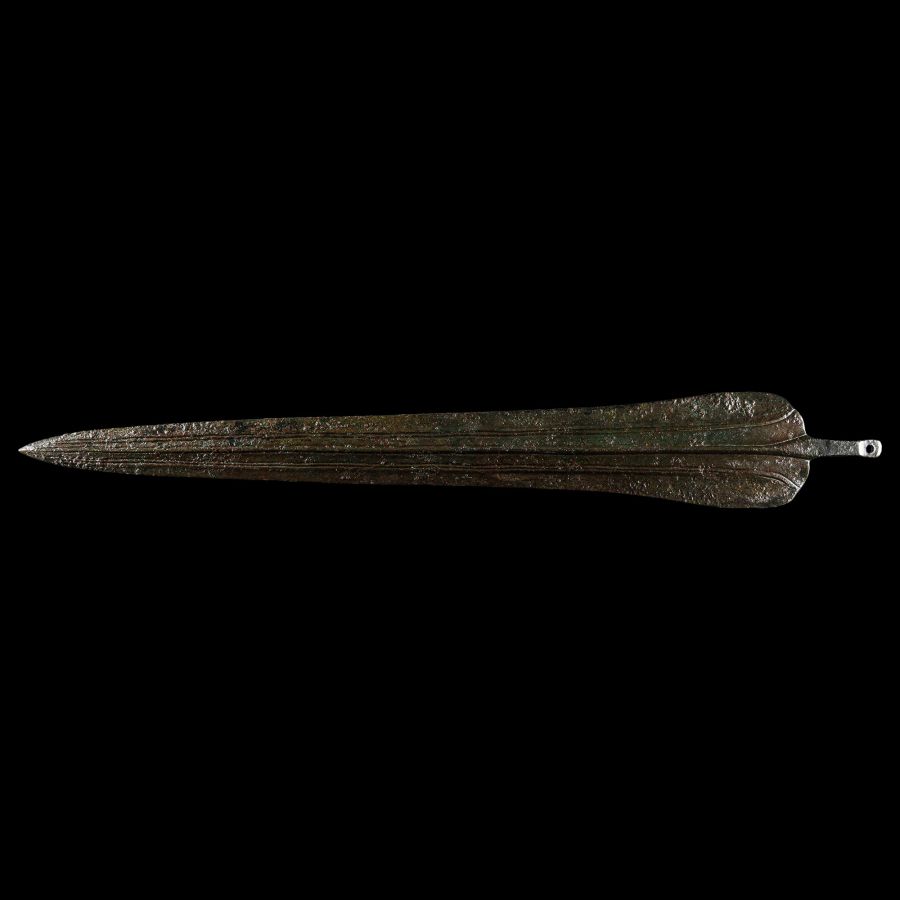
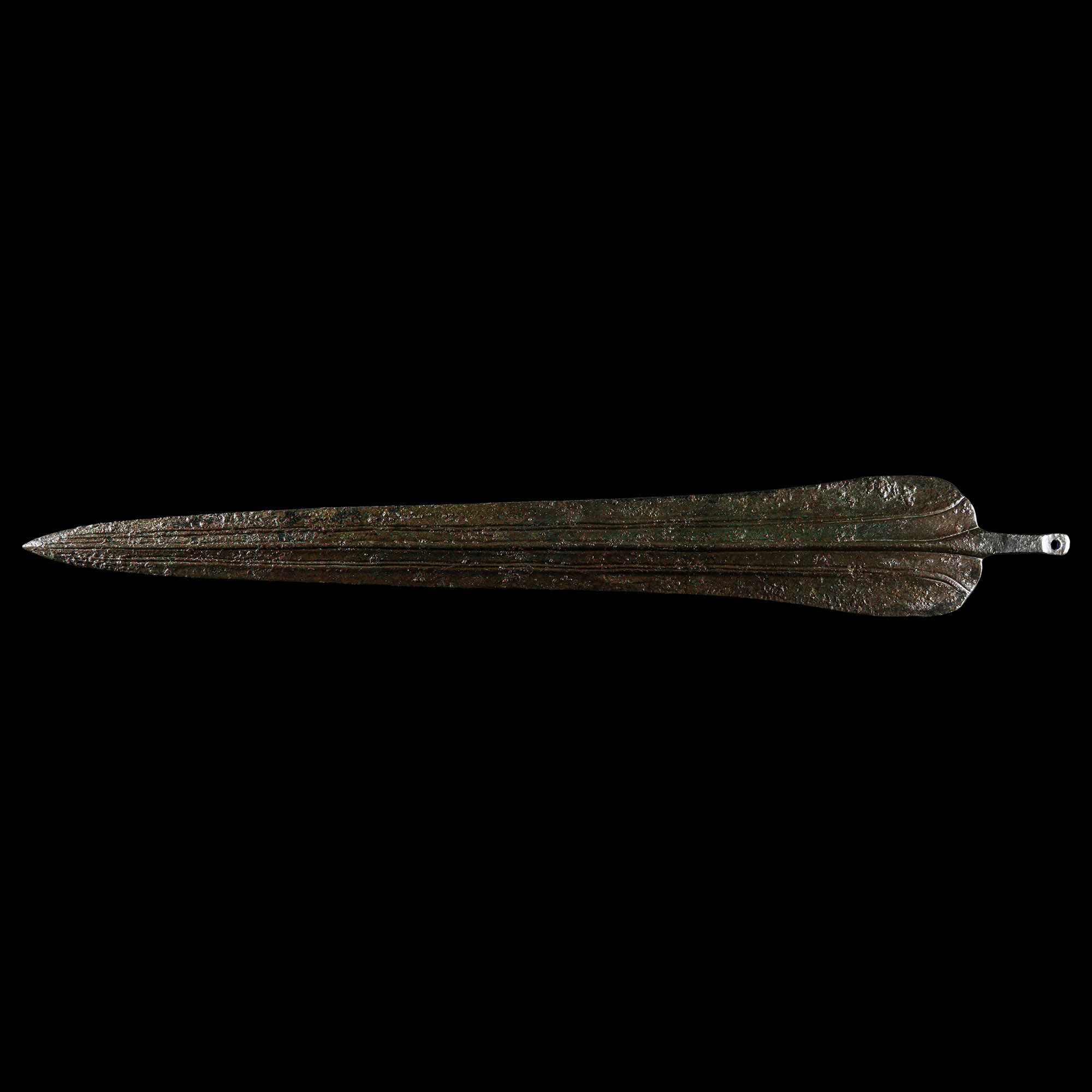
North-West Persian Bronze Short Sword with Blood Channels
2ND-1ST MILLENNIUM B.C.
17 3/8 in. (439 grams, 44.2 cm).
Shaped as a two-edged bronze blade, leaf-shape with short rectangular tang with fastening hole, corrugated midrib extending almost to the tip and flared at the shoulder.
ProvenanceAcquired 1980-2015.
Ex Abelita family collection.
See Christie's, Axel Guttmann collection of Ancient Arms and Armour, Part 1, London, South Kensington, Wednesday 6 November 2002, for similar swords with preserved pommel (lot 24) and without (lot 31).
FootnotesThe metalworking techniques used in making bronze weapons in Luristan were very complex. Surfaces were often finished in repoussé work, and some of the weapons were chased and others engraved. Many of the graves dating from the era of Kassite hegemony contain bronze and iron artefacts, including various type of weapons. These swords with shallow fullers tapering to a sharp tip have been dated by P.R.S. Moorey to the end of the 2nd millennium B.C.
CONDITIONTimeLine Auctions follows a vetting process to ensure the authenticity and legality of all items, reinforcing our commitment to integrity and responsible trading. Each antiquity, antique, and coin lot undergoes thorough examination by a vetting committee of at least ten external specialists, professional trade association members, scientists, and archaeologists: Our Vetting Process
AUCTIONS:
TimeLine is a leading auction house specialising in antiquities, ancient art, collectables, natural history, coins, medals, and books. Our auctions offer museums, collectors, historians, and enthusiasts the opportunity to acquire unique and historically significant pieces.
LOT 1403
North-West Persian Bronze Short Sword with Blood Channels
Estimate £250 - 350€290 - 410 (for guidance only)$340 - 470 (for guidance only)
-
Greek Bronze Arrowhead Collection
Circa 5th-3rd century B.C.Sold for (Inc. bp): £111
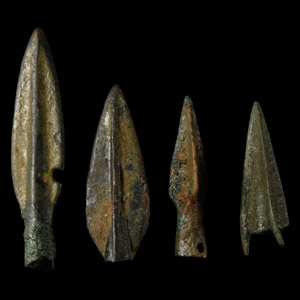
Comprising: two leaf-shaped with raised midribs; one triangular with barbs; one triangular with short socket. 18 grams total, 34-52 mm
From an old UK collection, acquired on the UK art market. Property of a Shropshire private collector. -
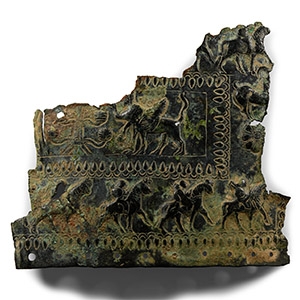
Urartu Bronze Repoussé Fragment with Advancing Warriors on Horseback
Circa 9th-7th century B.C.Sold for (Inc. bp): £1,560
The rectangular fragment with repoussé leaf borders, the outer scene composed of advancing warriors on horseback, each rider holding a round shield and a quiver of arrows on his back, a horned animal and a rosette to the right; the central scene with a winged human-headed bull flanking a tree, possibly a pomegranate tree or a tree of life; the lower edge pierced for attachment. 41 grams, 12 cm wide
From the property of the late Mr SM, London, UK, 1969-1999. Accompanied by a previous catalogue information slip. -
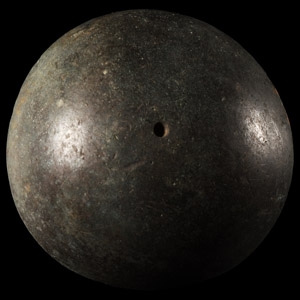
Large Romano-British Bronze Military Boss
1st century A.D.Sold for (Inc. bp): £111
Substantial cast cupola with dimple to the apex, reverse with two ferrous attachment spikes; possibly from a field artillery piece. 174 grams total, 74 mm wide
Reputed to have been excavated near Viables in Hampshire at the end of the 19th century. From the estate of the late Jennifer Simmonds. Acquired from Jacobs & Hunt auctioneers, Petersfield, Hampshire, UK.
