
Loading, please wait...
LOT 1777
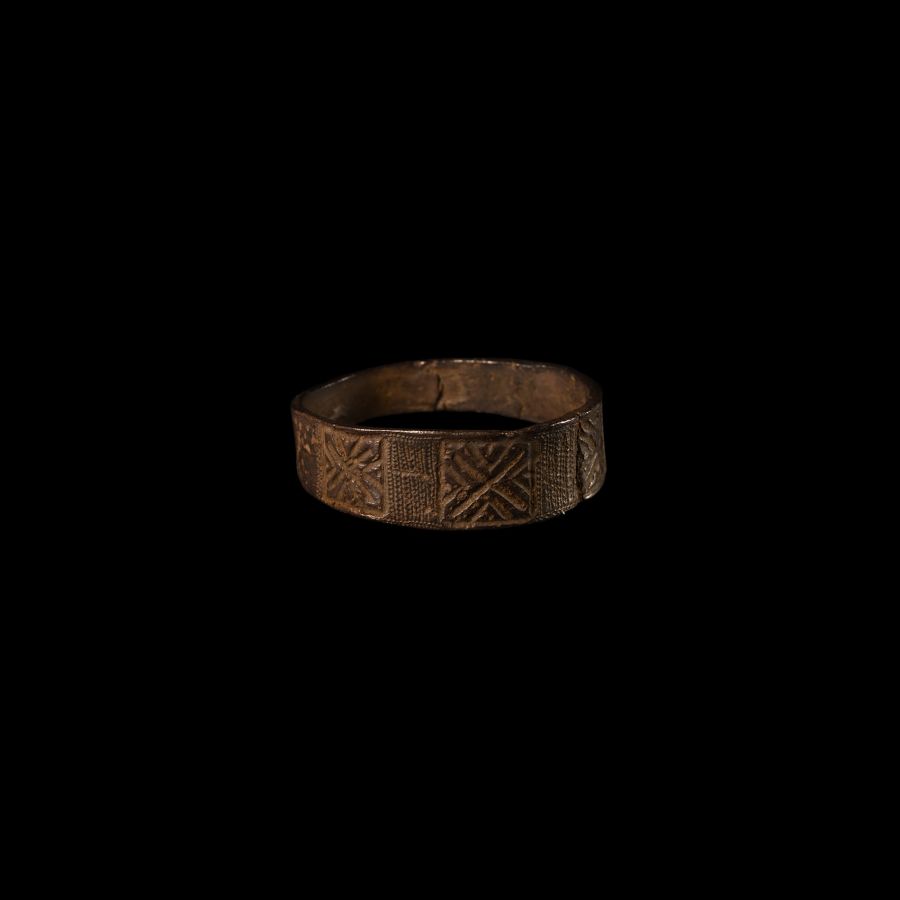
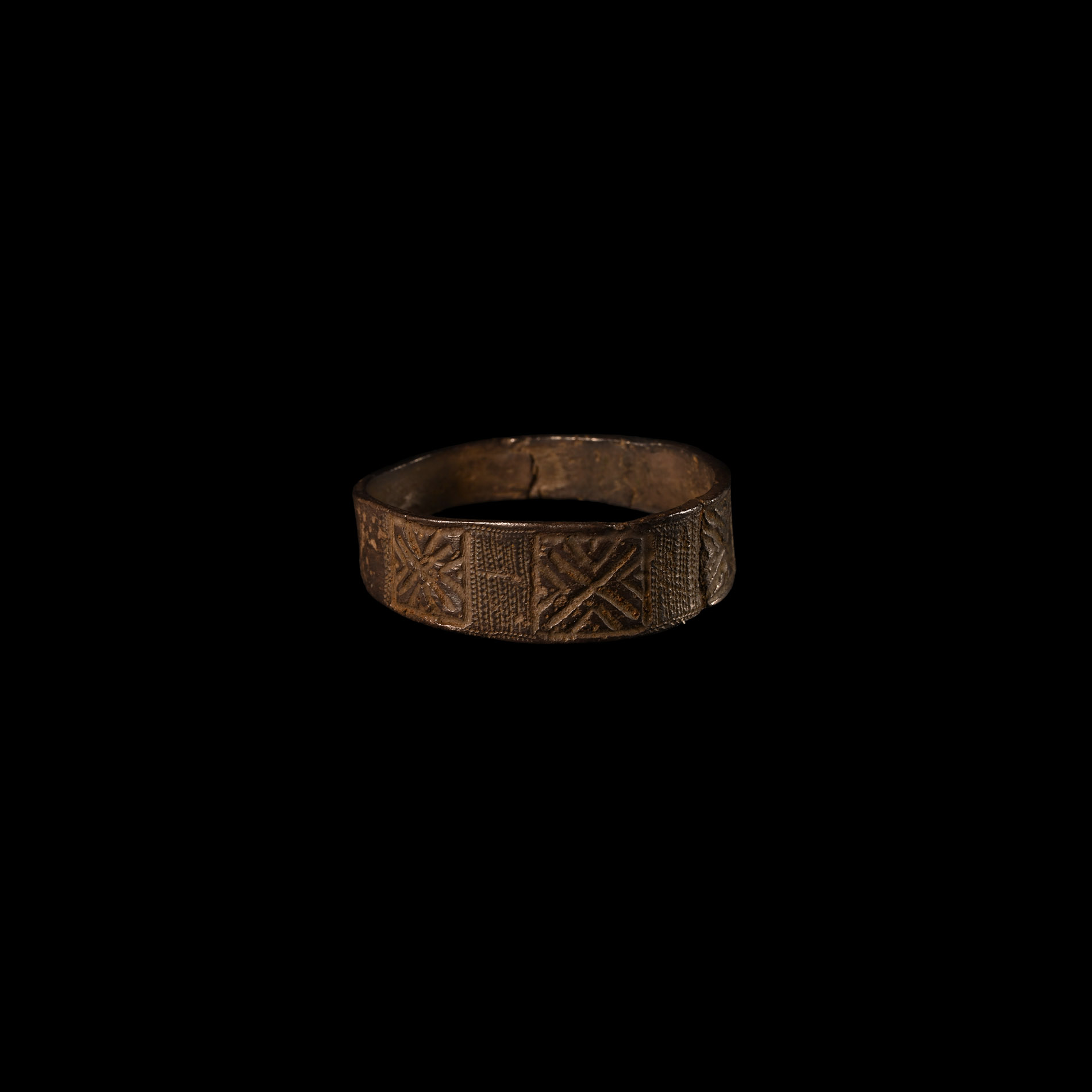
Norman Silver Ring with Saltire Crosses
CIRCA 11TH-12TH CENTURY A.D.
1 in. (3.58 grams, 25.44 mm overall, 23.15 mm internal diameter (approximate size British W 1/2, USA 11 1/4, Europe 25.66, Japan 24)).
Composed of a flat-section hoop and expanded bezel, engraved panels displaying saltire crosses alternating with panels of dimples.
ProvenanceAcquired 1990s-early 2000s.
East Anglian private collection.
TimeLine Auctions follows a vetting process to ensure the authenticity and legality of all items, reinforcing our commitment to integrity and responsible trading. Each antiquity, antique, and coin lot undergoes thorough examination by a vetting committee of at least ten external specialists, professional trade association members, scientists, and archaeologists: Our Vetting Process
AUCTIONS:
TimeLine is a leading auction house specialising in antiquities, ancient art, collectables, natural history, coins, medals, and books. Our auctions offer museums, collectors, historians, and enthusiasts the opportunity to acquire unique and historically significant pieces.
-
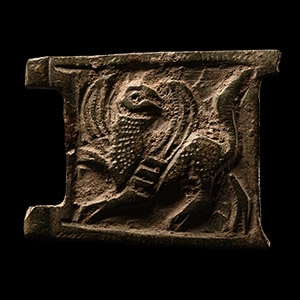
Medieval Bronze Zoomorphic Belt Buckle Plate
10th-11th century A.D.Sold for (Inc. bp): £143
Displaying a regardant griffin advancing left in relief. 13 grams, 39 mm
Acquired from a London antiques shop, 1990s. -
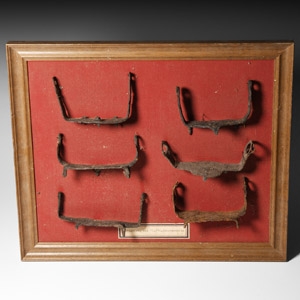
Medieval Early Iron 'Ice Crampon' Collection
15th-16th century A.D.Sold for (Inc. bp): £33
Mounted on a framed back board for display. 1 kg, 38.5 x 32 cm
Acquired 1960s-1990s. Late Alison Barker collection, a retired London barrister. -
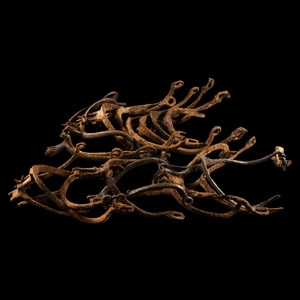
Medieval Iron Spur Group
14th-16th century A.D.Sold for (Inc. bp): £117
Comprising spurs of various types and sizes, including examples retaining the rowel, buckles and other fitting elements. 1.1 kg total, 13-16.5 cm
Acquired 1990s-early 2000s. East Anglian private collection.
