
Loading, please wait...
LOT 1389
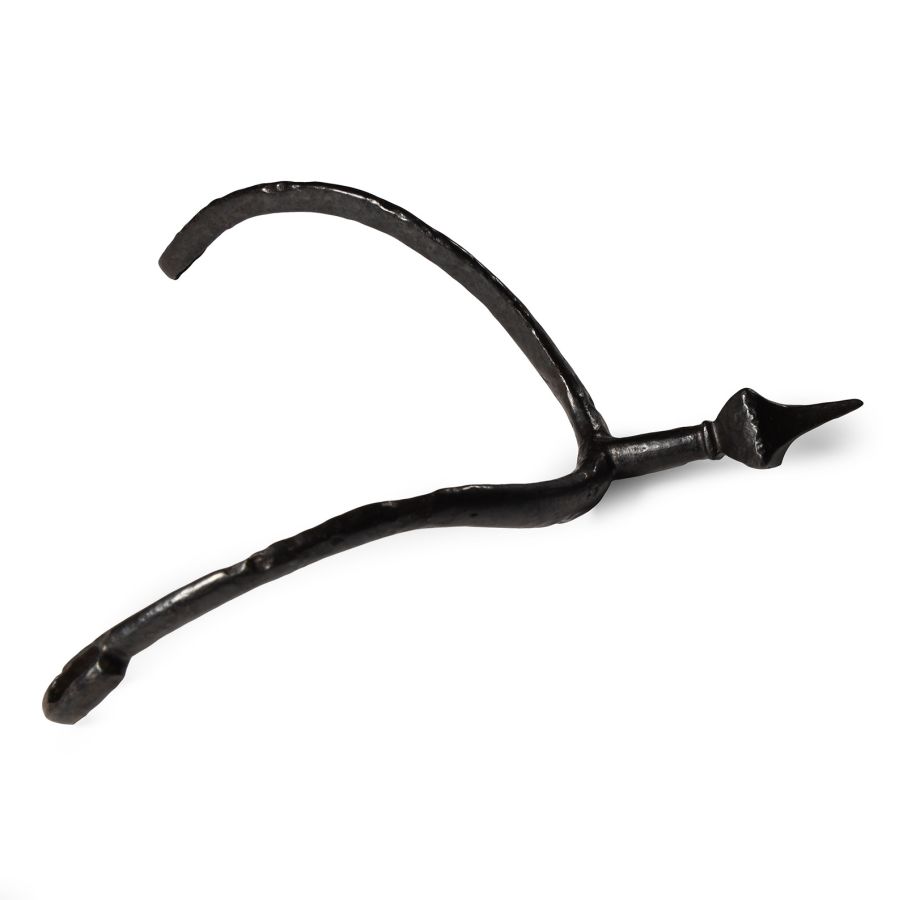
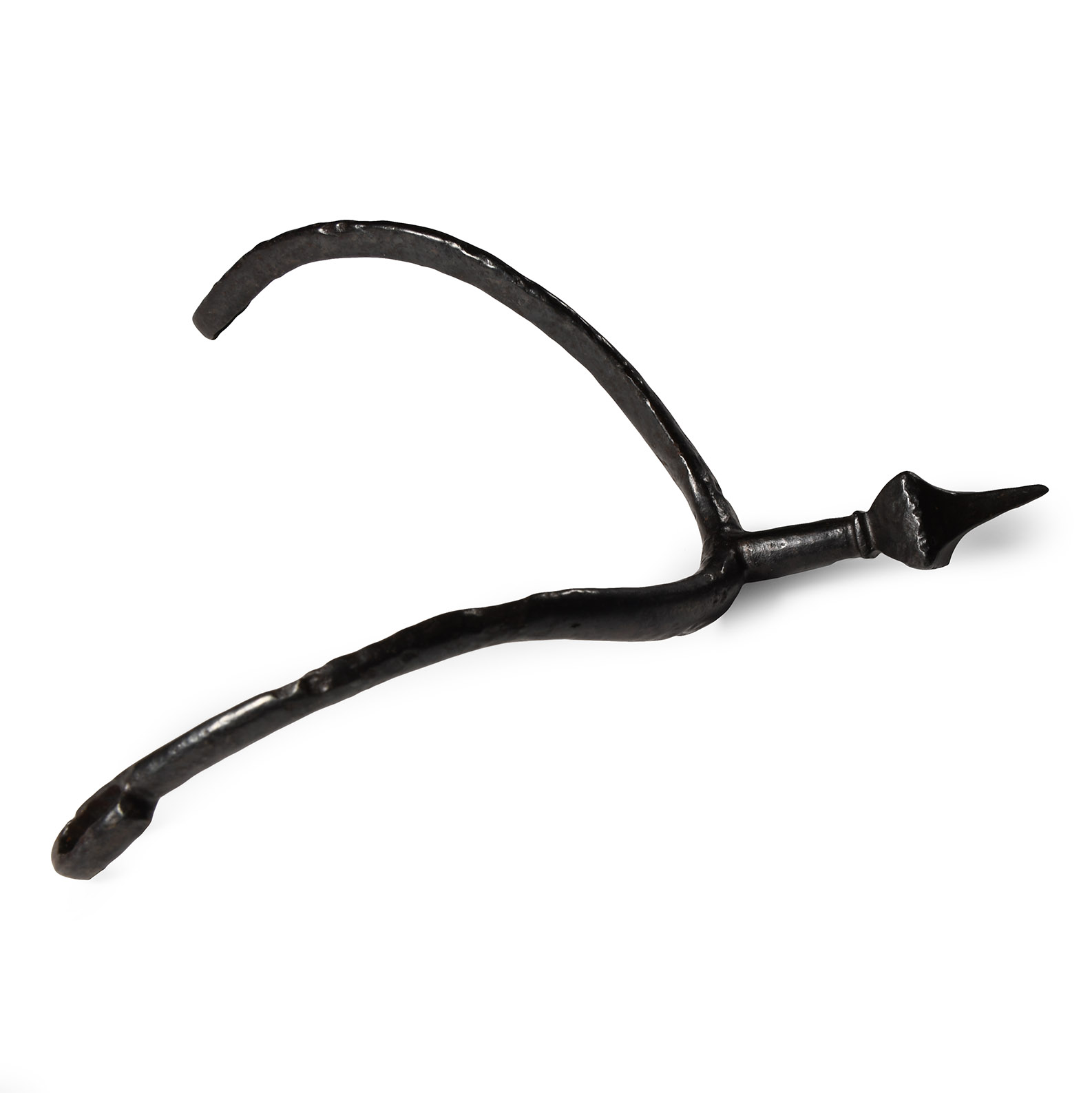
Norman Iron Prick Spur
11TH-12TH CENTURY A.D.
4 3/4 in. (52 grams, 12 cm).
With abruptly curved arms ending in two loops, the prick with biconvex bulb. [No Reserve]
ProvenanceFrom the collection of the famous author, writer and speaker, Gordon Bailey, Essex, UK; formed since 1968.
LiteratureCf. Romisch-Germanischen Zentralmuseum Mainz (RGZM), Das Reich der Salier, 1024-1125, Sigmaringen, 1992, pp.86-87, fig.33b, Vitrine 14, for similar spur.
FootnotesThe spur belongs to Western specimens of the 12th century, with more or less strongly curved spurs and short, strong, lowered spikes, whereby the majority of the spurs already have loops instead of rivet plates.
CONDITIONTimeLine Auctions follows a vetting process to ensure the authenticity and legality of all items, reinforcing our commitment to integrity and responsible trading. Each antiquity, antique, and coin lot undergoes thorough examination by a vetting committee of at least ten external specialists, professional trade association members, scientists, and archaeologists: Our Vetting Process
AUCTIONS:
TimeLine is a leading auction house specialising in antiquities, ancient art, collectables, natural history, coins, medals, and books. Our auctions offer museums, collectors, historians, and enthusiasts the opportunity to acquire unique and historically significant pieces.
-
.jpg)
Medieval Iron Axehead
15th-16th century A.D.Sold for (Inc. bp): £33
With square butt, scooped underside and a flared blade. 1.04 kg, 16 cm
Acquired on the UK market before 1992. Ex property of a North London gentleman. -
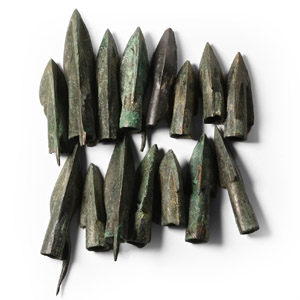
Greek Bronze Tri-Finned Arrowhead Collection
Circa 7th-3rd century B.C.Sold for (Inc. bp): £195
Comprising: seven arrowheads with a slender, lozenge-shaped blade and a socket extending near the tip, base of the socket with a side lug; eight socketted bronze arrowheads, mainly triangular or foliate in section, trilobate and with short socket. 77 grams total, 23-46 mm
UK private collection before 2000. Acquired on the UK art market. Property of a London gentleman.
The Scythians were famous for their archery abilities, and were often employed as mercenaries. The Athenian tyrant Pisistratus hired them and they participated in battles beside the Athenian phalanx as well as serving as a police corps keeping order within the city of Athens. This explains the great range of Scythian arrowheads found on the Greek sites. -
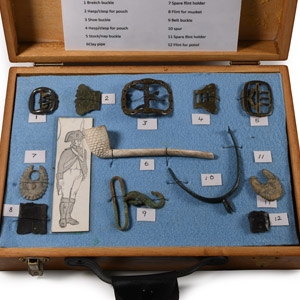
Cased British Military 'Published' Artefact Collection
Late 17th-early 19th century A.D.Sold for (Inc. bp): £124
Comprising: breech and shoe, hat, belt ands stock/nap bronze buckles; clasps for pouches; a clay pipe; spare flint holders; a flint for musket; a flint for pistol; a bronze spur; military buttons for Royal Marine, Artillery, Coldstream and Dragoon Guards from 1795 to 1820; an officer’s whistle; a bayonet holder. 1.36 kg total, case: 30.5 x 22 x 6.5 cm
From the collection of the famous author, writer and speaker, Gordon Bailey, Essex, UK; formed since 1968.
Various military items have been recovered from the military sites of the Napoleonic Wars. Buttons are the most common items, made of copper, with some signs of gilding and silvering. Also small buckles are frequent finds, as well as musket balls and musket parts. These latter are rare because the individual soldiers were responsible for the care and maintenance of their fire-arms.
