
Loading, please wait...
LOT 1785
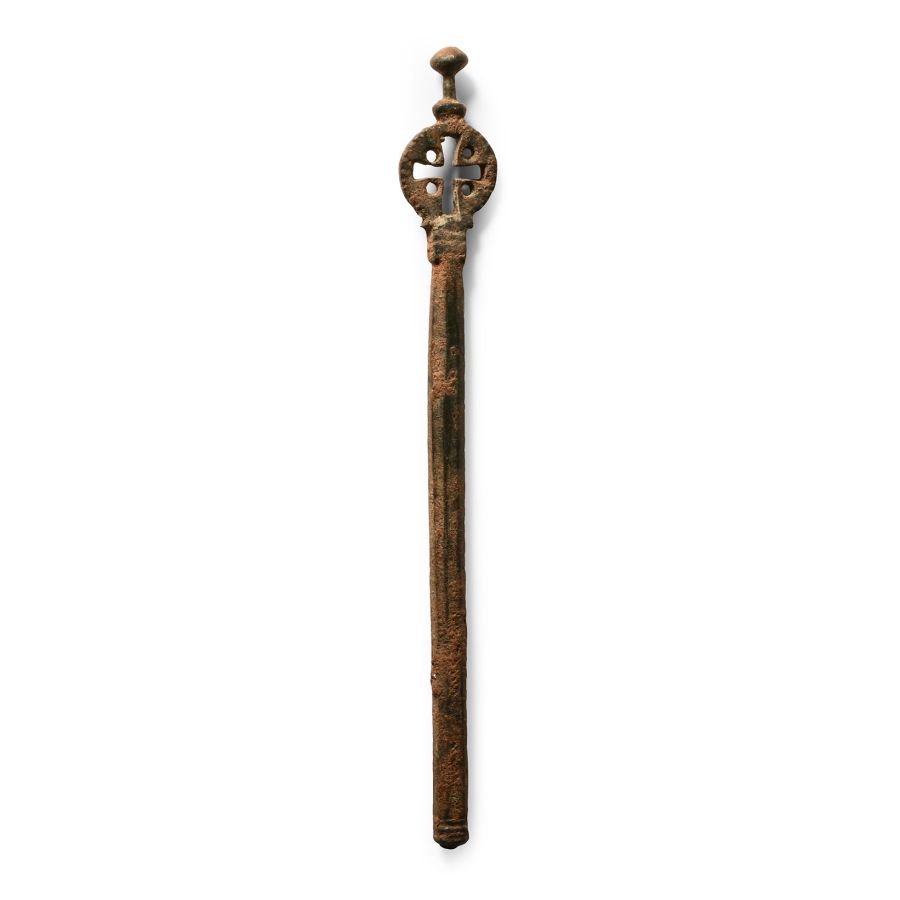
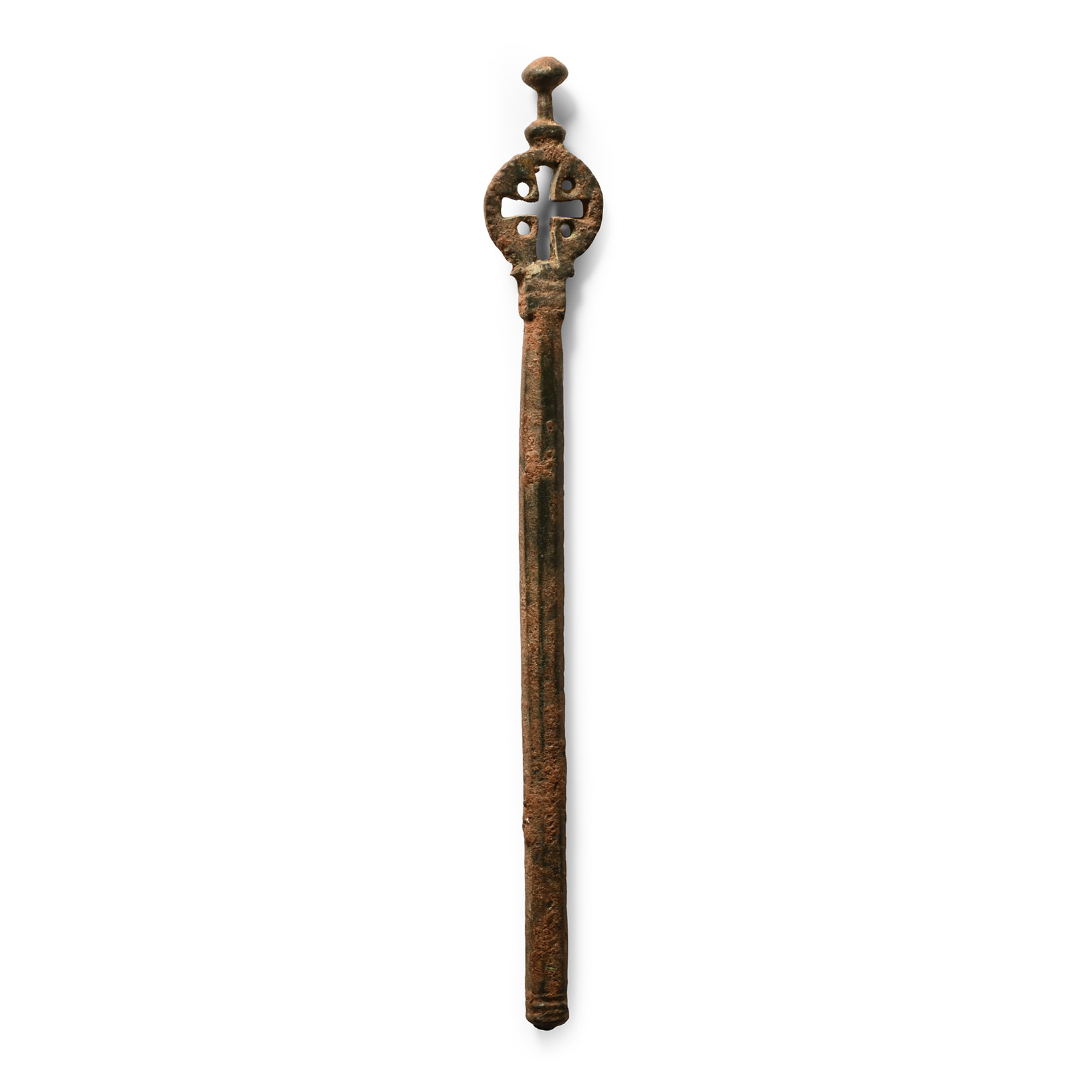
Norman Bronze Key Shank with Cross
LATE 11TH CENTURY A.D.
4 3/8 in. (15.7 grams, 11.1 cm).
Octagonal in section with pierced discoid bow and knop finial; openwork cross with pellets in the spandrels, rectangular bolster. [No Reserve]
ProvenanceAcquired on the UK art market.
Property of an Essex, UK, gentleman.
TimeLine Auctions follows a vetting process to ensure the authenticity and legality of all items, reinforcing our commitment to integrity and responsible trading. Each antiquity, antique, and coin lot undergoes thorough examination by a vetting committee of at least ten external specialists, professional trade association members, scientists, and archaeologists: Our Vetting Process
AUCTIONS:
TimeLine is a leading auction house specialising in antiquities, ancient art, collectables, natural history, coins, medals, and books. Our auctions offer museums, collectors, historians, and enthusiasts the opportunity to acquire unique and historically significant pieces.
-
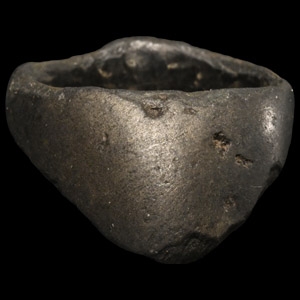
Medieval Bronze Archer's Thumb Ring
12th-15th century A.D.Sold for (Inc. bp): £98
Comprising a hoop with a raised boss to the back and a plain triangular plaque. 9.31 grams, 33.69 mm overall, 20.50 mm internal diameter (approximate size British W, USA 11, Europe 25, Japan 24)
Acquired 1980-2015. Ex Abelita family collection. -
.jpg)
Medieval Gilt Zoomorphic Buckle Plate
Circa 12th-13th century A.D.Sold for (Inc. bp): £85
Gilt-bronze with reserved design of a hound advancing with head turned on a pounced field with bevelled edges, two straps for attachment to the buckle loop. 2.4 grams, 21.5 mm
Ex Chapman collection, UK, 1990s. Accompanied by a previous handwritten catalogue information slip. -
.jpg)
Medieval Iron Rowel Spur Collection
Circa 13th-14th century A.D.Sold for (Inc. bp): £143
Comprising examples of various types, including some retaining the rowel. 217 grams total, 11.5-14.8 cm
Acquired 1990s-early 2000s. East Anglian private collection.
The deep curve of the shoulders, the lack of protrusion above the base of the rowel holder, the short rowel holder and the small diameter rowel are characteristics that point to dating some of this specimens in the 13th century. Kirpichnikov puts these spurs in type V (first half of the 13th-14th century) after a spur depicted on an English tombstone dating to the beginning of the 14th century.
