
Loading, please wait...
LOT 1831
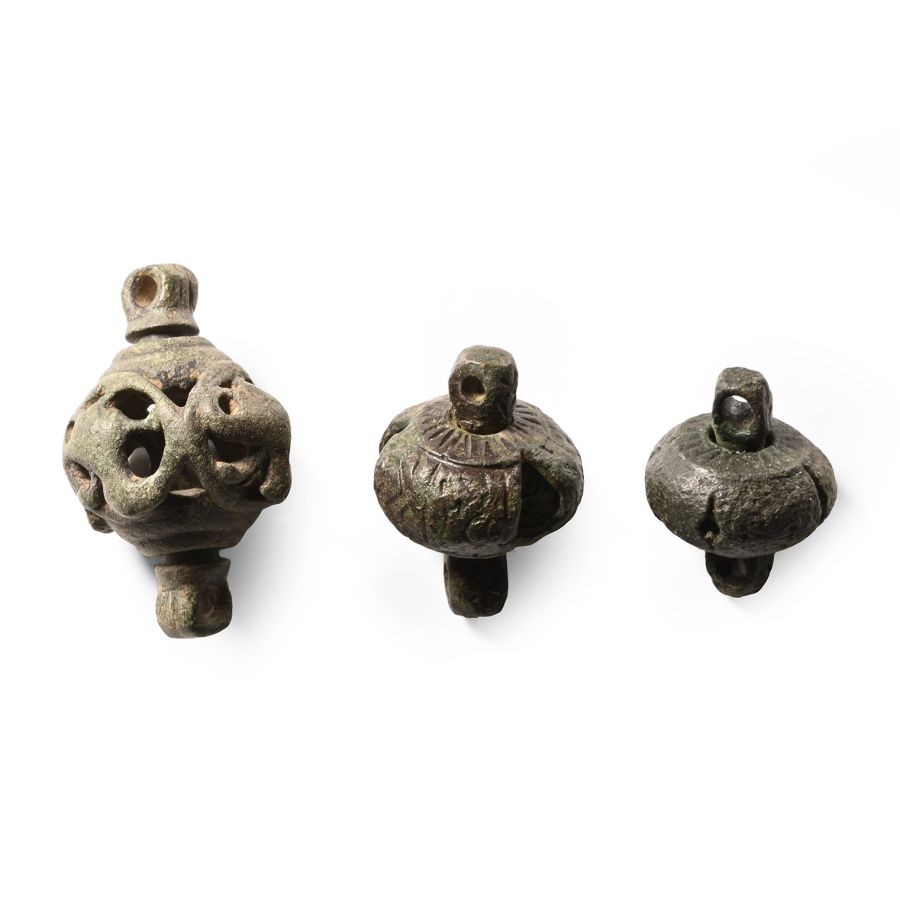
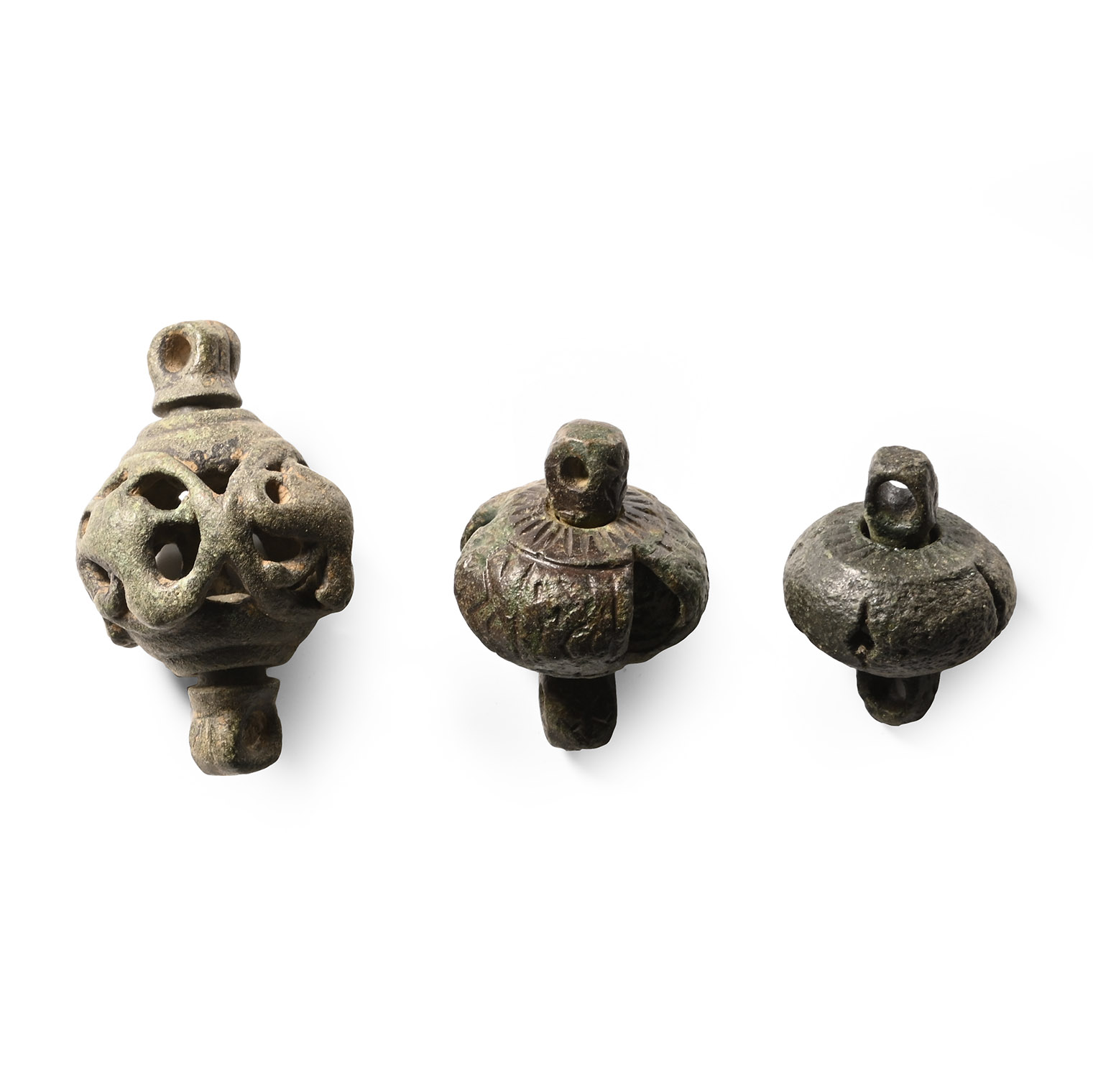
Norman Bronze Hunting Dog Swivel Collection
11TH-12TH CENTURY A.D.
1 1/4 - 1 7/8 in. (103 grams total, 32-47 mm).
Elaborate swivel with large openwork bulbs and decorative motifs; many of these objects are published in the Detector Finds book series. [3, No Reserve]
ProvenanceFrom the collection of the famous author, writer and speaker, Gordon Bailey, Essex, UK; formed since 1968.
LiteratureCf. Bailey, G., Detector Finds 5, Witham, 2002, p.70ff.
CONDITIONTimeLine Auctions follows a vetting process to ensure the authenticity and legality of all items, reinforcing our commitment to integrity and responsible trading. Each antiquity, antique, and coin lot undergoes thorough examination by a vetting committee of at least ten external specialists, professional trade association members, scientists, and archaeologists: Our Vetting Process
AUCTIONS:
TimeLine is a leading auction house specialising in antiquities, ancient art, collectables, natural history, coins, medals, and books. Our auctions offer museums, collectors, historians, and enthusiasts the opportunity to acquire unique and historically significant pieces.
-
.jpg)
Medieval Knight's Bronze Limoges Buckle Plate with Rampant Lion Fighting a Human-Headed Snake
12th-13th century A.D.Sold for (Inc. bp): £169
Rectangular plaque with two attachment holes and flange to rear, enamel design with rampant lion and figure; additional later rivet head close to one corner. 13.8 grams, 33 mm
Found North Norfolk, UK. From an old private collection of Norfolk, UK, gentleman, formed since 1998. -
.jpg)
Medieval Gilt Zoomorphic Buckle Plate
Circa 12th-13th century A.D.Sold for (Inc. bp): £85
Gilt-bronze with reserved design of a hound advancing with head turned on a pounced field with bevelled edges, two straps for attachment to the buckle loop. 2.4 grams, 21.5 mm
Ex Chapman collection, UK, 1990s. Accompanied by a previous handwritten catalogue information slip. -
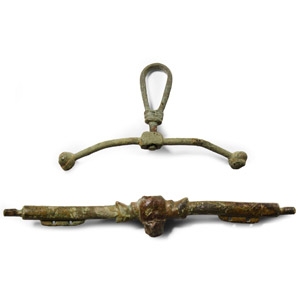
Medieval Bronze Purse Bar Group
15th-16th century A.D.Sold for (Inc. bp): £33
Including one with elongated suspension loop, one with central bulb and lateral pierced flanges. 102 grams total, 10.5-16 cm
From the collection of the famous author, writer and speaker, Gordon Bailey, Essex, UK; formed since 1968.
