
Loading, please wait...
LOT 1201
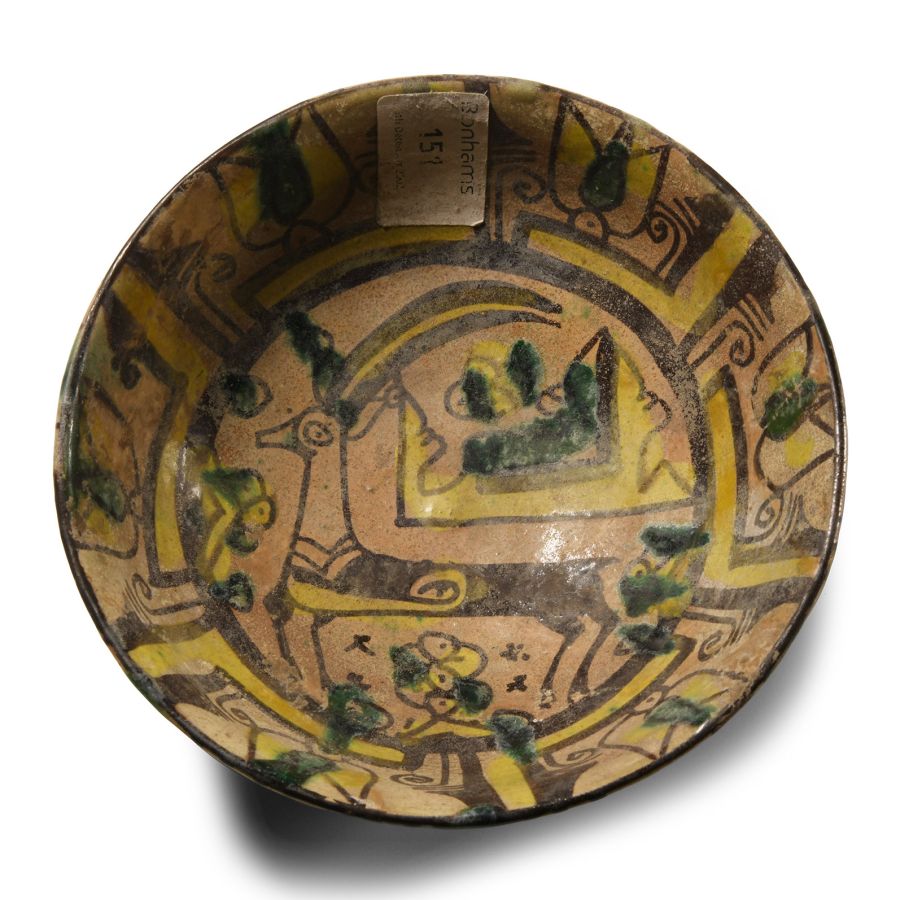
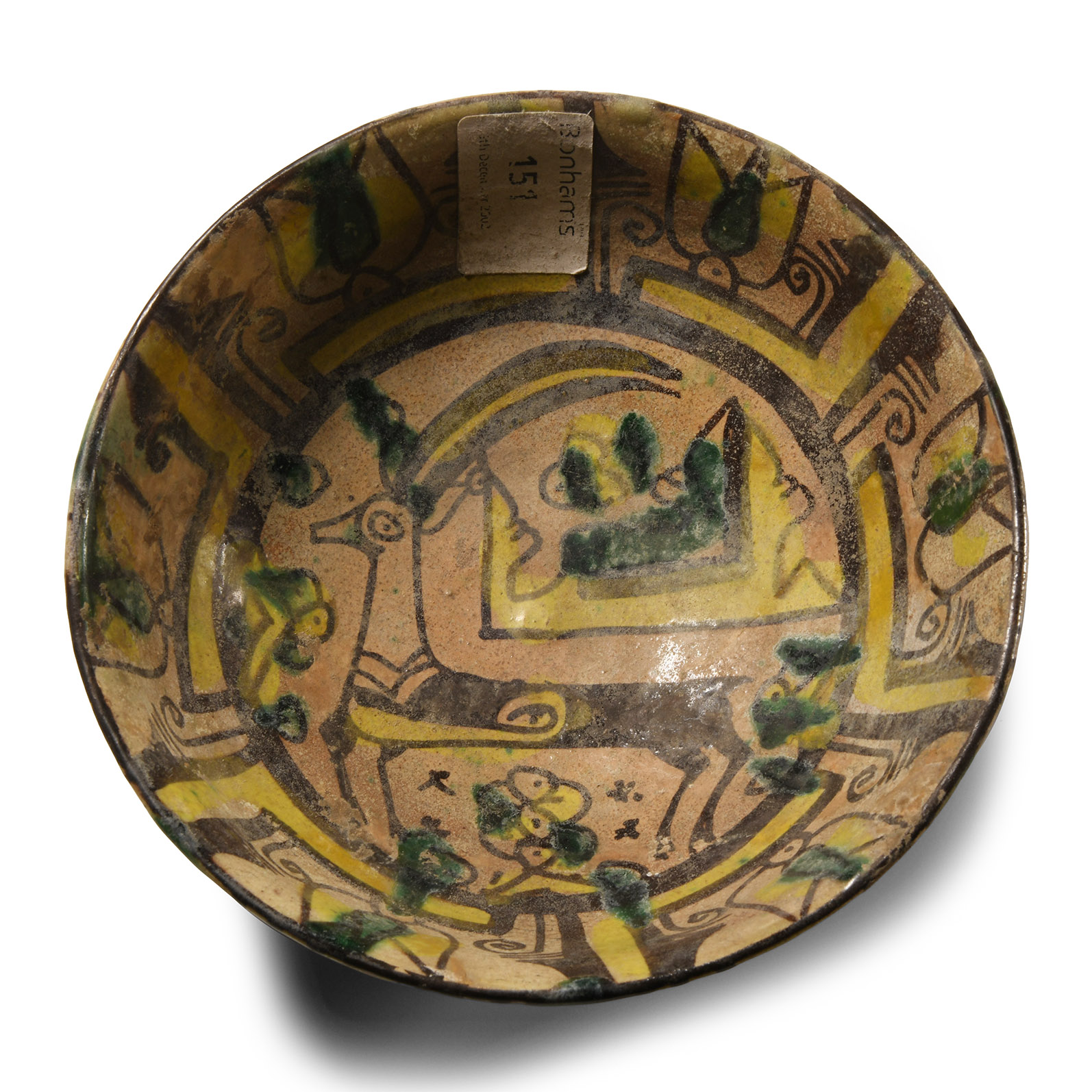
Nishapur Glazed Bowl with Ibex
9TH-10TH CENTURY A.D.
6 3/8 in. (331 grams, 16 cm).
Hemispherical in profile with broad foot, outer face with vertical streaks in brown, green and yellow; inner face with central ibex in profile with radiating flowers to the sidewall; some restoration; old Bonhams label affixed to the inside and two old labels to the exterior. [No Reserve]
ProvenanceEx H.K. Monif, New York, USA.
Acquired Bonhams, London, 5th December 2002(?), lot 151.
From an important Cambridgeshire estate; thence by descent.
TimeLine Auctions follows a vetting process to ensure the authenticity and legality of all items, reinforcing our commitment to integrity and responsible trading. Each antiquity, antique, and coin lot undergoes thorough examination by a vetting committee of at least ten external specialists, professional trade association members, scientists, and archaeologists: Our Vetting Process
AUCTIONS:
TimeLine is a leading auction house specialising in antiquities, ancient art, collectables, natural history, coins, medals, and books. Our auctions offer museums, collectors, historians, and enthusiasts the opportunity to acquire unique and historically significant pieces.
-
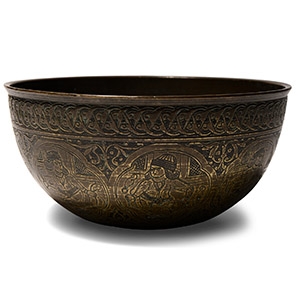
Qajar Period Decorated Bowl
19th century A.D.Estimate: £120 - 170 (+bp*)
Opening Bid: £60
Spun bronze bowl with everted rim, dense low-relief decoration of tendrils and interlace with quatrefoil panels each with a kneeling figure. 195 grams, 11.9 cm wide
Acquired by the vendor's father on the UK art market, before 1990. -
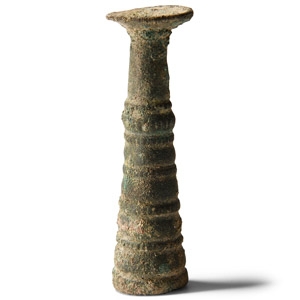
Luristan Bronze Kohl Pot
1st millennium B.C.Estimate: £200 - 300 (‡+bp*)
Opening Bid: £100
Of tapering cylindrical form with everted rim, decoratively notched ribs of alternating breadth to to body. 60 grams, 78 mm
Acquired in Europe before 1993. -
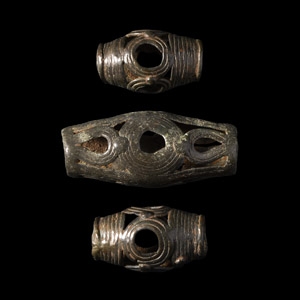
Amlash Bronze Cage Bead Collection
2nd-1st millennium B.C.Sold for (Inc. bp): £130
Each composed of a biconical body featuring openwork geometric motifs and pellets. 68 grams total, 38-63 mm
Fine condition.
Acquired before 1983. Ex London gallery, 1990s.
