
Loading, please wait...
LOT 1055
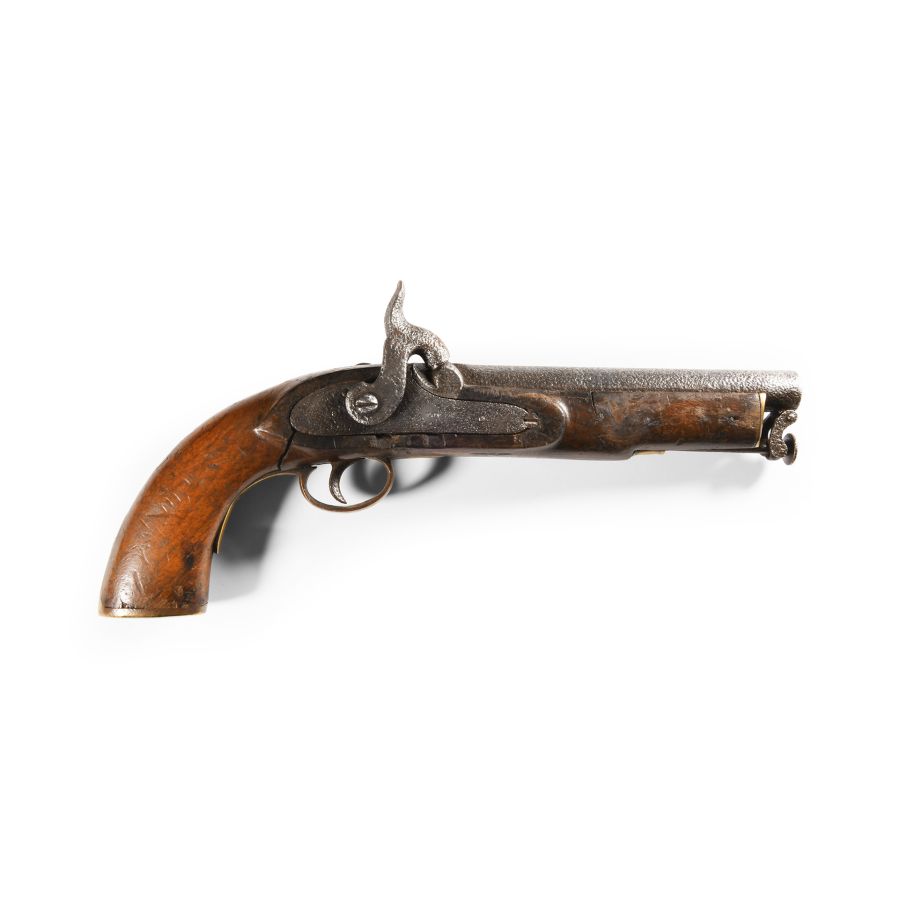
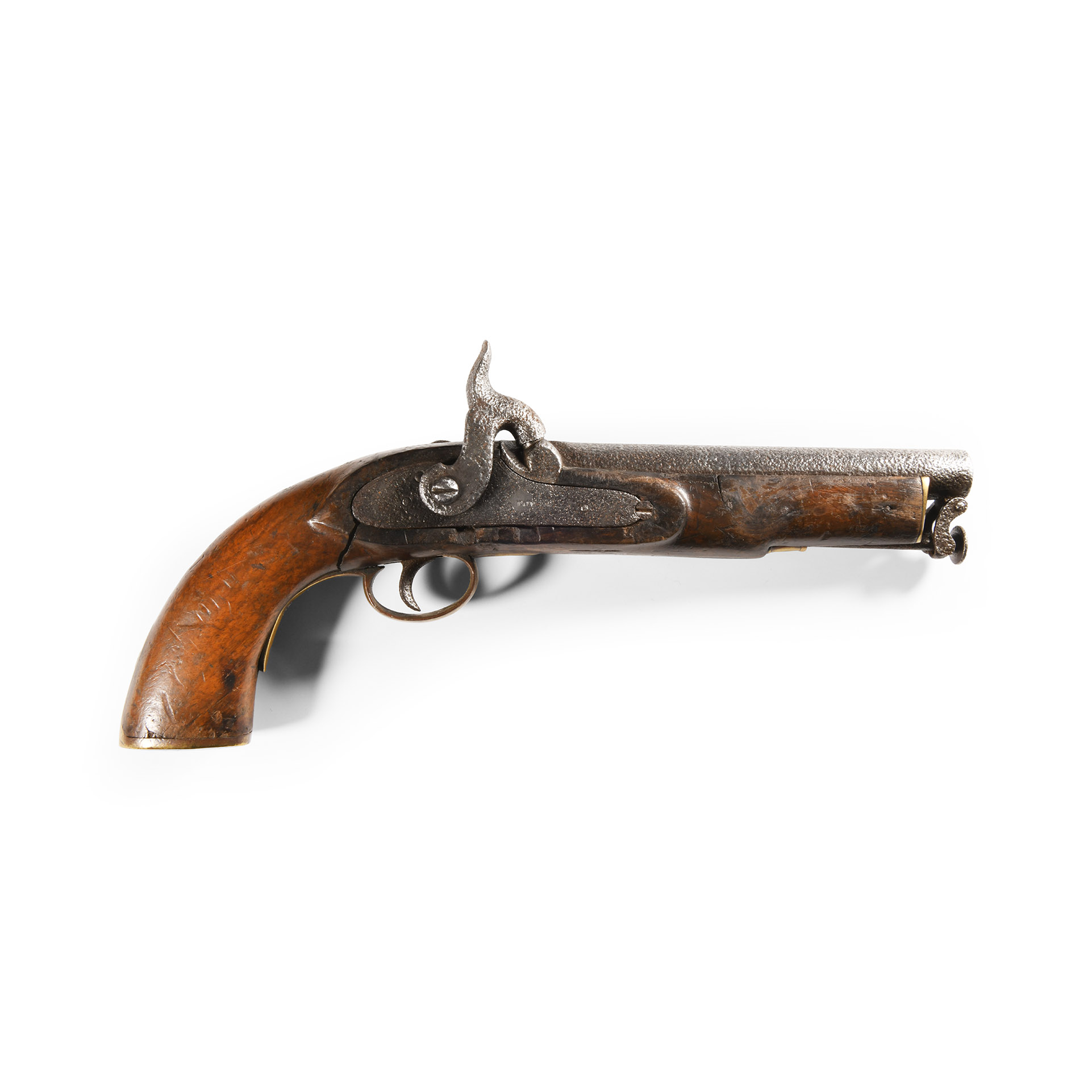
Newland Pattern Percussion Tower Pistol
19TH CENTURY A.D.
14 in. (1.17 kg, 35.5 cm).
About 5/8" bore pistol with 19cm (7½") barrel, the percussion lockplate marked 'TOWER' fitted with captive ramrod, full wood stock and butt (cracked) with brass butt cap, fore-end, ferrule and trigger guard and steel belt hook; action working.
ProvenanceAcquired from Mostly Boxes, Northern Ireland.
The Kusmirek Collection, UK.
Accompanied by a Mostly Boxes invoice.
Sold as an exempt item under Section 58 (2) of the Firearms Act, 1968, to be held as a curiosity or ornament. No license required but buyer must be over 18 years of age. Overseas bidders should note that, due to UK regulations governing export of all firearms, overseas buyers will need to make arrangements for shipping this lot out of the UK directly, by air freight, with a specialist company or agent.
CONDITIONTimeLine Auctions follows a vetting process to ensure the authenticity and legality of all items, reinforcing our commitment to integrity and responsible trading. Each antiquity, antique, and coin lot undergoes thorough examination by a vetting committee of at least ten external specialists, professional trade association members, scientists, and archaeologists: Our Vetting Process
AUCTIONS:
TimeLine is a leading auction house specialising in antiquities, ancient art, collectables, natural history, coins, medals, and books. Our auctions offer museums, collectors, historians, and enthusiasts the opportunity to acquire unique and historically significant pieces.
-
.jpg)
French WWII 'Donkey Ears' Trench Periscope
1940s A.D.Sold for (Inc. bp): £143
Aluminium bodied binocular trench periscope with green finish, fitted with folding handle and leather neck strap; with original leather case fitted with shoulder strap and belt/webbing loop. 1.69 kg, 29.5 cm
The Kusmirek Collection, UK. -
Medieval Iron Single-Handed Sword
Late 13th-early 14th century A.D.Sold for (Inc. bp): £3,640
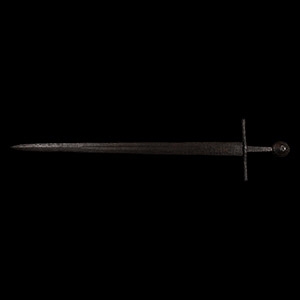
Of Oakeshott Type XII or XIII with a double-edged, well-balanced tapering blade, shallow fullers and a parallel-sided straight lower guard of cross style 2; medium tang and disc pommel of type K with chamfered sides; the blade with later inlaid markings, one side with Passau wolf, the other side with cross within a circle; cleaned and conserved. 1.39 kg, 95 cm
fine condition, restored.
Acquired 1990s-early 2000s. East Anglian private collection. Accompanied by an academic report by Dr Raffaele D'Amato.
The sword’s blade presents analogies with a sword of type XIIIa (Aleksic, 2007, pl.7,1) sharing the same type of pommel and the same length of the fuller. The sword, found in the Danube near the village Visnjica, is now in the City Museum, Belgrad, and presents a cross and a wolf impressed on the blade and inlaid with a yellow metal. -
.jpg)
Assyrian Bronze Relief Fragment
Circa 9th century B.C.Sold for (Inc. bp): £16,900
Displaying a corrugated rim above and below; two advancing soldiers, each striding forwards over the headless body of a dead enemy, carrying a severed head in each hand; the soldiers shown bearded and each wearing a pointed and segmented helmet with a recess to accommodate the ears, a cuirass and thigh-length tunic, with a bow over one shoulder and a sword slung from a waist belt; mounted on a custom-made display stand. 72 grams, 10.8 cm wide (277 grams total, 11 cm high including stand)
Ex S. Moussieff collection, London, UK. Acquired from C.J. Martin (Coins) Ltd. Accompanied by an academic report by Dr Raffaele D'Amato. This lot has been checked against the Interpol Database of stolen works of art and is accompanied by search certificate no.203209.
Battle-scenes - and especially images where the Assyrians overrun their enemies and achieve outright victory - appear to make up a large part of 'official' art of the period. Subjecting a defeated foe to torture and death is the theme of much of the wall-decoration of the palace of Nineveh. A battle-scene depicting the siege of a walled city shows similarly equipped infantrymen; it is in the Metropolitan Museum of Art, New York, under accession no.55.121.4a, b.
