
Loading, please wait...
LOT 2140
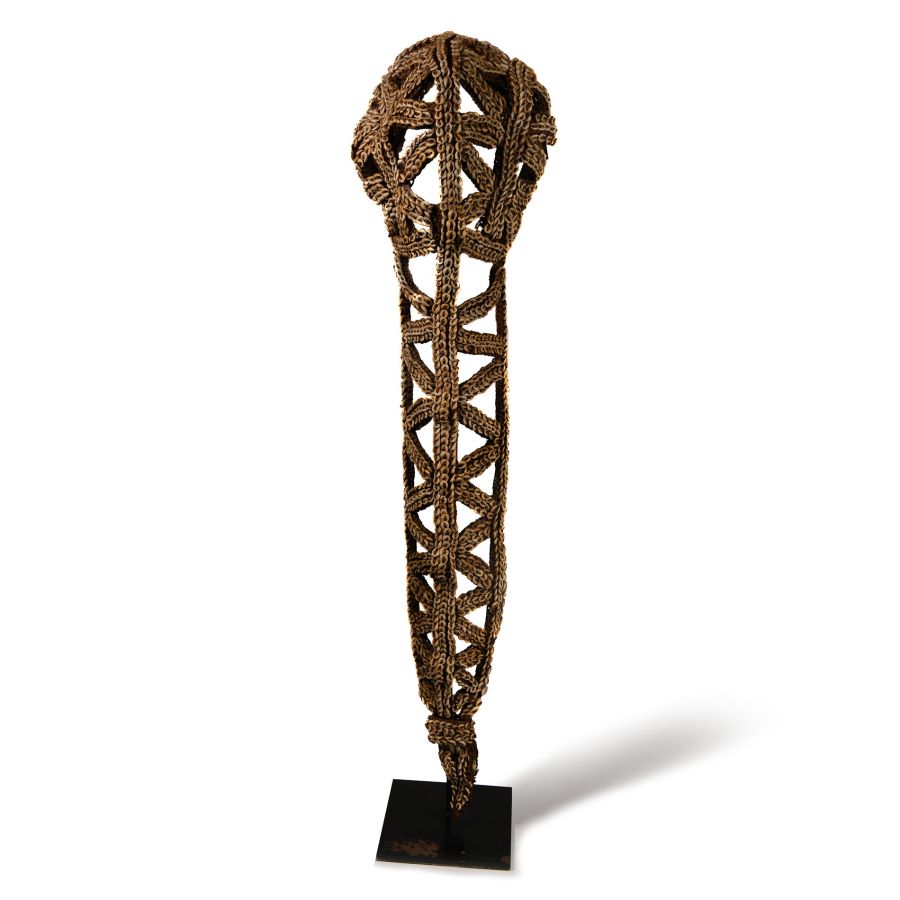
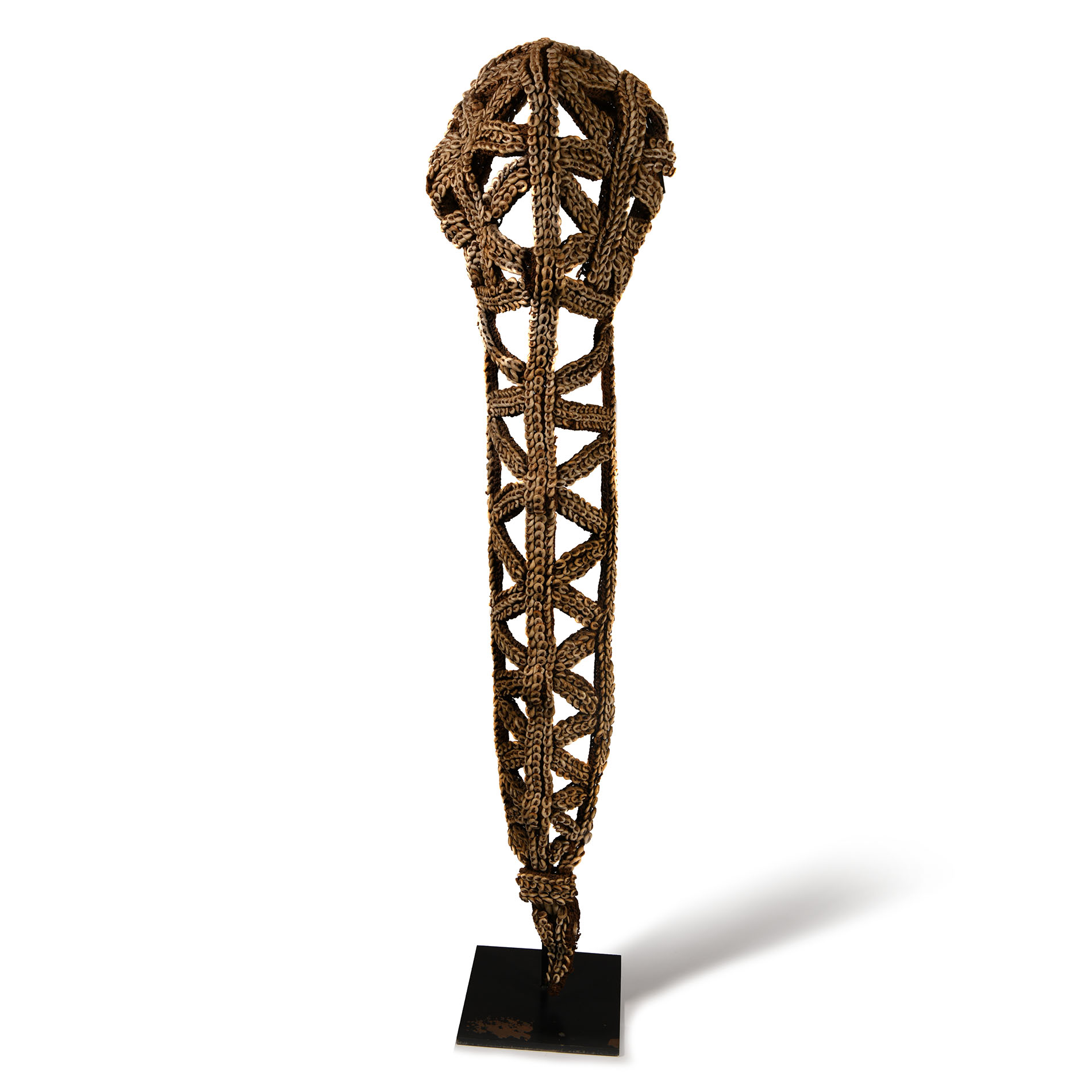
New Guinea Woven Cowrie Marriage Headdress
19TH-20TH CENTURY A.D.
32 1/2 in. (2 kg total, 82 cm including stand).
A long open ambuusap of closely woven fibre cords with small cowrie shells sewn to the outer surfaces in lines, terminating at the base in a crocodile head; typical of work from the Siakulen Blackwater Lakes region in Sepik Province; with a custom-made display stand. [No Reserve]
ProvenanceAcquired 1970s-1990s.
Ex property of an American gentleman.
Cf. Biebuyck D and Van den Abbeele, N., The Power of Headdresses, Brussels, 1984, p.228, pl.182, for similar and discussion.
FootnotesThese elaborate headdresses were worn by women on ceremonial occasions, such as marriage.
CONDITIONTimeLine Auctions follows a vetting process to ensure the authenticity and legality of all items, reinforcing our commitment to integrity and responsible trading. Each antiquity, antique, and coin lot undergoes thorough examination by a vetting committee of at least ten external specialists, professional trade association members, scientists, and archaeologists: Our Vetting Process
AUCTIONS:
TimeLine is a leading auction house specialising in antiquities, ancient art, collectables, natural history, coins, medals, and books. Our auctions offer museums, collectors, historians, and enthusiasts the opportunity to acquire unique and historically significant pieces.
-
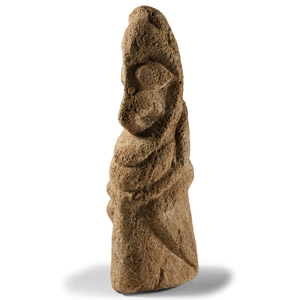
South Pacific Island Malekula Vanuatu Stone Idol
19th century A.D.Sold for (Inc. bp): £247
Modelled in the round sandstone seated figure with exaggerated facial features, arms linked beneath the chin and legs bent to the rear. 746 grams, 19.5 cm
Ex Frank collection, USA. From a collection acquired on the UK art market from various auction houses and collections mostly before 2000. From an important Cambridgeshire estate; thence by descent. Accompanied by an old identification tag. -
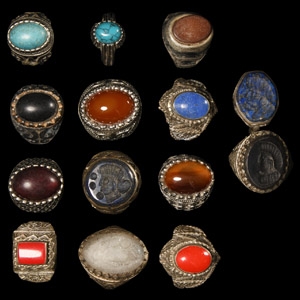
Bedouin Ring Collection
20th century A.D.Sold for (Inc. bp): £52
Including inset glass cabochons, intaglio human profile busts, and other types. 133 grams total, 26 -33 mm
Ex Paris collection, early 20th century. -
.jpg)
West African Carved Wooden Baule Figure Pair
20th century A.D.Sold for (Inc. bp): £52
Free-standing male and female figure, carved in the round standing naked albeit for their sandaled feet and engraved representations of body art. 2.7 kg total, 50 cm high each
Ex late Walter Steinberg collection. Property of a lady, by inheritance.
