Loading, please wait...

Use mousewheel to zoom in and out, click to enlarge

Details

LOT 2393

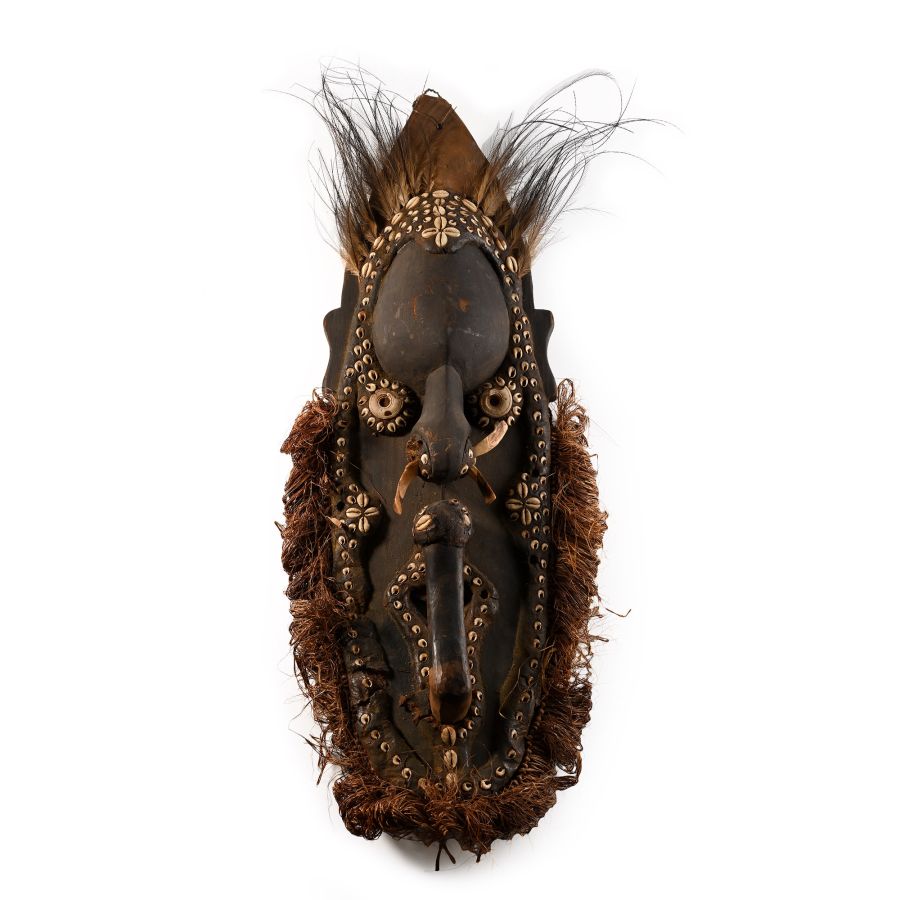
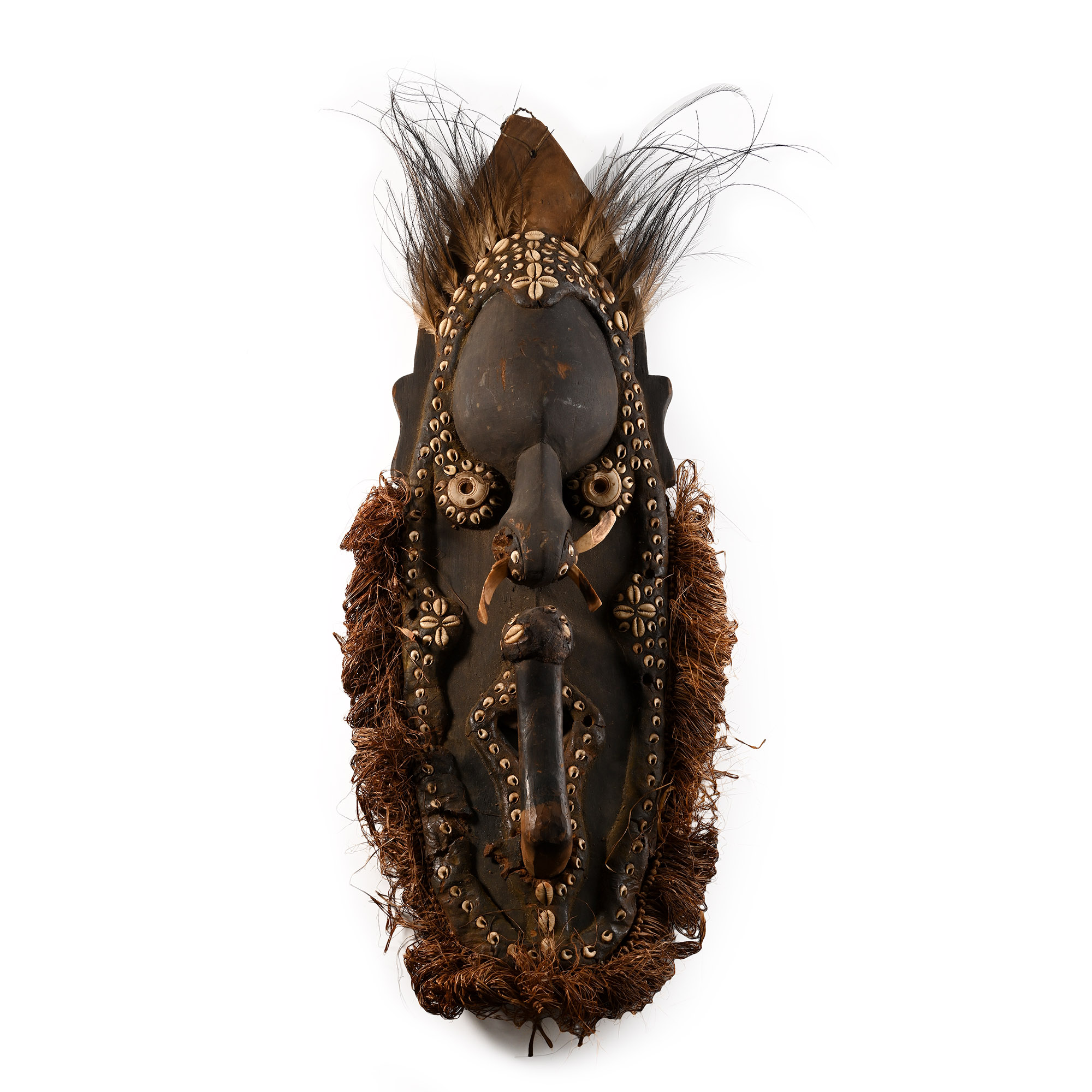
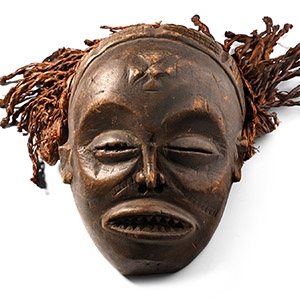
New Guinea Wooden House Mask

PAPUAN, EARLY-MID 20TH CENTURY A.D.

25 1/4 in. (1.55 kg, 64 cm).

Carved as an elongated face with feather headdress, inlaid with cowrie shells and with hog tusks to the nose; grip handle in front of the mouth. [No Reserve]

Provenance

Ex Bury St Edmunds, UK, ethnographical collection.
From the property of a late Lincolnshire, UK, gentleman.

CONDITION

VETTING:

TimeLine Auctions follows a vetting process to ensure the authenticity and legality of all items, reinforcing our commitment to integrity and responsible trading. Each antiquity, antique, and coin lot undergoes thorough examination by a vetting committee of at least ten external specialists, professional trade association members, scientists, and archaeologists: Our Vetting Process


AUCTIONS:

TimeLine is a leading auction house specialising in antiquities, ancient art, collectables, natural history, coins, medals, and books. Our auctions offer museums, collectors, historians, and enthusiasts the opportunity to acquire unique and historically significant pieces.

LOT 2393

New Guinea Wooden House Mask

Sold for (Inc. bp): £52

Print page

RELATED LOTS

  • West African Squatting Stone Figure Pair
    West African Squatting Stone Figure Pair
    Kissi Tribe, early 20th century A.D.

    Sold for (Inc. bp): £7

    Carved stone statues (twins) from Sierra Leone; two steatite anthropomorphic carvings, one male and one female, both with hands wrapped around the knees. 2.55 kg total, 20-23.5 cm


    From Sierra Lione, West Africa. From an old Norwich, UK, collection. From the property of a late Lincolnshire, UK, gentleman.

    The Kissi as early as the 15th century, revered soapstone (steatite) anthropomorphic carvings, which are found in fields and rivers in the area centered around Sewa and Mano rivers. The Kissi people call them Pomdo (Pombo), which mean "the deceased". Some of their carvings are extremely old. These statues were the abodes of the spirits of their ancestors. In order to find out which ancestor a statue represented; a man’s dreams were analyzed with the help of the diviner. At festivities the statue was wrapped in cotton upon which sacrificial blood had been poured. The owner (the guardian of the statue) placed it on the family altar; hence it was thought to be the family’s protector against sickness. It was also consulted before a new undertaking was planned. The statues were believed to have supernatural power and were used in rice cultivation. Remarkably, the descendants of the Kissi people still keep up the tradition of stone carving.

    Lot Details

  • African Wooden Ceremonial Face Mask
    African Wooden Ceremonial Face Mask
    Lega Warega Tribe, early 20th century A.D.

    Sold for (Inc. bp): £221

    Hollow to the rear with protruding bosses for the eyes, applied fabric to lower edge. 181 grams, 22.1 cm


    From Democratic Republic of the Congo, Central Africa. From the Estate of Dr J Bynon; acquired 30 July 1911. From the property of a late Lincolnshire, UK, gentleman.

    Most Lega masks are sculptures of a human face that are rarely worn over the face and never for purposes of true transformation. The Lega masks can be assigned different uses and meanings depending on the context of the performance. In Bwami ceremonies, masks are attached to different parts of the body, fixed to hat, piled in stacks, hung on fences, held in the hand, dragged on the ground, and occasionally worn on the forehead with the beard draping over the face of the wearer or arranged on a miniature palisade. Participants in most rites display their masks as a group in conjunction with particular dance movements and aphorisms, which vary depending on the context in which they are used. Lega masks differ from those used in many other African masquerades in that while women do not own them, both men and women handle and present them in very similar performances. Masks are among the initiation objects displayed on the grave before being passed to new owners. They are usually passed from an uncle to a nephew.

    Lot Details

  • African Wooden Akuaba Doll Fertility Figure
    African Wooden 'Akuaba Doll' Fertility Figure
    Ashanti Tribe, 20th century A.D.

    Sold for (Inc. bp): £33

    Carved from dark-coloured, lightweight wood in traditional form and dyed dark brown with large, round head with a plain hairstyle, large eyes and zig-zag lines beneath, extending down the back and abdomen representing the typical tribal scarification marks. 250 grams, 30.5 cm


    From Ghana, West Africa. Ex private collection of Mr.N.J., Leicester, UK. From the property of a late Lincolnshire, UK, gentleman.

    Among the Ashanti people in Ghana, women hoping for offspring carry these ‘Akuaba dolls’ in their clothes. Traditionally, these ‘Akuaba’ have a large, round, flat head that is reminiscent of its origin as a representation of the moon goddess, which is associated with fertility. Once the ‘Akuaba’ figure has fulfilled its purpose, the mother of the desired child places it on her domestic altar, where it is worshipped in a shrine, or she passes it on to the next generation.

    Lot Details

Stay up-to-date with the latest from TimeLine Auctions by joining our mailing list