
Loading, please wait...
LOT 1981
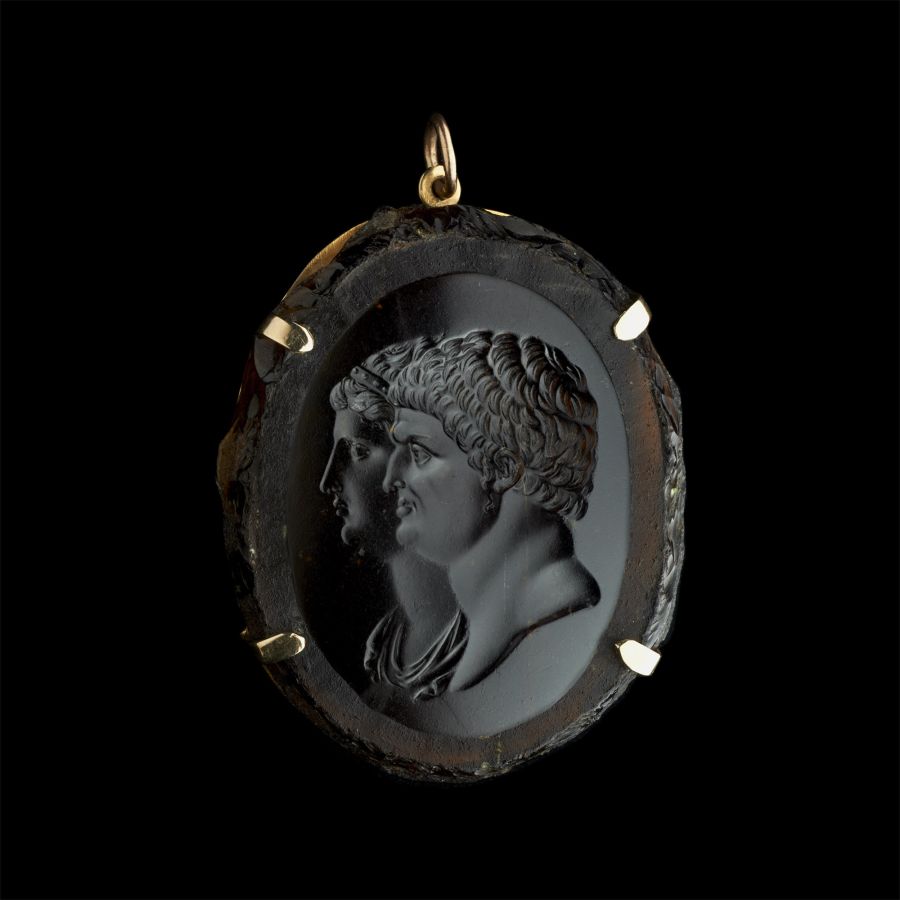
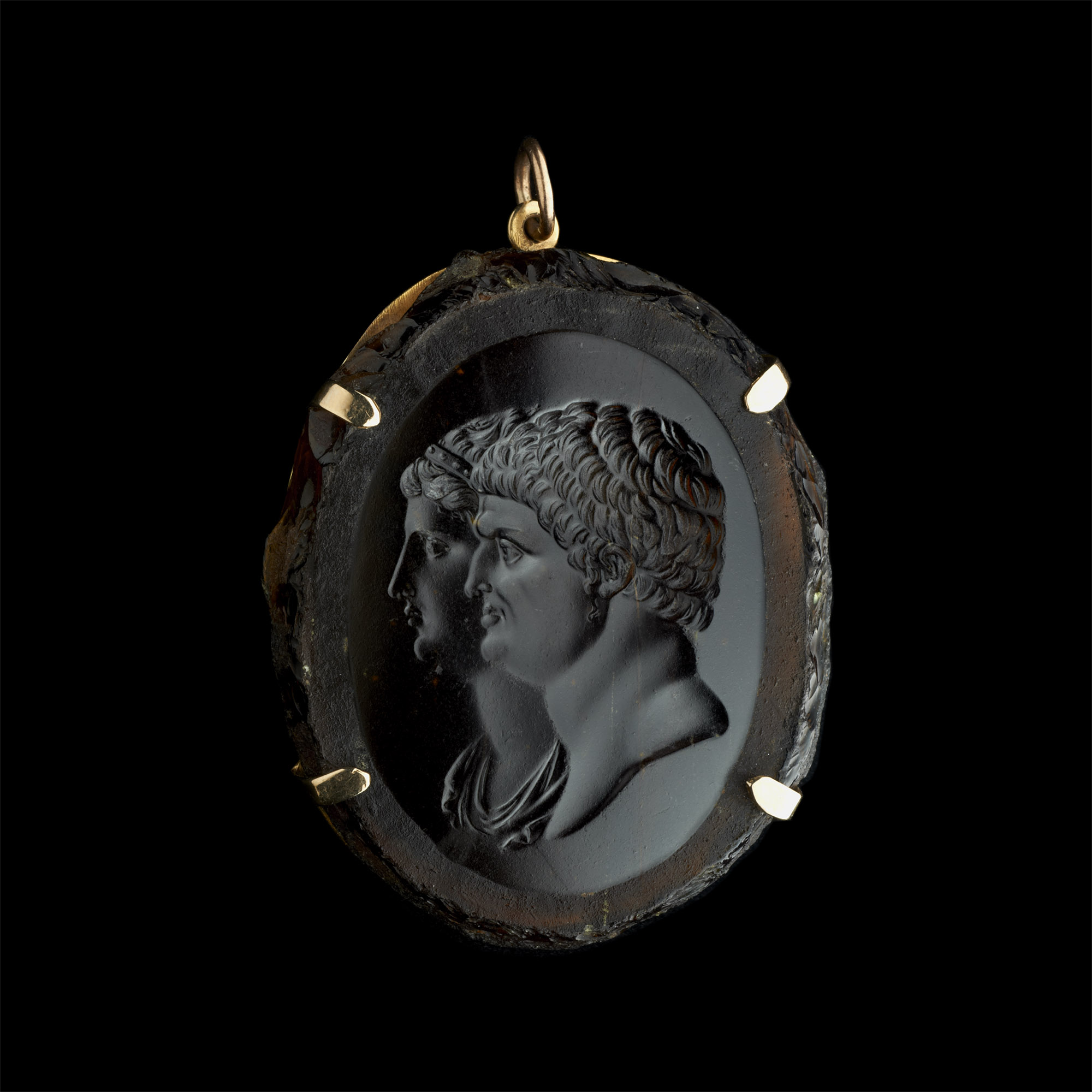
Neoclassical Glass Oval with Jugate Busts in Gold Pendant
CIRCA 1800 A.D.
2 3/8 in. (36.8 grams, 61 mm).
The oval with pounced surface, slightly domed panel with profile male and female busts; set in a gold frame with suspension loop. [No Reserve]
ProvenancePrivate collection, England.
CONDITIONTimeLine Auctions follows a vetting process to ensure the authenticity and legality of all items, reinforcing our commitment to integrity and responsible trading. Each antiquity, antique, and coin lot undergoes thorough examination by a vetting committee of at least ten external specialists, professional trade association members, scientists, and archaeologists: Our Vetting Process
AUCTIONS:
TimeLine is a leading auction house specialising in antiquities, ancient art, collectables, natural history, coins, medals, and books. Our auctions offer museums, collectors, historians, and enthusiasts the opportunity to acquire unique and historically significant pieces.
LOT 1981
Neoclassical Glass Oval with Jugate Busts in Gold Pendant
Sold for (Inc. bp): £182
-
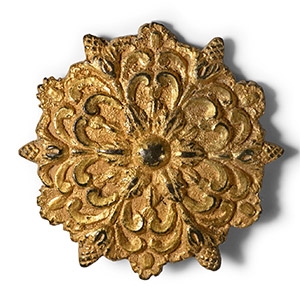
Tudor Period Gilt Bronze Mount with Acorns
16th-17th century A.D.Sold for (Inc. bp): £65
Slightly domed profile, central floral motif with radiating foliate scrolls, six acorns to the outer edge. 26.9 grams, 48 mm
Ex German art market, 2000s. Acquired from an EU collector living in London. From the collection of Surrey, UK, gentleman. -
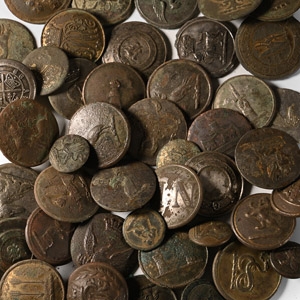
Post Medieval Bronze Military and Other Button Collection
18th-20th century A.D.Sold for (Inc. bp): £39
Including types with heraldic animals, initials, heater shields and others; many of these objects are published in the Detector Finds book series as well as Buttons & Fasteners 500BC-1840AD. 246 grams total,15-28 mm
From the collection of the famous author, writer and speaker, Gordon Bailey, Essex, UK; formed since 1968. -
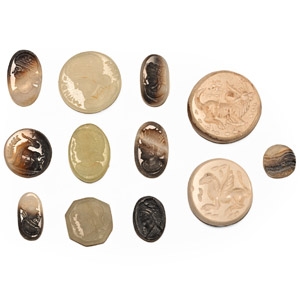
Gemstone Collection
20th century AD.Sold for (Inc. bp): £13
Mainly discoid and ellipsoid cloisons with intaglio designs including mythical beast, profile bust and other types. 17 grams total, 9-21 mm
Acquired on the UK art market. Property of a North London, UK, gentleman.
