
Loading, please wait...
LOT 2043
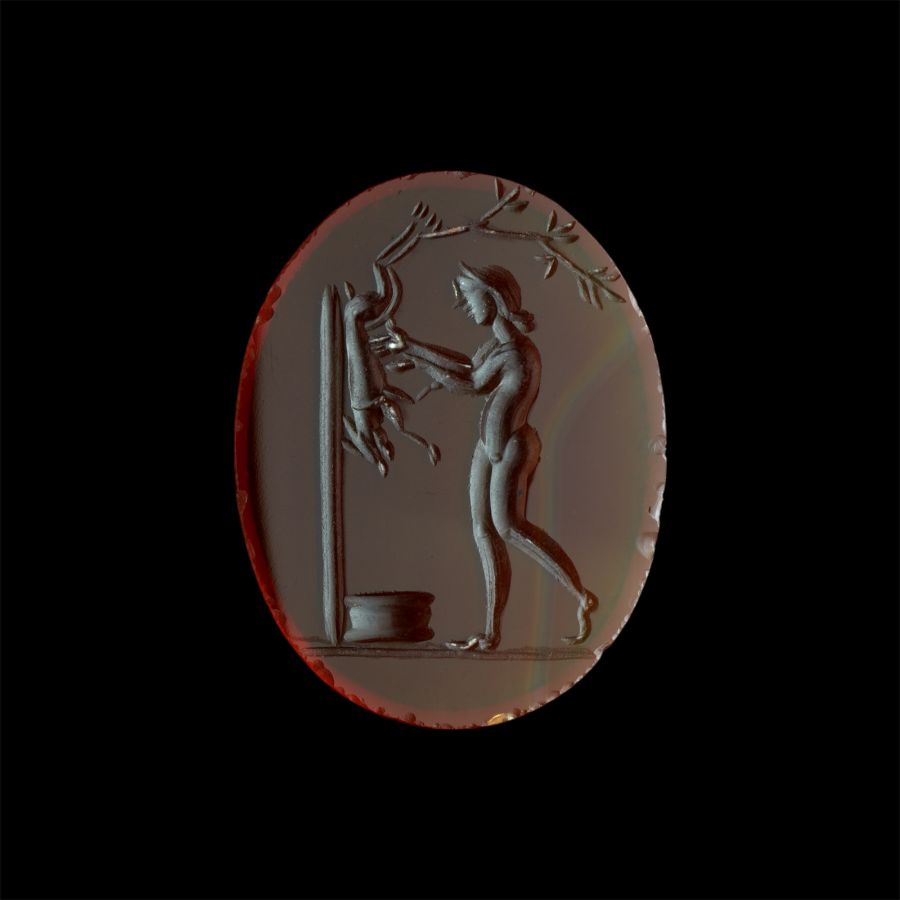
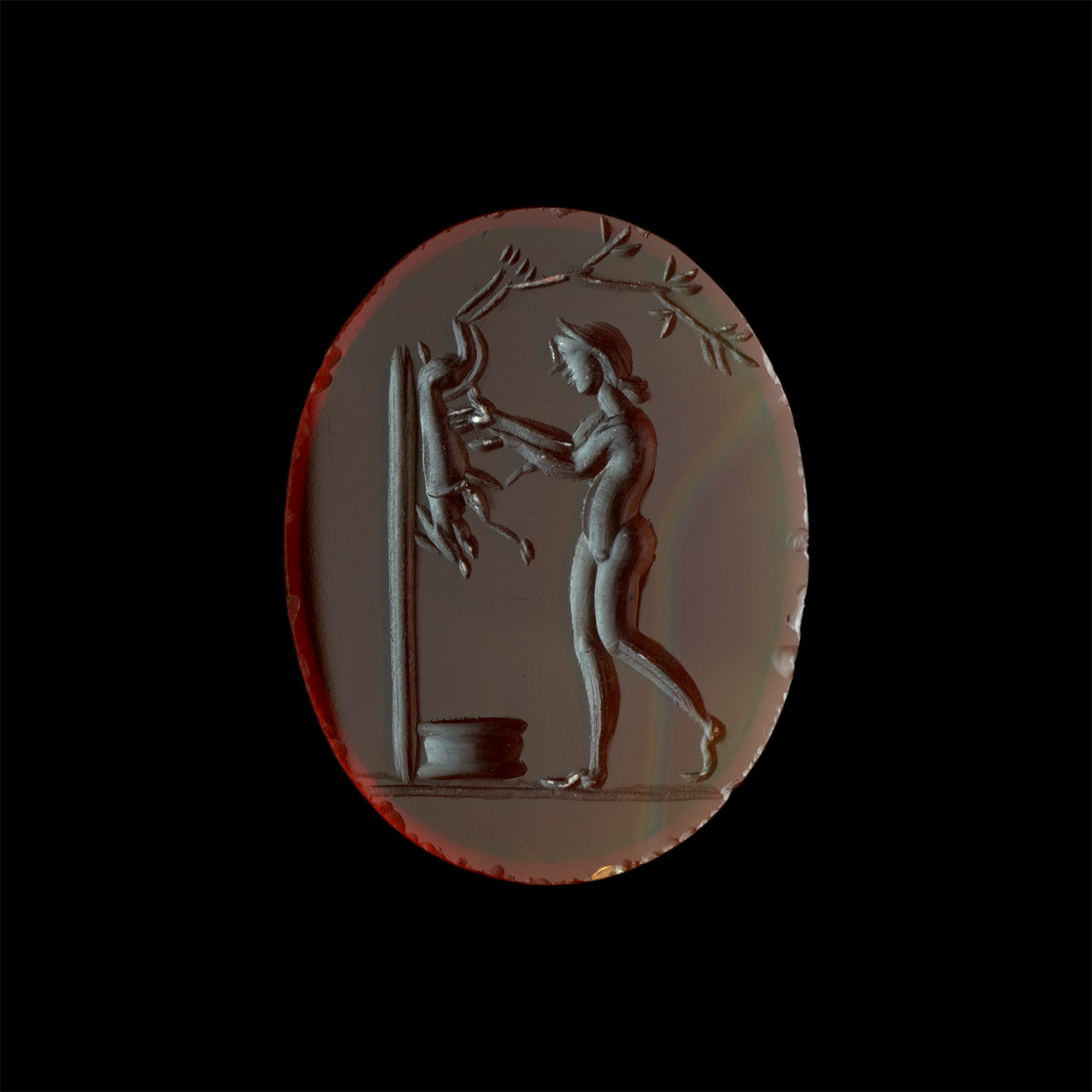
Neoclassical Carnelian Gemstone with Naked Goddess
18TH-19TH CENTURY A.D.
1 in. (1.47 grams, 25 mm).
Ellipsoid panel with nude female supporting an inverted dog over a libation bowl, frond above; supplied with a museum-quality impression. [No Reserve]
ProvenancePrivate collection, England.
CONDITIONTimeLine Auctions follows a vetting process to ensure the authenticity and legality of all items, reinforcing our commitment to integrity and responsible trading. Each antiquity, antique, and coin lot undergoes thorough examination by a vetting committee of at least ten external specialists, professional trade association members, scientists, and archaeologists: Our Vetting Process
AUCTIONS:
TimeLine is a leading auction house specialising in antiquities, ancient art, collectables, natural history, coins, medals, and books. Our auctions offer museums, collectors, historians, and enthusiasts the opportunity to acquire unique and historically significant pieces.
-

Commonwealth Vellum Document
Dated 1654 A.D.Sold for (Inc. bp): £91
Relating to a tenement lease relating to a messuage, cottage, and other appurtenances. 12 grams, 40 cm
UK gallery, early 2000s. -

Post Medieval Iron Artefact Display
16th-18th century A.D.Sold for (Inc. bp): £20
Comprising: a medieval stone mason's chisel; two post medieval foot pattens (17th-18th century A.D.) for an adult and a child, composed of a ring with extended tongue fitted with iron rivets used to secure the ring to a wooden platform; a 16th-17th century two prong fork with handle replacement; mounted on a backing board. 563 grams total, 15-18.5 cm
From the collection of the famous author, writer and speaker, Gordon Bailey, Essex, UK; formed since 1968.
Iron pattens first came into use probably in 17th century A.D., and gained popularity by the first half of this century. The original design of the patten was that of one piece of shaped wood, but this evolved into to a wooden platform attached to the underside of an iron ring. The foot pattens were forerunners of the Wellington boot which came into use in 19th century A.D. -

Tudor Bronze Spoon with Rose Maker's Mark
16th century A.D.Sold for (Inc. bp): £124
With flat oval cross-section stem, tapering very slightly from the bowl and ending in a simple ball seal knop; a maker's mark in the form of a Tudor rose within a circular border stamped within the bowl, adjacent to the stem. 48 grams, 17 cm
From the collection of the famous author, writer and speaker, Gordon Bailey, Essex, UK; formed since 1968.
Spoons with this type of knop date from the 16th century A.D. The knop, when bearing an owner's initial, could be used as a seal. The bronze spoons of the Tudor era were inexpensive and not mentioned in wills, but if silvered or in silver they were often listed among their owner’s property.
