
Loading, please wait...


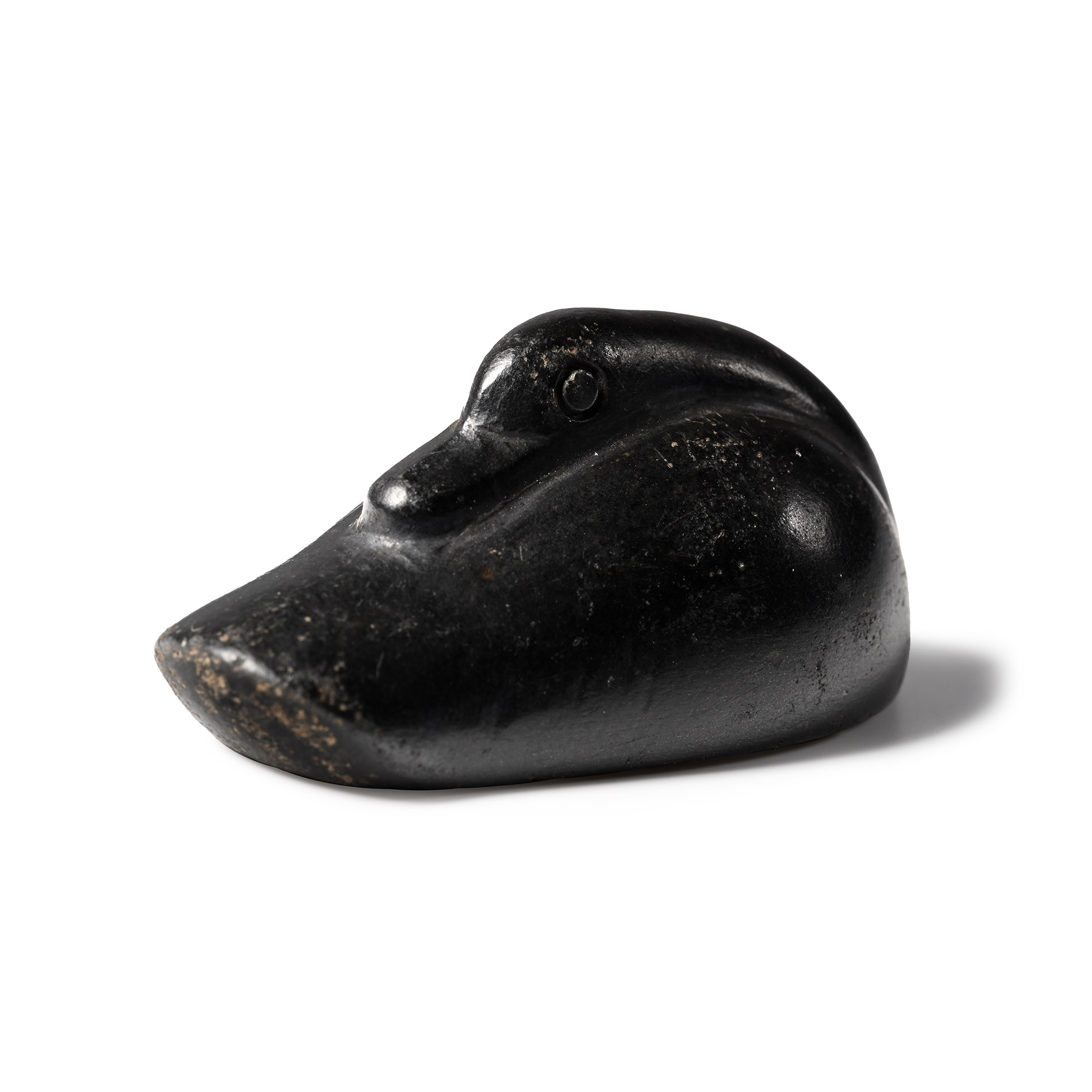
LOT 0261
Neo Babylonian Stone Duck Weight
7TH-6TH CENTURY B.C.
1 1/2 in. (18 grams, 37 mm).
Modelled in the round with the head resting along the spine.
ProvenanceCollected from 1970-1999.
From the collection of the late Mr S.M., London, UK.
Cf. Kozloff, A.P., Animals in Ancient Art, from the Leo Mildenberg collection, Cleveland, 1981, fig.12bis.
CONDITIONTimeLine Auctions follows a vetting process to ensure the authenticity and legality of all items, reinforcing our commitment to integrity and responsible trading. Each antiquity, antique, and coin lot undergoes thorough examination by a vetting committee of at least ten external specialists, professional trade association members, scientists, and archaeologists: Our Vetting Process
AUCTIONS:
TimeLine is a leading auction house specialising in antiquities, ancient art, collectables, natural history, coins, medals, and books. Our auctions offer museums, collectors, historians, and enthusiasts the opportunity to acquire unique and historically significant pieces.
-
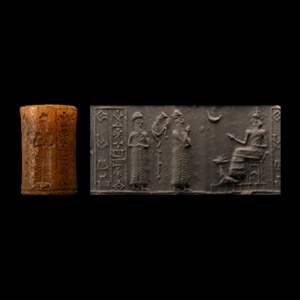
Akkadian Alabaster Cylinder Seal of Kiruzum (or Hurruzum), Servant of (the Goddess) Ninsianna
Late 3rd-early 2nd millennium B.C.Sold for (Inc. bp): £2,340
With frieze depicting a throne-room scene, seated king in tiered robe confronted by two robed supplicants with an altar and idol, two columns of cuneiform text; supplied with a museum-quality impression. 42 grams, 38 mm
From the 'S' collection, acquired 1970-1990s. The collection was seen and studied by W.G. Lambert, late Professor of Assyriology at the University of Birmingham, 1970-1993. This lot has been checked against the Interpol Database of stolen works of art and is accompanied by search certificate number no.12245-222160. -
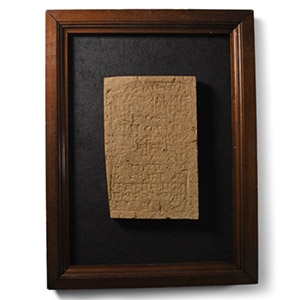
Temple Brick Section of Nebuchadnezzar II, King of Babylon
Circa 604-562 B.C.Sold for (Inc. bp): £1,560
A rectangular section with fourteen columns of cuneiform text mentioning the foundation of a temple by Nebuchadnezzar II, translating as 'King of Babylon provisioner of Esagil and Ezida prime son of Nabopolassar, King of Babylon and Ebabbara, the temple of Shamash in Larsa..[...]'; mounted in a custom-made velvet lined display frame. 1.5 kg, 31 x 41.2 cm
From a collection acquired on the UK art market from various auction houses and collections, mostly before 2000. From an important Cambridgeshire estate; thence by descent. This lot has been checked against the Interpol Database of stolen works of art and is accompanied by search certificate number no.12340-214698.
The construction of the Hanging Gardens of Babylon and the destruction of Jerusalem's temple are ascribed to Nebuchadnezzar II. He is featured in the Book of Daniel and is mentioned in several other books of the Bible. -
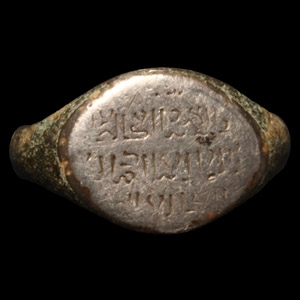
Western Asiatic Silver and Bronze Epigraphic Charm Ring
13th-14th century A.D.Sold for (Inc. bp): £65
Comprising a slender bronze hoop expanding at the shoulders, silver intaglio with an inscription in three lines. 1.56 grams, 17.76 mm overall, 15.90 mm internal diameter (approximate size British D, USA 1 3/4, Europe 1.15, Japan 1)
Acquired 1980-2015. Ex Abelita family collection.
