
Loading, please wait...
LOT 1280
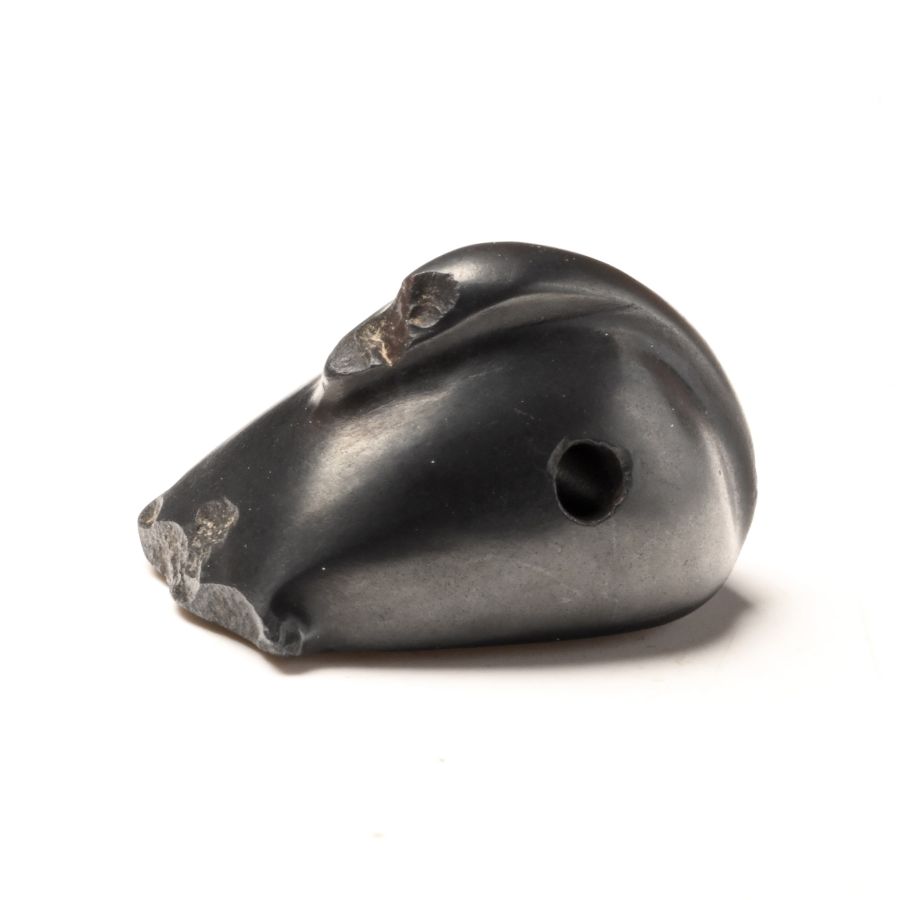
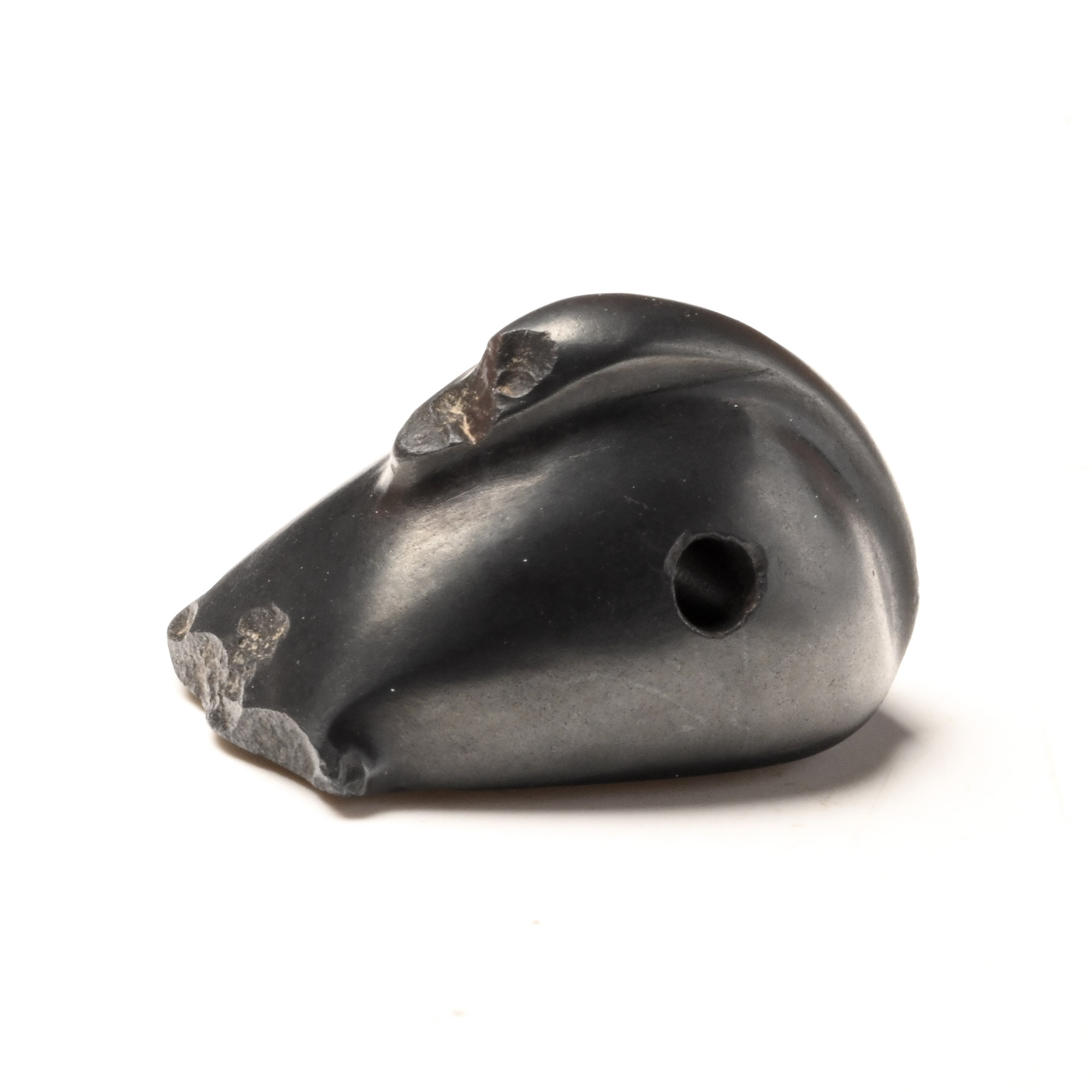
Neo Babylonian Haematite Duck Weight
7TH-6TH CENTURY B.C.
3/4 in. (6.45 grams, 20 mm).
Formed as a duck, with head turned towards the tail. [No Reserve]
ProvenanceEx Simmons Gallery, 1990s.
Ex London, UK, collection.
TimeLine Auctions follows a vetting process to ensure the authenticity and legality of all items, reinforcing our commitment to integrity and responsible trading. Each antiquity, antique, and coin lot undergoes thorough examination by a vetting committee of at least ten external specialists, professional trade association members, scientists, and archaeologists: Our Vetting Process
AUCTIONS:
TimeLine is a leading auction house specialising in antiquities, ancient art, collectables, natural history, coins, medals, and books. Our auctions offer museums, collectors, historians, and enthusiasts the opportunity to acquire unique and historically significant pieces.
-
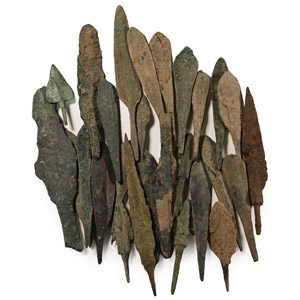
Western Asiatic Bronze Arrowhead Collection
18th-7th century B.C.Sold for (Inc. bp): £117
Including triangular, leaf-shaped, barbed, paddle-shaped arrowheads with a flat, comparatively wide mid-rib, and others. 205 grams total, 37-93 mm
Ex London art market, 1980-1990s. This lot has been cleared against the Art Loss Register database, and is accompanied by an illustrated lot declaration signed by the Head of the Antiquities Department, Dr Raffaele D'Amato.
Fourteen arrowheads of this group were typical of the Old Babylonian Empire. The shoulders were pronounced and the arrowhead had a rectangular-section tapering tang. This simple form was popular across the ancient Near East, and similar items have been found in the Holy Land. -
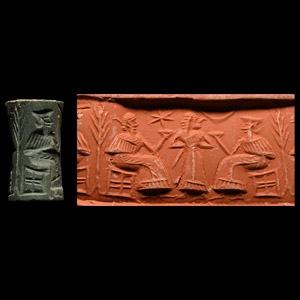
Akkadian Green Jasper Cylinder Seal with Seated Figures
Circa 2300-2200 B.C.Sold for (Inc. bp): £749
Showing a divine drinking scene; accompanied by a museum quality impression and a copy of an old scholarly note, typed and signed by W.G. Lambert, late Professor of Assyriology, University of Birmingham, 1970-1993, which states: 'Cylinder Seal of Green Jasper, 23 x 13 mm. Two seated figures face each other. On the right is a male, wearing a flat cap on his head, and a long robe to the feet with a deep fringe at the bottom. He is holding up a flat cup. The figure on the left is female, bare-headed, but wearing a similar long garment with fringe at the bottom, alos a fringe where the fabric overlaps from the waist down. Both figures hold up the same type of cup. Between them stands a servant, in a similar long robe and with bare head, holding a mace at the waist. In the sky there is a star and lunar crescent. A tall slender tree serves as a terminal. This is a Akkadian seal, c. 2300-2200 B.C., from Mesopotamia or a neighbouring region. In view of the flat cap on the male the figures are no doubt divine, and this is then a divine drinking scene. This seal is in excellent state of preservation.' 6.31 grams, 23 mm
From the private collection of a North American lady, formed 1970s-early 1990s, with collection reference no.P18. Accompanied by a copy of a scholarly note, typed and signed by Professor Wilfrid George Lambert in August 1992 and an old photograph. -
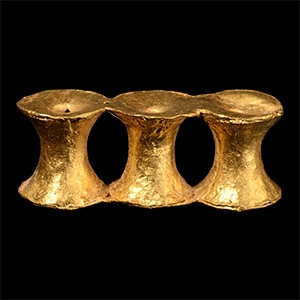
Western Asiatic Spool-Shaped Gold Beads
Late 2nd-1st millennium B.C.Sold for (Inc. bp): £208
Group of three spool-shaped elements, each pierced longitudinally and forming a spacer bead for a multi-strand necklace. 1.91 grams, 19 mm
From the collection of a late Japanese gentleman, 1970s onwards.
