
Loading, please wait...
LOT 1283
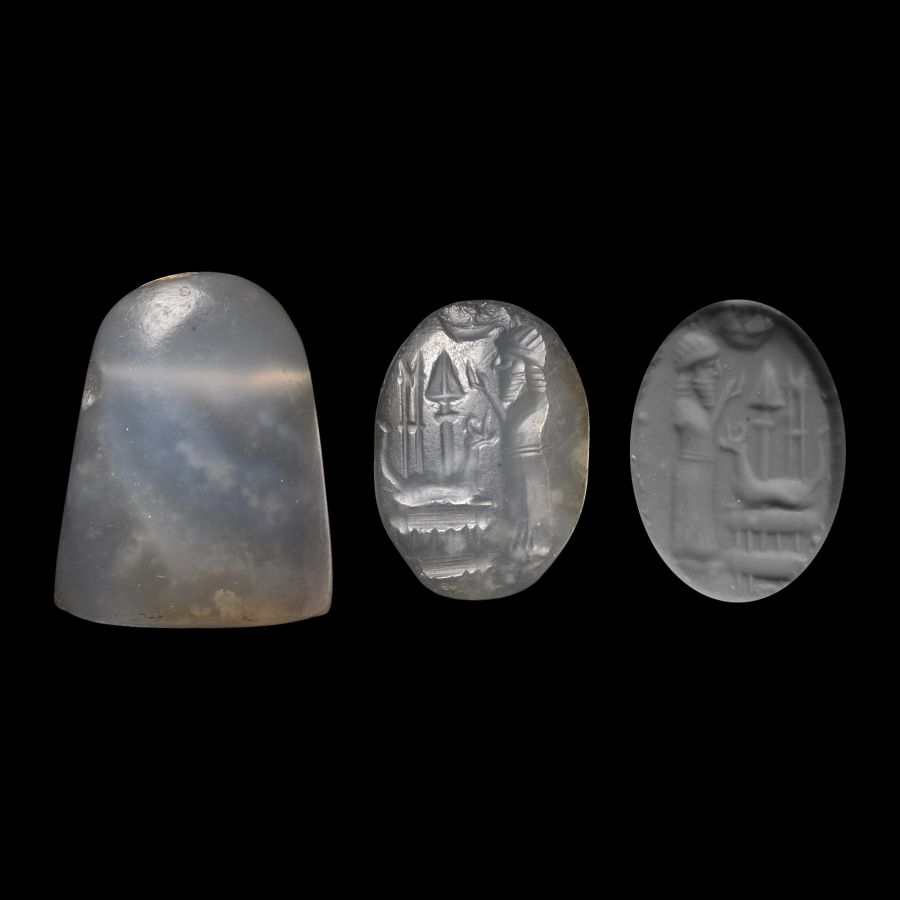
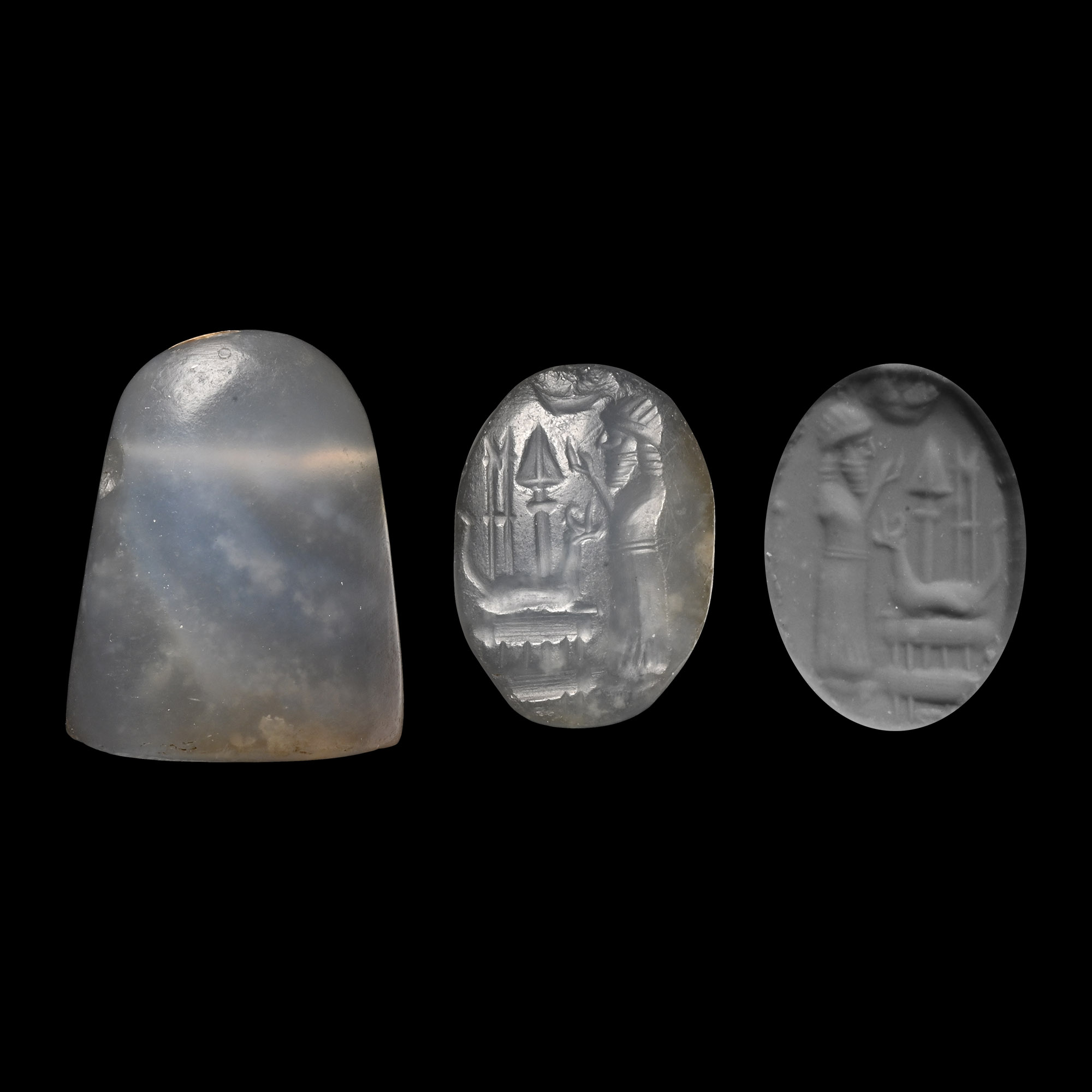
Neo-Babylonian Chalcedony Stamp Seal with King
CIRCA 7TH-6TH CENTURY B.C. OR LATER
1 in. (11.61 grams, 26 mm).
Tongue-shaped in profile with incuse image of a worshipping king before an altar, crescent above.
ProvenanceFrom a collection of a Devonshire, UK, gentleman established from the mid 1990s.
CONDITIONTimeLine Auctions follows a vetting process to ensure the authenticity and legality of all items, reinforcing our commitment to integrity and responsible trading. Each antiquity, antique, and coin lot undergoes thorough examination by a vetting committee of at least ten external specialists, professional trade association members, scientists, and archaeologists: Our Vetting Process
AUCTIONS:
TimeLine is a leading auction house specialising in antiquities, ancient art, collectables, natural history, coins, medals, and books. Our auctions offer museums, collectors, historians, and enthusiasts the opportunity to acquire unique and historically significant pieces.
-
.jpg)
Western Asiatic Black Stone Kohl Pot with Geometric Design
2nd millennium B.C. or laterSold for (Inc. bp): £169
Bifacial with suspension loops and three tubular chambers, both broad faces with incised geometric pattern of squares and chevrons in a grid. 173 grams, 77 mm
Acquired 1970s-1996. Property of a North American collector. London collection, 2016. -
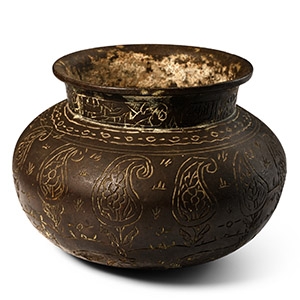
Western Asiatic Bronze Jar with Incised Decoration
Circa 19th century A.D.Sold for (Inc. bp): £72
Squat with broad rounded base, narrow neck and flared mouth; incised decoration including calligraphic text, annulets in a band, freehand image of a wolf attacking a deer. 605 grams, 12.7 cm
Believed to have been in the collection of George Adolphus Gray (c.1850), Captain of a merchant vessel and avid collector. Acquired by the present owner circa 15 years ago, reportedly recovered from a skip. -
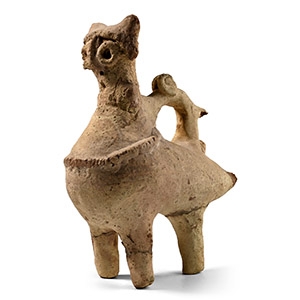
Western Asiatic Painted Bird Vessel
8th-9th century A.D.Estimate: £200 - 300 (+bp*)
Opening Bid: £100
Hollow-formed piriform body with three columnar legs, strap handle with applied detailing and applied collar, tapering neck and strigine head with applied loops to the eyes. 442 grams, 17 cm high
UK collection, 1990s. Acquired on the UK art market, before 2000. Private collection, Mr M.V., a London-based businessman.
