
Loading, please wait...
LOT 1393
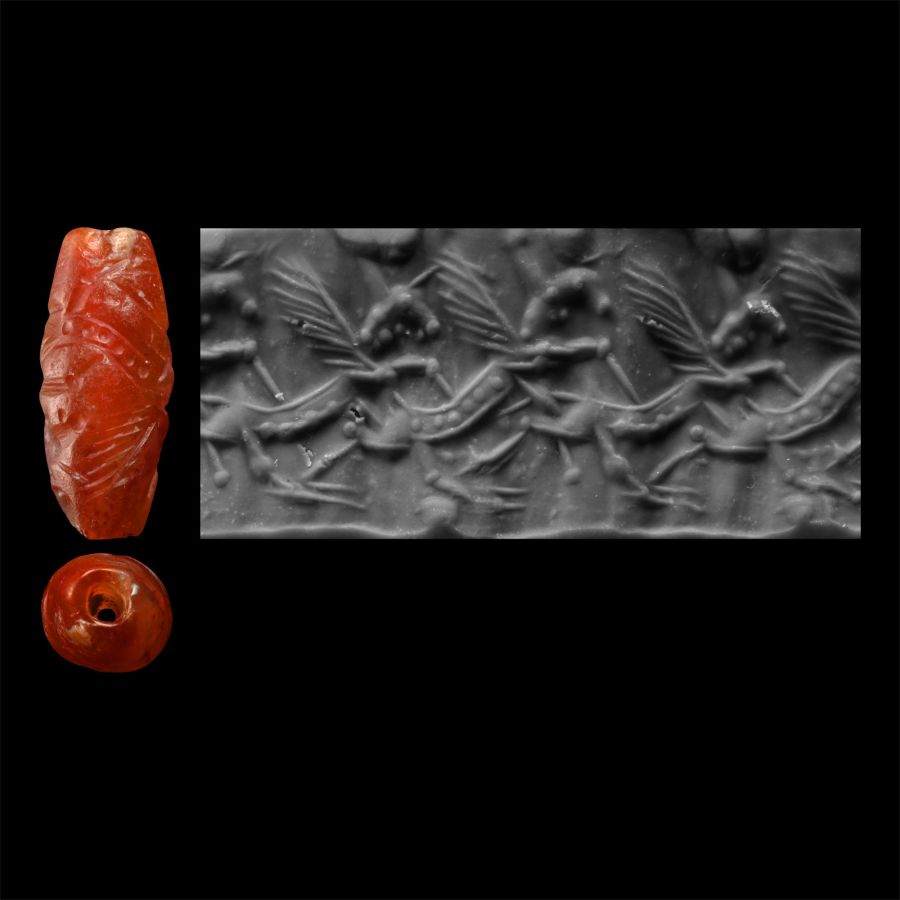
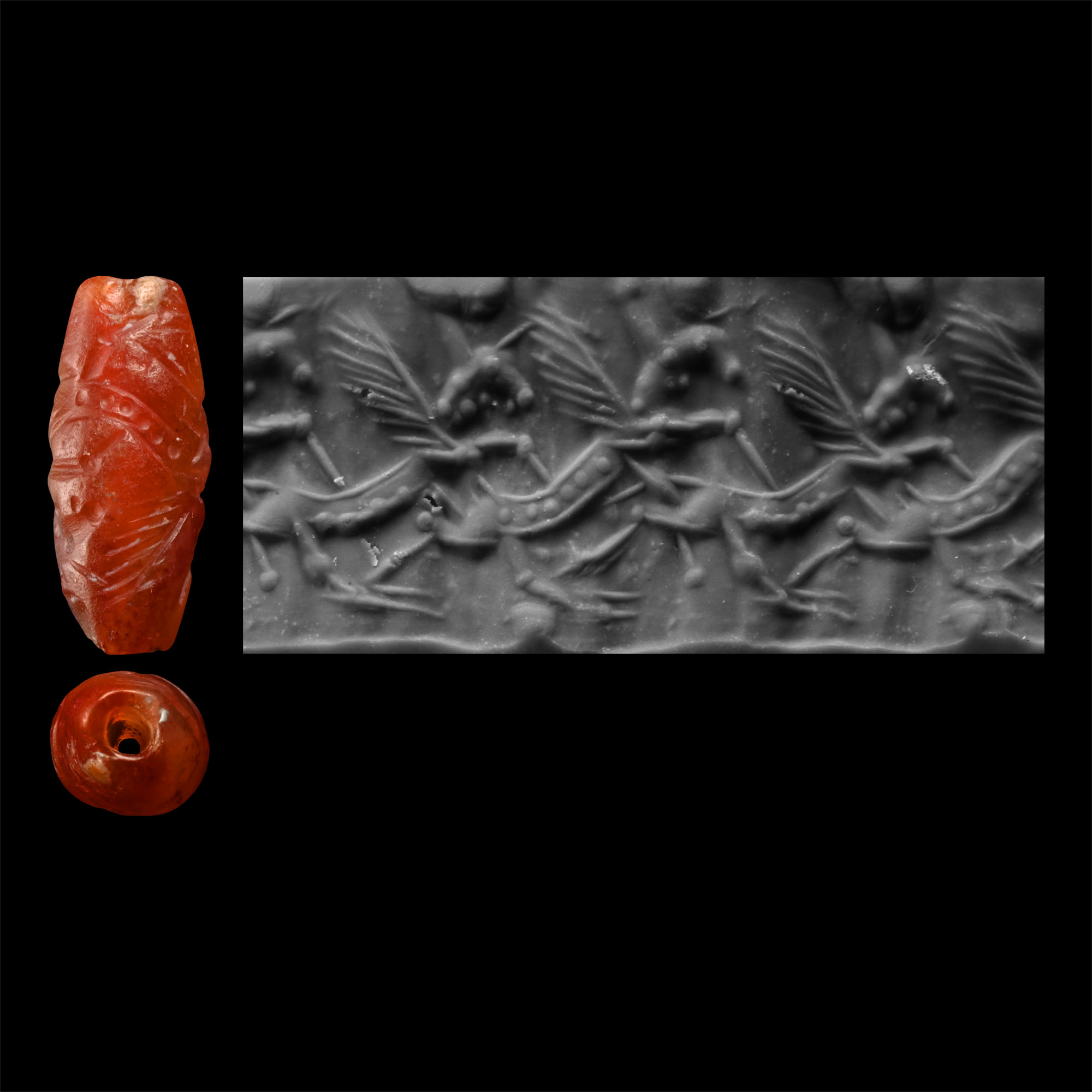
Neo-Babylonian Carnelian Cylinder Seal with Two Winged Quadrupeds
CIRCA 900-750 B.C.
3/4 in. (3.18 grams, 19 mm).
Cylinder with cord and bead handles; accompanied by a copy of an old scholarly note, typed and signed by W.G. Lambert, late Professor of Assyriology, University of Birmingham, 1970-1993, which states: 'Cylinder Seal of Carnelian 19 x 8.5 mm, The scene shows two winged quadrupeds in a frieze. Each has the body of a bull, but with wings. Each is running and the front part of the body is reared up, overlapping the one in front. It is meant as a scene of one animal chasing the other. The seal is engraved mainly with the cutting wheel, but there are dots along the animals' bodies and at other points down with the drill. The seal is convex in shape, like a bead. This is a seal in the Neo-Babylonian style, c. 900-750 B.C., though examples have been found both in Babylonia and in south-west Iran. It is in very good condition and is an attractive piece.'; supplied with a museum-quality impression. [No Reserve]
ProvenanceUK private collection, acquired 1980-1983.
Accompanied by a copy of a scholarly note, typed and signed by Professor Wilfrid George Lambert in May 1992.
This lot has been cleared against the Art Loss Register database, and is accompanied by an illustrated lot declaration signed by the Head of the Antiquities Department, Dr Raffaele D'Amato.
TimeLine Auctions follows a vetting process to ensure the authenticity and legality of all items, reinforcing our commitment to integrity and responsible trading. Each antiquity, antique, and coin lot undergoes thorough examination by a vetting committee of at least ten external specialists, professional trade association members, scientists, and archaeologists: Our Vetting Process
AUCTIONS:
TimeLine is a leading auction house specialising in antiquities, ancient art, collectables, natural history, coins, medals, and books. Our auctions offer museums, collectors, historians, and enthusiasts the opportunity to acquire unique and historically significant pieces.
LOT 1393
Neo-Babylonian Carnelian Cylinder Seal with Two Winged Quadrupeds
Sold for (Inc. bp): £520
-
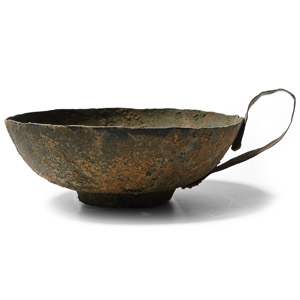
Achaemenid Bronze Handled Cup
6th-4th century B.C.Estimate: £100 - 140 (+bp*)
Opening Bid: £50
Comprising a wide shallow body with repoussé foot and separately applied strap handle. 50 grams, 12.6 cm
Acquired 1980-2015. Ex Abelita family collection. This lot has been cleared against the Art Loss Register database, and is accompanied by an illustrated lot declaration signed by the Head of the Antiquities Department, Dr Raffaele D'Amato. -
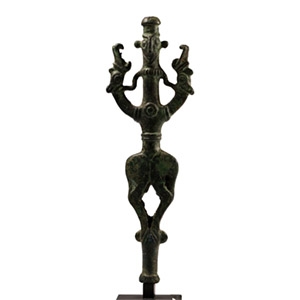
Luristan Bronze Finial with Master of Animals
8th-7th century B.C.Estimate: £1,500 - 2,000 (‡+bp*)
Opening Bid: £675
A bifacial sceptre head formed as a 'Master of Animals' atop a collared tubular stem, comprising two slender crescentic arms representing slender beasts with ridged backs and roaring mouths, each in the grip of the Master standing crowned between them; the Master with tubular body, animal-like ears, prominent nose above a small mouth and wearing a neck ring and domed headdress; mounted on a display stand. 213 grams total, 19.7 cm including stand
Ex Capitaine Patrick Pakenham, Geneva, Switzerland, acquired in the 1960s-1970s, thence by succession. Private collection. This lot has been cleared against the Art Loss Register database, and is accompanied by an illustrated lot declaration signed by the Head of the Antiquities Department, Dr Raffaele D'Amato. -
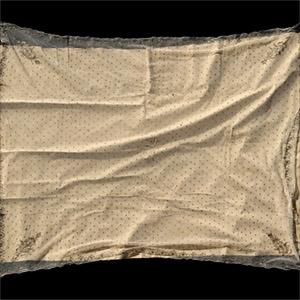
Western Asiatic Textile with Gold Embroidery
19th-20th century A.D.Sold for (Inc. bp): £72
A roughly rectangular netted fabric with embroidered edges, small quatrefoils to the field, and a larger leaf in each corner. 512 grams, 122 x 140 cm
Private collection of a London gentleman, acquired between 1965-2020. This lot has been cleared against the Art Loss Register database, and is accompanied by an illustrated lot declaration signed by the Head of the Antiquities Department, Dr Raffaele D'Amato.
