
Loading, please wait...


LOT 0204
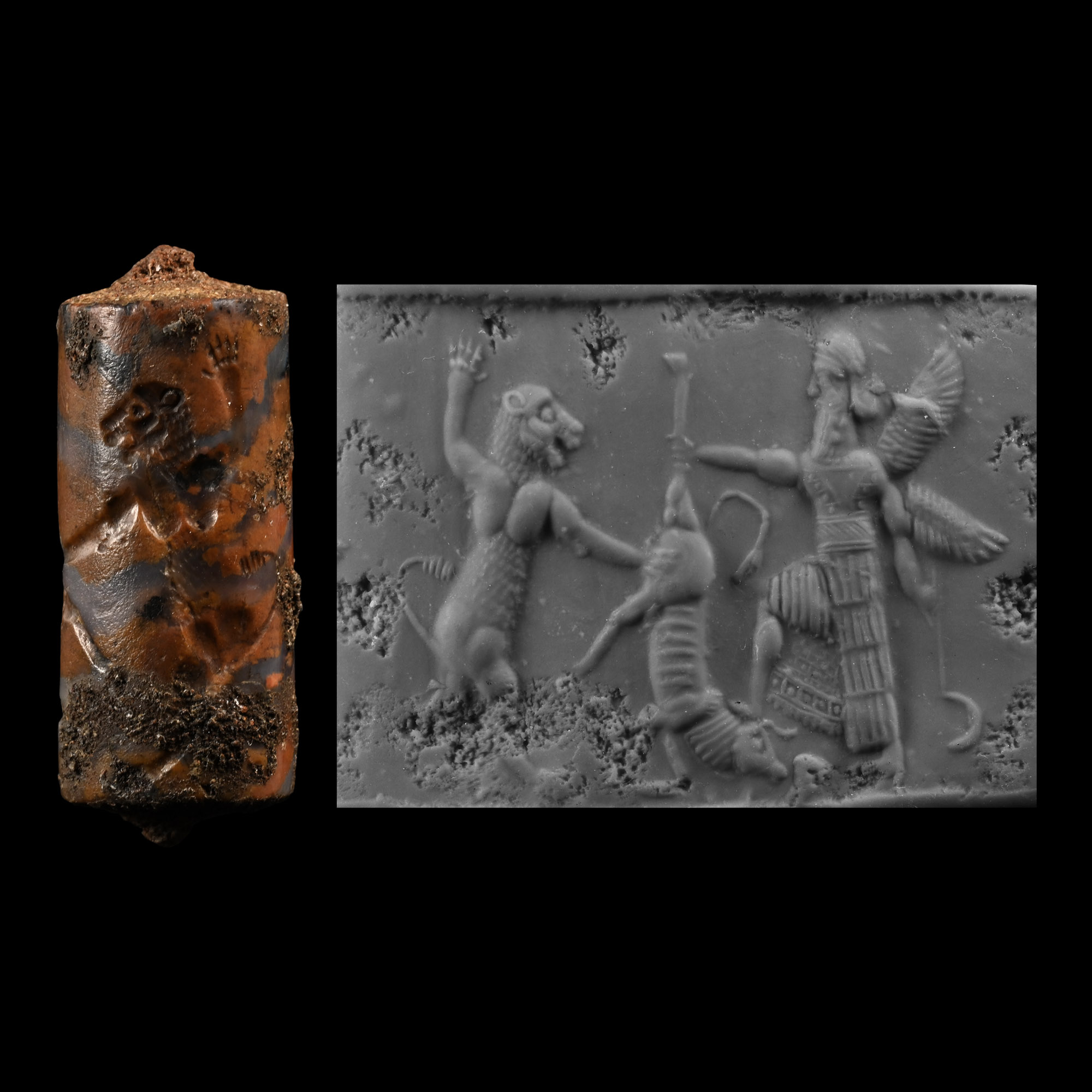
Neo-Babylonian Banded Agate Cylinder Seal with Bull-Man Contest Scene
7TH-6TH CENTURY B.C.
1 1/2 in. (12.6 grams, 36 mm).
Frieze with contest scene, winged divinity in profile grasping the hindleg of a bull while lion raises its foreleg preparing to strike; supplied with a museum-quality impression.
ProvenanceFrom the 'S' collection, acquired 1970-1990s.
The collection was seen and studied by W.G. Lambert, late Professor of Assyriology at the University of Birmingham, 1970-1993.
This lot has been checked against the Interpol Database of stolen works of art and is accompanied by search certificate number no.12250-222162.
Cf. Collon, D., Catalogue of the Western Asiatic Seals in the British Museum. Cylinder Seals V. Neo-Assyrian and Neo-Babylonian Periods, London, 2001, no.321, for another cylinder seal of this period with the very rare contest scene with stag.
CONDITIONTimeLine Auctions follows a vetting process to ensure the authenticity and legality of all items, reinforcing our commitment to integrity and responsible trading. Each antiquity, antique, and coin lot undergoes thorough examination by a vetting committee of at least ten external specialists, professional trade association members, scientists, and archaeologists: Our Vetting Process
AUCTIONS:
TimeLine is a leading auction house specialising in antiquities, ancient art, collectables, natural history, coins, medals, and books. Our auctions offer museums, collectors, historians, and enthusiasts the opportunity to acquire unique and historically significant pieces.
LOT 0204
Neo-Babylonian Banded Agate Cylinder Seal with Bull-Man Contest Scene
Sold for (Inc. bp): £2,340
-
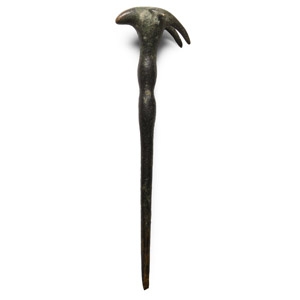
Hasanlu Bronze Pin with Ram's Head Finial
9th-8th century B.C.Sold for (Inc. bp): £130
With a tapering round-section shank, finial topped with a ram's head. 110 grams, 16.5 cm
From the collection of late George Withers, UK. Acquired from Dore and Rees, UK. Property of Mr A.B., an American collector.
The corpus of pins from Hasanlu includes simple plain pins, pins with lion's head and other zoomorphic pins. The zoomorphic pins were either cast onto a bronze shank or the pin was inserted into a hollow of the head. A third category was that of the pins cast in one piece, like our specimen, representing a goat or mouflon, an animal often depicted in the North-West Persian material culture. -
.jpg)
Old Assyrian Haematite Cylinder Seal with Presentation Scene
Circa 2000-1750 B.C.Sold for (Inc. bp): £975
With incised frieze of a seated figure with hand extended to a figure in floor-length pleated garment, second figure behind him in a fringed robe, blank panel to the rear. 5.92 grams, 20 mm
Acquired 1970s-1996. Property of a North American collector; collection no.05. London collection, 2016. -
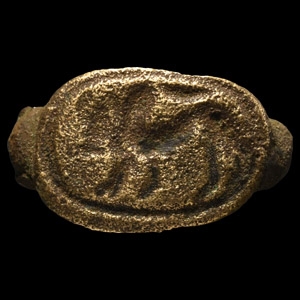
Western Asiatic Bronze Ring with Bull
2nd century B.C.-1st century A.D.Sold for (Inc. bp): £39
With a D-section hoop, oval bezel with intaglio motif of an advancing zebu bull advancing left. 5.19 grams, 23.86 mm overall, 19.24 mm internal diameter (approximate size British O 1/2, USA 7 1/4, Europe 15.61, Japan 15)
Acquired 1980-2015. Ex Abelita family collection.
