
Loading, please wait...
LOT 0207
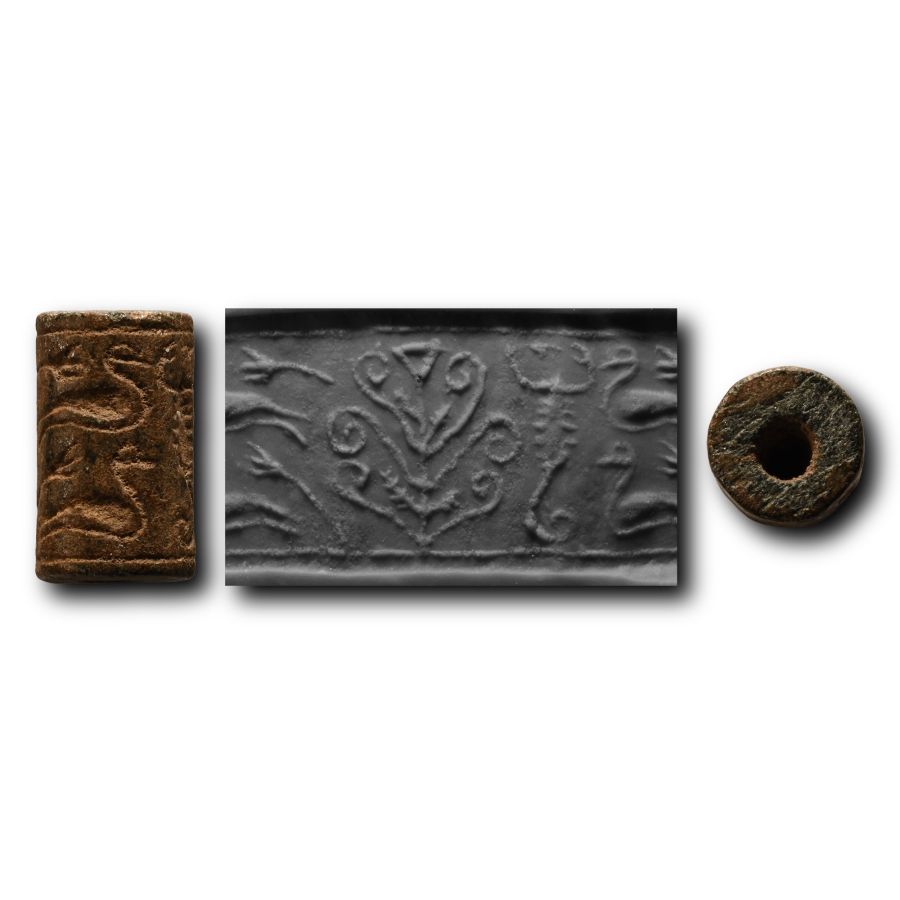
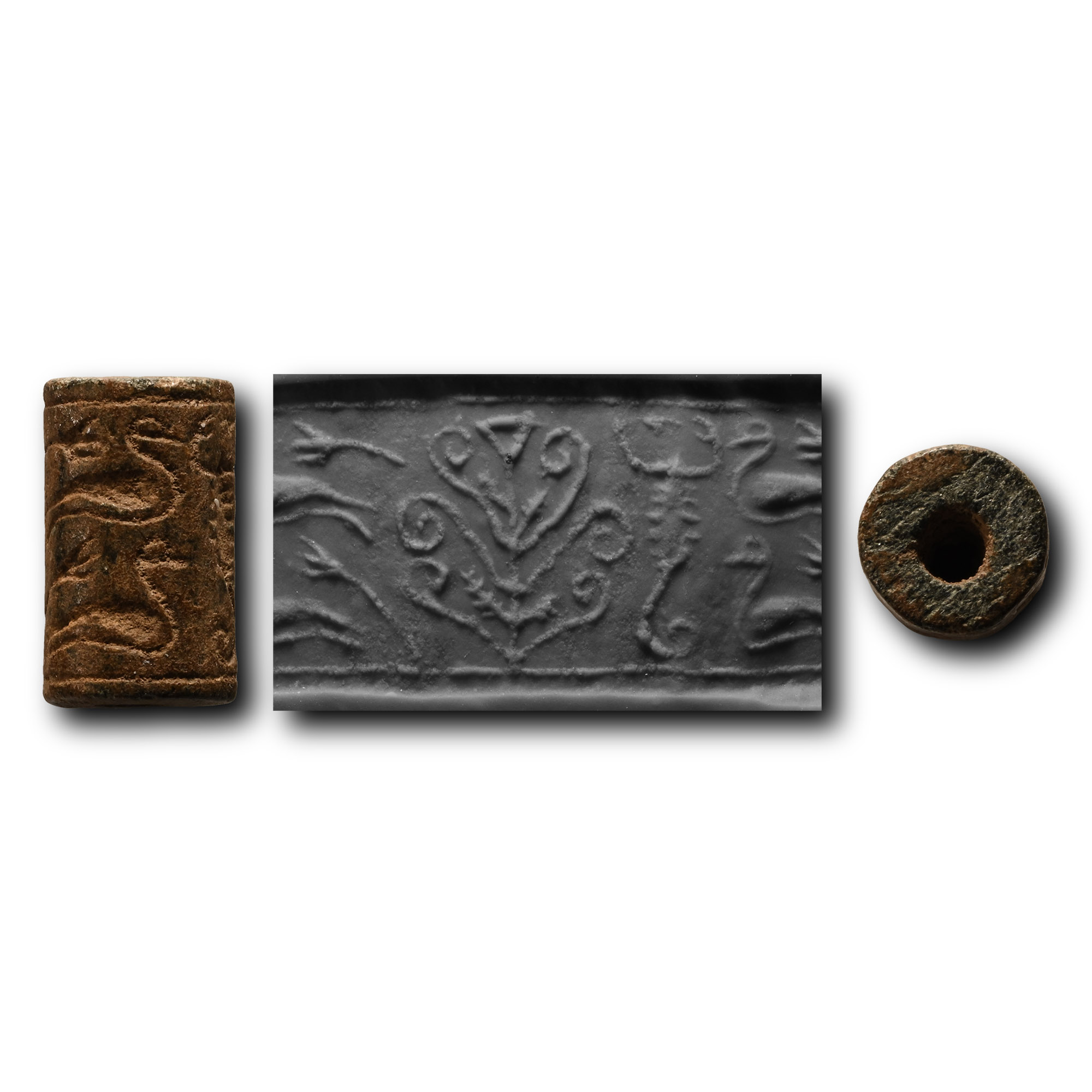
Neo-Assyrian Stone Cylinder Seal with Scorpion and Bird
1ST MILLENNIUM B.C.
5/8 in. (3.32 grams, 17 mm).
With pointillé design of two birds one above the other, a scorpion and a tulip.
ProvenanceFrom the 'S' collection, acquired 1970-1990s.
The collection was seen and studied by W.G. Lambert, late Professor of Assyriology at the University of Birmingham, 1970-1993.
Cf. Teissier, B., Ancient Near Eastern Cylinder Seals in the Marcopoli Collection, Berkeley, 1984, item 181, for type.
CONDITIONTimeLine Auctions follows a vetting process to ensure the authenticity and legality of all items, reinforcing our commitment to integrity and responsible trading. Each antiquity, antique, and coin lot undergoes thorough examination by a vetting committee of at least ten external specialists, professional trade association members, scientists, and archaeologists: Our Vetting Process
AUCTIONS:
TimeLine is a leading auction house specialising in antiquities, ancient art, collectables, natural history, coins, medals, and books. Our auctions offer museums, collectors, historians, and enthusiasts the opportunity to acquire unique and historically significant pieces.
LOT 0207
Neo-Assyrian Stone Cylinder Seal with Scorpion and Bird
Sold for (Inc. bp): £845
-
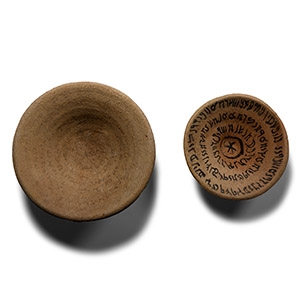
Aramaic Terracotta Magic Bowl with Cursive Script
4th-8th century A.D.Sold for (Inc. bp): £468
An unglazed terracotta trumpet-shaped bowl with the faint remains of Aramaic-script to the inside; accompanied by a smaller bowl with three concentric rings of recently overpainted pseudo Aramaic-script to the upper face. 277 grams total, 9.5-12.4 cm
Acquired on the German art market, 1989-1995. with The Museum Gallery, 19 Bury Place, London, WC1, UK, 1998-2003. Property of a London based academic, 2003-present.
Aramaic incantation bowls are particular to the Sassanian period and have been found in regions of modern Iraq. These simple ceramic bowls, also known as magic bowls, each contain an Aramaic inscription, written in ink, which spirals from the centre. The bowls seem to have played an important part in domestic life. For example, during excavation in Nippur in 1889, one or more incantation bowls were found in each house together with domestic artefacts, most often in doorways or under floorboards in the corner of rooms. The bowls are predominantly apotropaic, and the inscriptions tend to protect their owners from misfortunes such as those faced in child-birth, illness and evil spirits. -
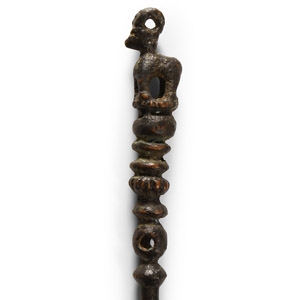
Luristan Bronze Pin with Ibex
1st millennium B.C.Sold for (Inc. bp): £104
With a tapering round-section shank, balustered finial topped with a standing ibex. 11.7 grams, 10.1 cm
UK private collection before 2000. On the UK art market. Property of a London gentleman. -
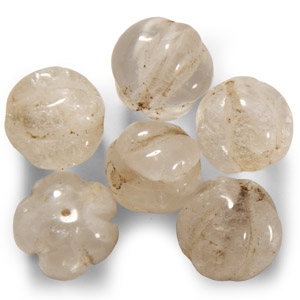
Western Asiatic Rock Crystal Melon Bead Group
17th-19th century A.D.Sold for (Inc. bp): £14
Group of six crystal melon beads. 7.05 grams total, 9-10 mm
From an old English deceased estate. Acquired on the London art market in the early 1990s. Property of a London, UK, collector.
