
Loading, please wait...
LOT 0189
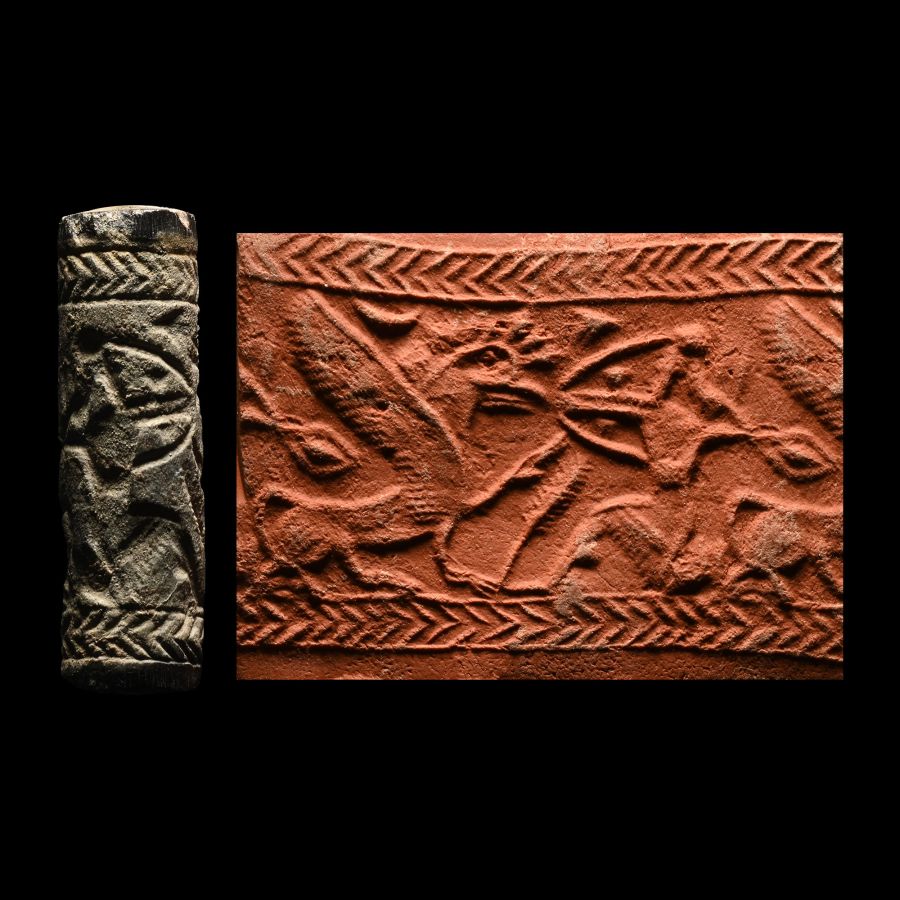
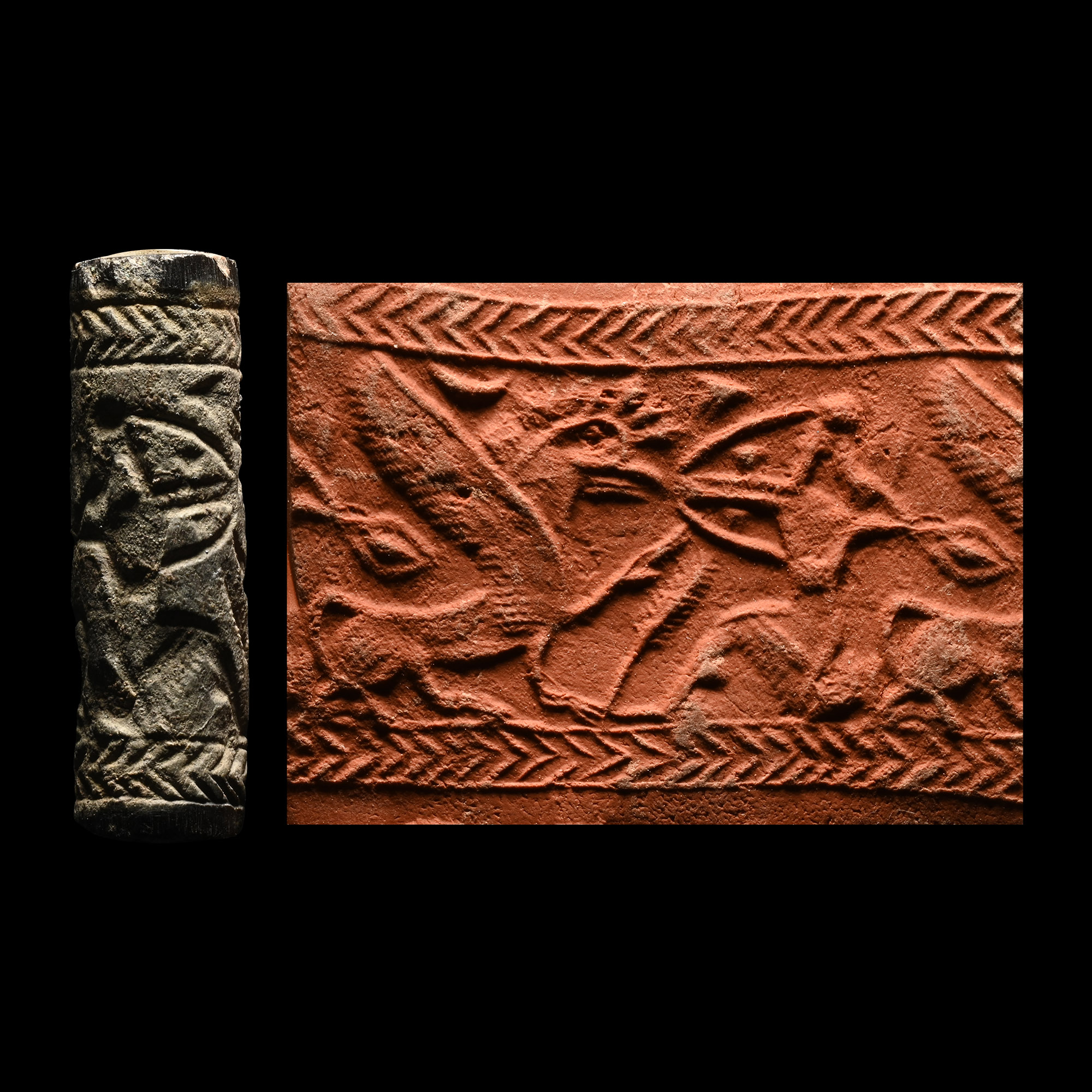
Neo-Assyrian Grey Stone Cylinder Seal with Kneeling God
CIRCA 900-800 B.C.
1 1/2 in. (8.7 grams, 39 mm).
With a god shooting a sphinx; accompanied by a museum quality impression and a copy of an old scholarly note, typed and signed by W.G. Lambert, late Professor of Assyriology, University of Birmingham, 1970-1993, which states: 'Cylinder Seal of Grey Stone, 39 x 12. Top and bottom borders are filled with rows of chevrons going in opposite directions, and the design between a kneeling god shooting at a facing sphynx with a bird's head. As filling motifs there are: a small tree or plant, a lozenge, a triangle and a crescent. At each end the stone is stained by remains of original bronze caps, and the bronze bar which ran through the central hole is still present, though the rest of the metal, save for traces, has disappeared. This is a Neo-Assyrian cylinder, c. 900-800 B.C., from Assyria itself, or from neighbouring areas.'
ProvenanceFrom the private collection of a North American lady, formed 1970s-early 1990s, with collection reference no.P16.
Accompanied by a copy of a scholarly note, typed and signed by Professor Wilfrid George Lambert dated February 1992 and an old photograph.
TimeLine Auctions follows a vetting process to ensure the authenticity and legality of all items, reinforcing our commitment to integrity and responsible trading. Each antiquity, antique, and coin lot undergoes thorough examination by a vetting committee of at least ten external specialists, professional trade association members, scientists, and archaeologists: Our Vetting Process
AUCTIONS:
TimeLine is a leading auction house specialising in antiquities, ancient art, collectables, natural history, coins, medals, and books. Our auctions offer museums, collectors, historians, and enthusiasts the opportunity to acquire unique and historically significant pieces.
LOT 0189
Neo-Assyrian Grey Stone Cylinder Seal with Kneeling God
Sold for (Inc. bp): £780
-
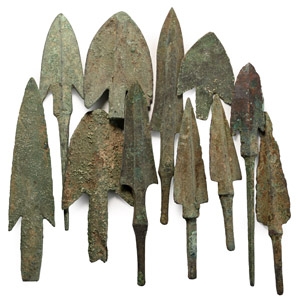
Luristan Bronze Arrowhead Collection
2nd-1st millennium B.C.Sold for (Inc. bp): £117
Mainly triangular-headed barbed and tanged types. 223 grams total, 4.6-11.6 cm
Ex London, UK, collection, 1990s. -
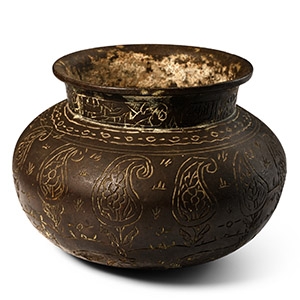
Western Asiatic Bronze Jar with Incised Decoration
Circa 19th century A.D.Sold for (Inc. bp): £72
Squat with broad rounded base, narrow neck and flared mouth; incised decoration including calligraphic text, annulets in a band, freehand image of a wolf attacking a deer. 605 grams, 12.7 cm
Believed to have been in the collection of George Adolphus Gray (c.1850), Captain of a merchant vessel and avid collector. Acquired by the present owner circa 15 years ago, reportedly recovered from a skip. -
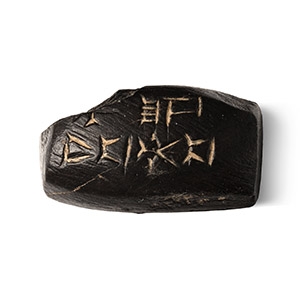
Babylonian Black Stone Inscribed Duck Weight
1st millennium B.C. or laterSold for (Inc. bp): £111
Rectangular in section with cuneiform inscription to the upper face. 3.92 grams, 20 mm
with Archaeologia, Switzerland, before 1983. Ex private North American collection. London private collection, 2016.
