
Loading, please wait...
LOT 1269
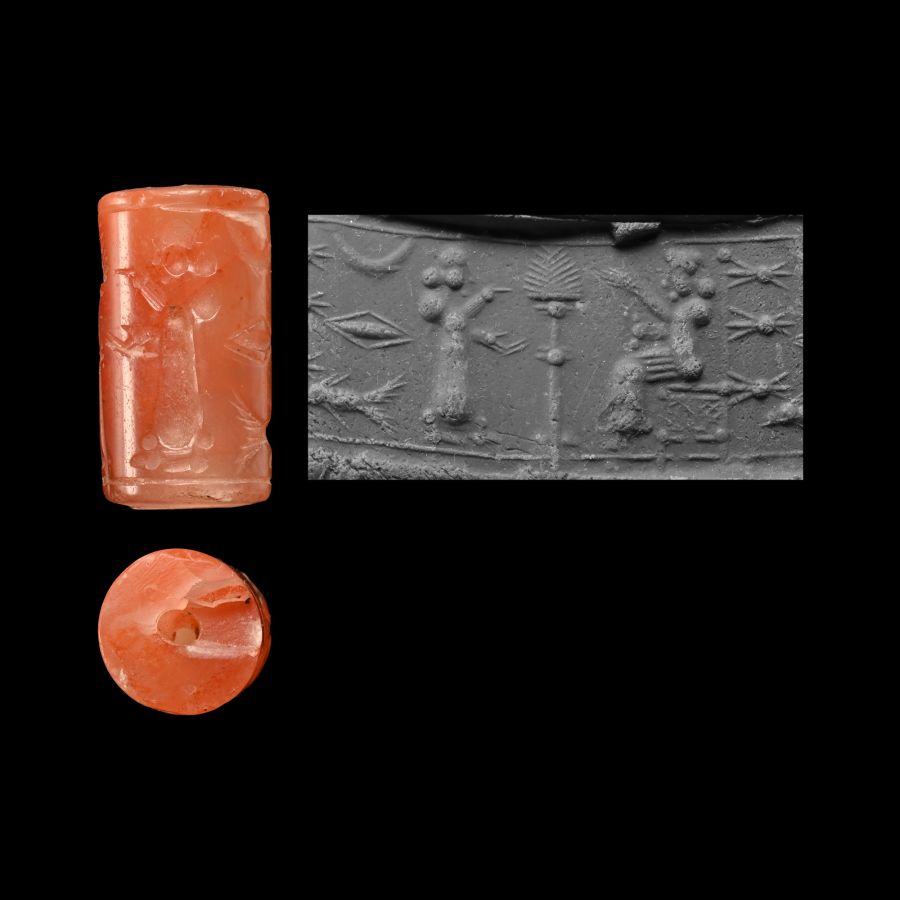
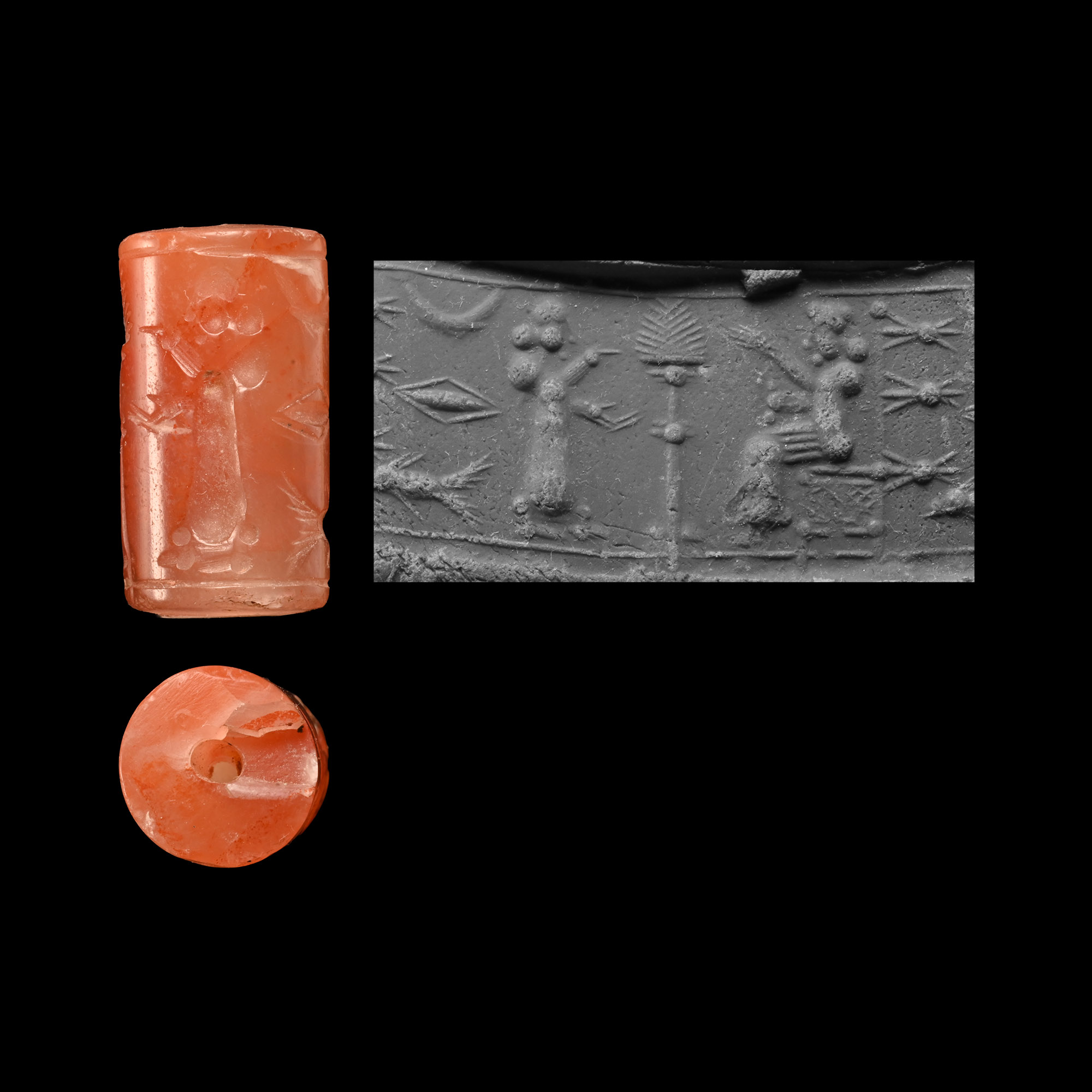
Neo-Assyrian Carnelian Cylinder Seal with Worship Scene
CIRCA 750-600 B.C.
3/4 in. (4.11 grams, 19 mm).
Accompanied by a copy of an old scholarly note, typed and signed by W.G. Lambert, late Professor of Assyriology, University of Birmingham, 1970-1993, which states: ' Cylinder seal of Cornelian, 20 x 11 mm. On the right a deity is seated on a throne with a high back decorated with sparkling knobs. This deity holds an unidentified object in one hand while raising the other. Facing stands a worshiper raising the right hand with index finger extended, extending the left and with palm cupped. Between the two figures is a fire-bowl raised on a pole with fire burning in the pan. Three filling motifs serve as a terminal: the lunar crescent, a lozenge-shape, and a fish. This is a Neo-Assyrian seal in late drilled style. c. 750-600 B.C.'; supplied with a museum-quality impression.
ProvenanceFrom the private collection of a North American lady, formed 1970s-early 1990s, with collection reference no.P1.
Accompanied by a copy of a scholarly note, typed and signed by Professor Wilfrid George Lambert dated March 1992.
This lot has been cleared against the Art Loss Register database, and is accompanied by an illustrated lot declaration signed by the Head of the Antiquities Department, Dr Raffaele D'Amato.
TimeLine Auctions follows a vetting process to ensure the authenticity and legality of all items, reinforcing our commitment to integrity and responsible trading. Each antiquity, antique, and coin lot undergoes thorough examination by a vetting committee of at least ten external specialists, professional trade association members, scientists, and archaeologists: Our Vetting Process
AUCTIONS:
TimeLine is a leading auction house specialising in antiquities, ancient art, collectables, natural history, coins, medals, and books. Our auctions offer museums, collectors, historians, and enthusiasts the opportunity to acquire unique and historically significant pieces.
LOT 1269
Neo-Assyrian Carnelian Cylinder Seal with Worship Scene
Sold for (Inc. bp): £442
-
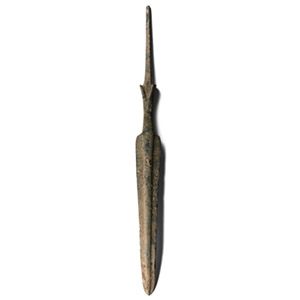
Large Amlash Type Bronze Spearhead
1200-1100 B.C.Sold for (Inc. bp): £130
Tapering leaf-shaped blade with raised midrib developing to a sturdy V-shaped shank, tapering rectangular-section tang. 546 grams, 48 cm
Ex London art market, 1980-1990s. This lot has been cleared against the Art Loss Register database, and is accompanied by an illustrated lot declaration signed by the Head of the Antiquities Department, Dr Raffaele D'Amato.
The weapon belongs to the type 1 of the spear-head classification of Khorasani, mainly from Marlik or Amlash areas. Similar pieces have been dated by Stutzinger to 1200-1100 B.C. -
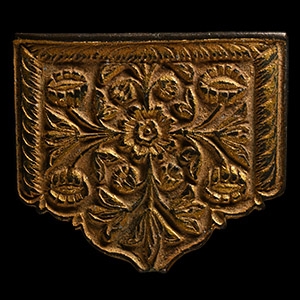
Western Asiatic Gilt Bronze Belt Element
12th-13th century A.D.Estimate: £300 - 400 (‡+bp*)
Opening Bid: £135
Pentagonal in plan with scooped ogival upper edge, shallow sides and slider-bar to reverse; high-relief decorative motifs of rosette and radiating stems and leaves. 18.25 grams, 43 mm
Acquired in the mid 1980s-1990s. Private collection, Switzerland, thence by descent. Private collection, since the late 1990s. This lot has been cleared against the Art Loss Register database, and is accompanied by an illustrated lot declaration signed by the Head of the Antiquities Department, Dr Raffaele D'Amato. -
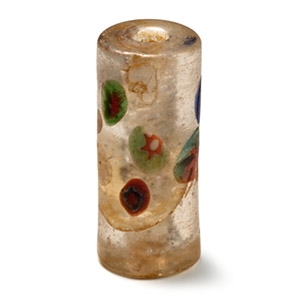
Western Asiatic Glass Cylinder Bead with Millefiori
Late 1st millennium B.C. or laterEstimate: £500 - 700 (+bp*)
Opening Bid: £130
Tubular in form with inset discoid panels of millefiori and other glass. 10.6 grams, 32 mm
with a London, UK gallery 1971-early 2000s. Private collection, London. This lot has been cleared against the Art Loss Register database, and is accompanied by an illustrated lot declaration signed by the Head of the Antiquities Department, Dr Raffaele D'Amato.
