
Loading, please wait...
LOT 1295
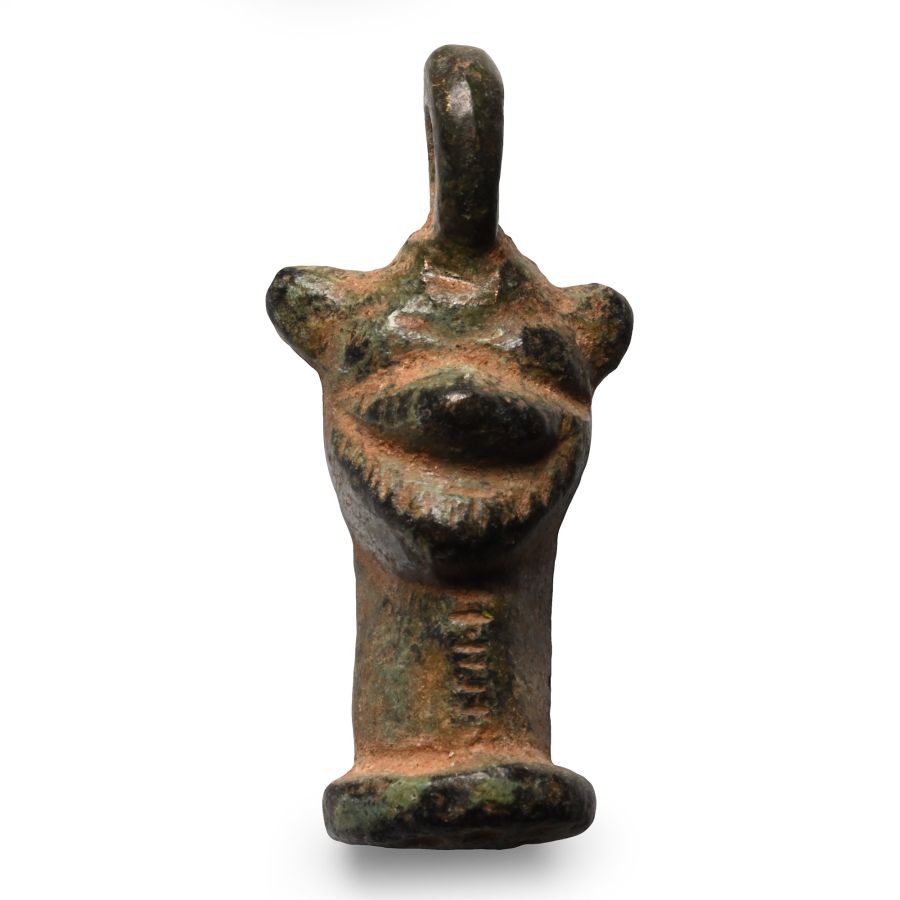
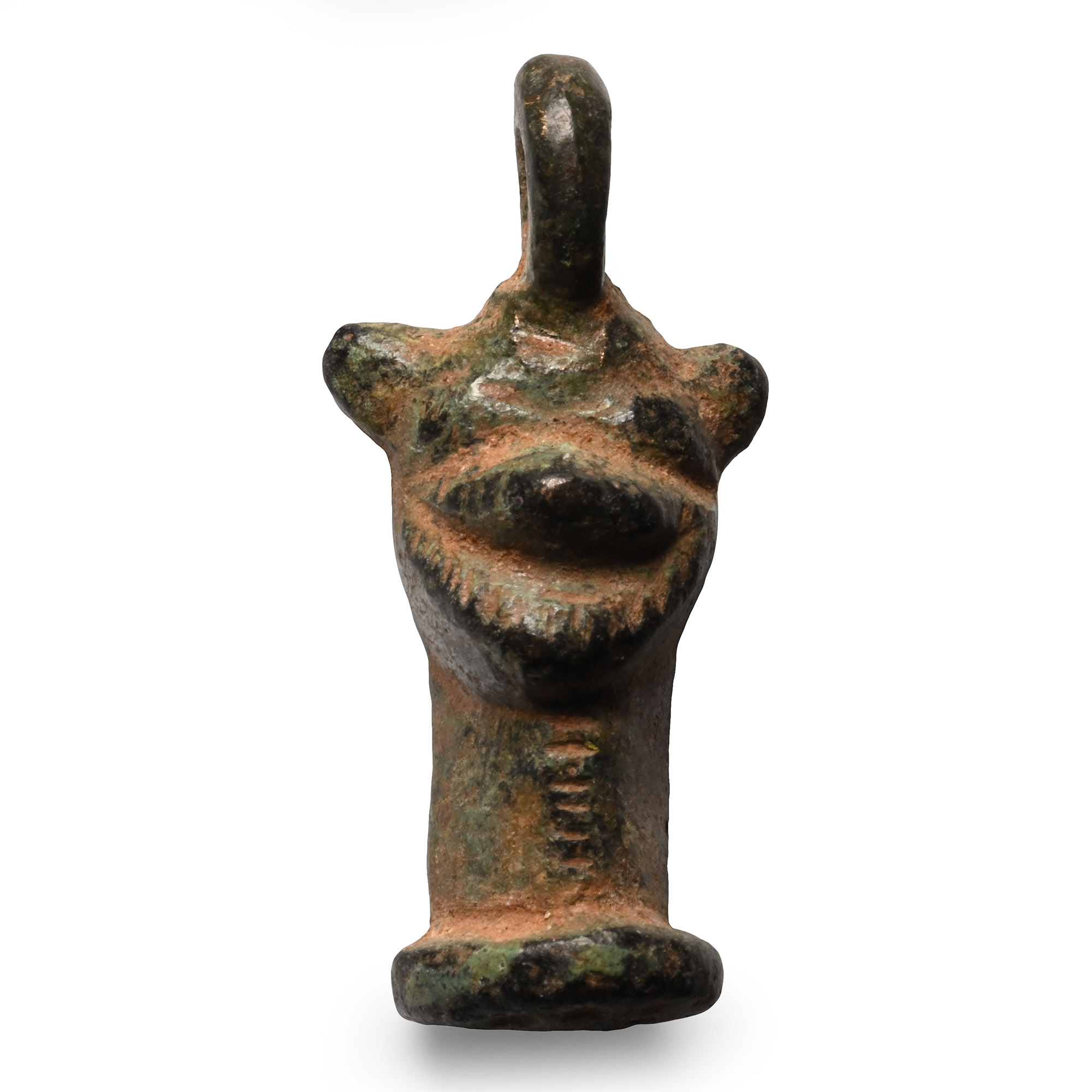
Neo-Assyrian Bronze Pazuzu Head Pendant
CIRCA 800 B.C.
1 in. (4.82 grams, 26 mm).
Columnar in form and plano-convex in section with discoid base and grotesque mask.
ProvenanceFrom a collection of a late London, UK, collector, 1980s.
This lot has been cleared against the Art Loss Register database, and is accompanied by an illustrated lot declaration signed by the Head of the Antiquities Department, Dr Raffaele D'Amato.
TimeLine Auctions follows a vetting process to ensure the authenticity and legality of all items, reinforcing our commitment to integrity and responsible trading. Each antiquity, antique, and coin lot undergoes thorough examination by a vetting committee of at least ten external specialists, professional trade association members, scientists, and archaeologists: Our Vetting Process
AUCTIONS:
TimeLine is a leading auction house specialising in antiquities, ancient art, collectables, natural history, coins, medals, and books. Our auctions offer museums, collectors, historians, and enthusiasts the opportunity to acquire unique and historically significant pieces.
LOT 1295
Neo-Assyrian Bronze Pazuzu Head Pendant
Estimate £200 - 300€230 - 350 (for guidance only)$270 - 410 (for guidance only)
-
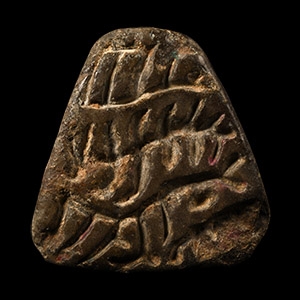
Western Asiatic Stone Seal with Engraved Design
3rd millennium B.C.Estimate: £180 - 240 (‡+bp*)
Opening Bid: £90
Triangular in plan and plano-convex in section with drilled upper face, geometric design to underside. 19 grams, 37 mm
Acquired in the mid 1980s-1990s. Private collection, Switzerland, thence by descent. Private collection, since the late 1990s. This lot has been cleared against the Art Loss Register database, and is accompanied by an illustrated lot declaration signed by the Head of the Antiquities Department, Dr Raffaele D'Amato. -
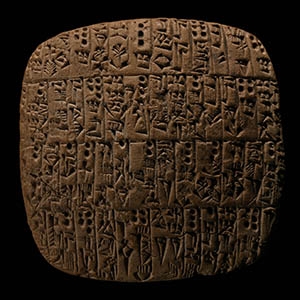
Early Dynastic Terracotta Administrative Cuneiform Tablet Recording Livestock and their Owners
IIIb, 2400-2340 B.C.Estimate: £15,000 - 20,000 (‡+bp*)
Opening Bid: £7,500
Pillow-shaped tablet with dense cuneiform text to two broad faces and one edge, concerning the listing of 146 sheep and their owners or shepherds:
202 grams, 78 mmColumn I Column II Column III 5 sheep, Pirigni, Kor 2?
6 male sheep, Ur-ur of Umma
3 sheep, Zag-mu, ki ni mu zu
5 sheep, x x-gi
4 male sheep …
Ur-Ishkur, herder of Abdu
4 sheep, Urgu (of) E-RU
2 … , herder IL, scribe
3 Gimni, herder chief galla-official
5 male sheep, Ur-lu, ..
2 sheep Lu-ra, herder…
…, herder
2 male sheep, Akadu, son of Lugal-sanga
2 Shesh-zimu
3 Zagmu,
Akadu
2 Ekalsi
1 Gimdu, son of Ekal
2 Mashda
1 … Guzi…
2 …kam … NA
Column IV Reverse Column V Column VI 2 Ur-…dua
6 Zagmu, herder of Mesanne
1 Urtul
3 GISH.MI, herder of Ilum-su?ni
4 Lugal-shalasu
Adda, singer?
5 Almu
2 Ur-Ezida
IGI MI ZI SI
3 Lueshla
2 Ur-… NE-RA
8 Azuzu
2 Adda, captain
1 En…du, nuesh-officiant
3 Sheshpadda, overseer
2 … ki-bi
…
…
6 E…
1 Ur…
…
1 Ur …
1 …
3 Dingir-urmu
1 Pirigni
Da…
1 Ur-Ninshaza, wife of U-u
4 Lugallu, herder of Lugalla…, majordomo
5 …igi-en …
1 Lugal-E…nisi
Column VII Column VIII Total 4 E-gish MI bi?, .., farmer
1 Ur-dingir, …si-TExESZ3
1 …
1 Lugal-nuduga
1 Aba-Enlil
1 Lugal …
2 Urmes
1 Urdam
1 Akadu, Adda…
1 U-u, …
Umunene
2 … -niE-u?
(space)
Its total: 146 sheep,
…
Pirigni (is) kush-official.
with Laemmle Gallery, San Vicente Boulevard, Los Angeles, USA. Acquired from the above in the early 1970s. with Bonhams, London, 13 April 2011, no.133. Private central European collection. Accompanied by copies of the relevant Bonhams catalogue pages. Accompanied by a copy of the translation for this tablet. This lot has been checked against the Interpol Database of stolen works of art and is accompanied by a search certificate number no.12121-218147. This lot has been cleared against the Art Loss Register database, and is accompanied by an illustrated lot declaration signed by the Head of the Antiquities Department, Dr Raffaele D'Amato. -
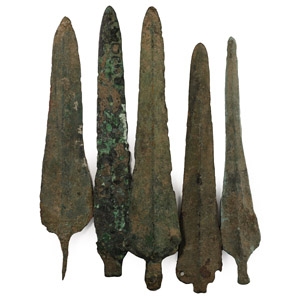
Western Asiatic Bronze Dagger Blade Collection
2700-1200 B.C.Sold for (Inc. bp): £169
Comprising five leaf-shaped blades with raised midribs, one with pierced tang rivet hole, another with two rivet holes on the round shoulders. 344 grams total, 18.5 - 21 cm
Ex London art market, 1980-1990s. This lot has been cleared against the Art Loss Register database, and is accompanied by an illustrated lot declaration signed by the Head of the Antiquities Department, Dr Raffaele D'Amato.
The shape of many blades with convex sides was undoubtedly the result of sharpening, but some may have been designed with this outline when a long narrow blade was needed for a special purpose. The daggers with large rivet holes in the round base probably originated by the Hyksos of the Egyptian Twelfth Dynasty.
