
Loading, please wait...
LOT 0235
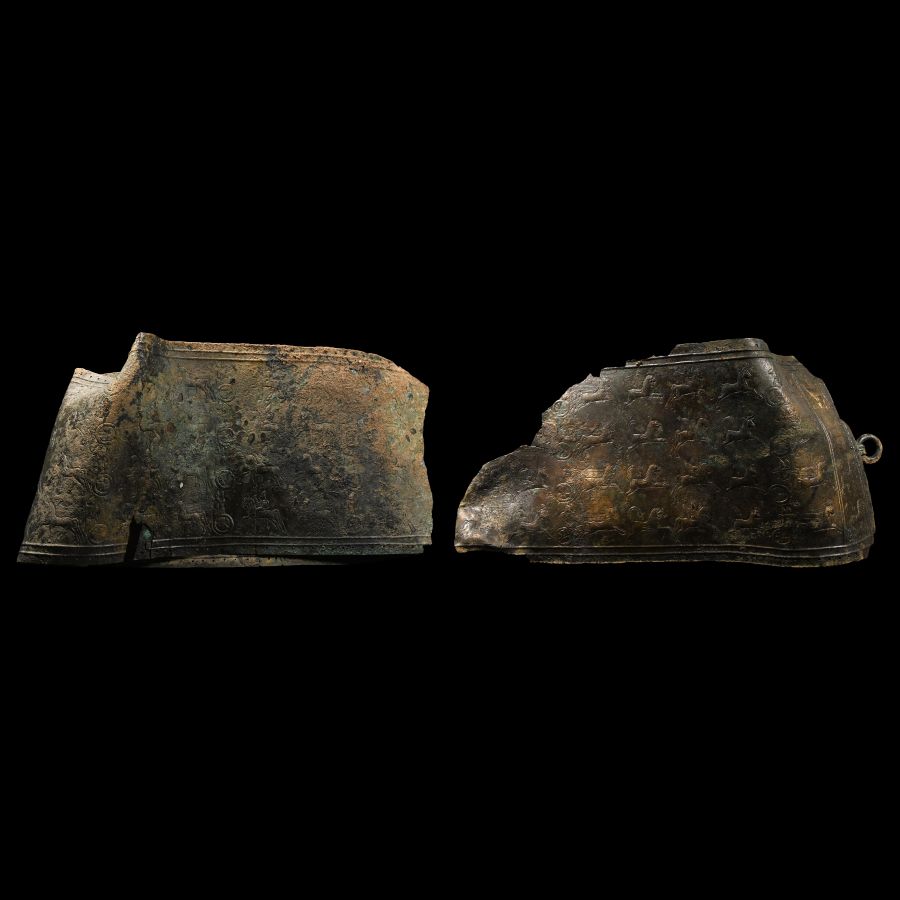
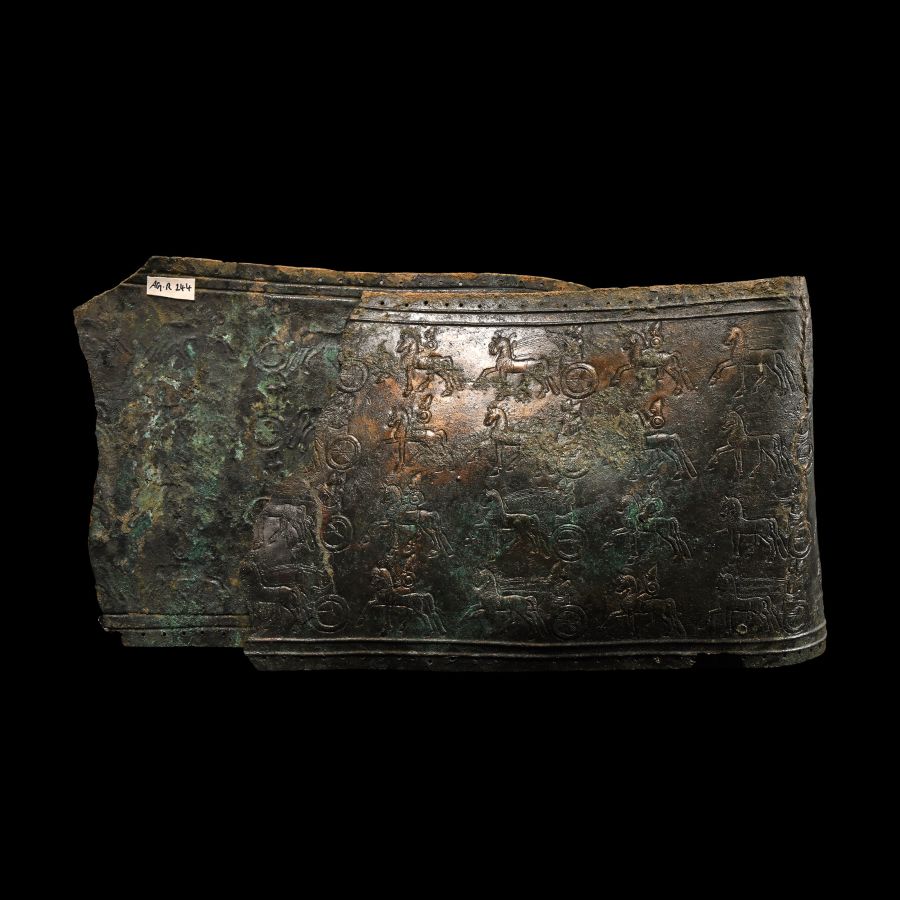
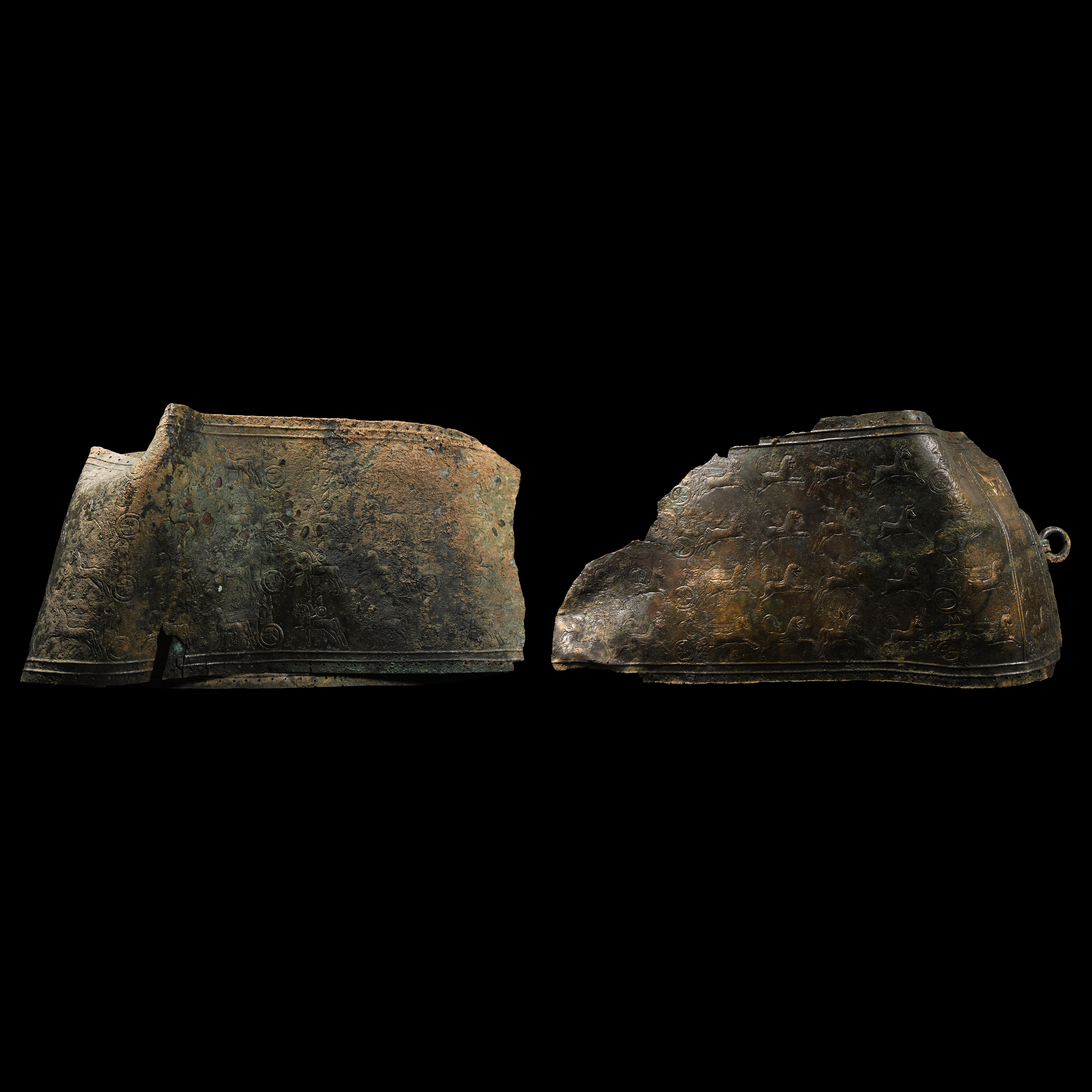
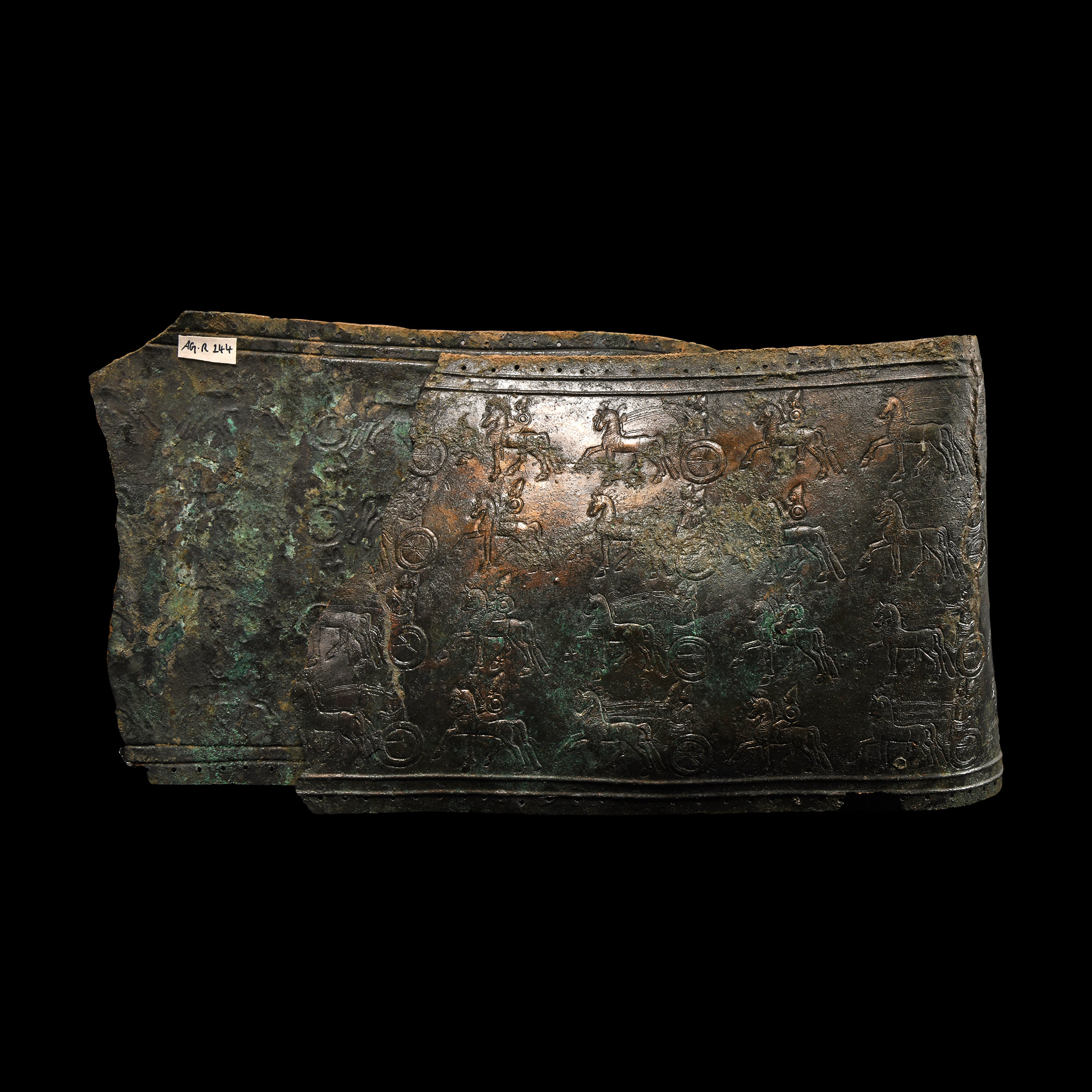
Neo-Assyrian 'Axel Guttmann' Bronze Belt Section Group
9TH-7TH CENTURY B.C.
12 - 13 3/4 in. (845 grams total, 30.5-35 cm).
Comprising two belt sections, each perforated around the edges for attachment: one with a repoussé display of alternating lions leaping towards warriors on horseback, leaping horned bulls and archers standing in horse-drawn war chariot; one fragment with articulate loop; the other folding over on itself, with repoussé display of helmetted warriors on horseback, alternating with warriors driving horse-drawn chariots; Urartian or Assyrian. [2, No Reserve]
ProvenanceEx Axel Guttmann collection, with reference no.AG R 244.
Accompanied by an academic report by Dr Raffaele D’Amato.
This lot has been checked against the Interpol Database of stolen works of art and is accompanied by search certificate number no.11760-203204.
Cf. Esayan, S.A., 'Gürtelbleche der Älteren Eisenzeit in Armenien' in Beiträge zur allgemeinen und vergleichenden Archäologie, vol.6, pp.97-198, pls. 8 & 25, nos.25 and 26 (belts from Golovino); Born H., Seidl U., Schutzwaffen aus Assyrien und Urartu, Sammlung Axel Guttmann IV, Mainz, 1995, nos.AG502, pp.83-84, figs.73-75, and pp.100-102, figs.89-93, pp.158ff., figs.124, 127-128; Christie’s,The Art of Warfare, the Axel Guttmann collection, Part I, Wednesday 6 November 2002, London, 2001, nos.13, pp.20-21, no.26, p.28; Gorelik, M.,Weapons of the Ancient East, IV millennium BC-IV century BC, Saint Petersburg (2003), pl.LXI, nn.88-89-90; Christie’s,The art of the warfare, the Axel Guttmann collection, Part II, Wednesday 28 April 2004, London, 2004, nos.47, pp.40-41; cf. also the Metropolitan Museum, New York, accession number 1976.5, for similar imagery on a copper-alloy plaque and accession number 1989.281.18, for an Urartian belt of similar form and design.
CONDITIONTimeLine Auctions follows a vetting process to ensure the authenticity and legality of all items, reinforcing our commitment to integrity and responsible trading. Each antiquity, antique, and coin lot undergoes thorough examination by a vetting committee of at least ten external specialists, professional trade association members, scientists, and archaeologists: Our Vetting Process
AUCTIONS:
TimeLine is a leading auction house specialising in antiquities, ancient art, collectables, natural history, coins, medals, and books. Our auctions offer museums, collectors, historians, and enthusiasts the opportunity to acquire unique and historically significant pieces.
LOT 0235
Neo-Assyrian 'Axel Guttmann' Bronze Belt Section Group
Sold for (Inc. bp): £2,340
-
Urartian Bronze Cuirass Belt with Animals
8th-7th century B.C.Sold for (Inc. bp): £4,160
Displaying two repoussé registers of animals including lions, antelope and birds processing right between geometric borders, stylised flower heads to one terminal; attachment perforations to upper and lower edges; one rounded terminal, one terminating with a narrow arm and D-shaped lug; mounted on an adjustable custom-made display stand. 6.4 kg total, 35 cm high including stand
some restoration.
UK private collection before 2000. UK art market. Property of a London gentleman. Accompanied by an academic report by Raffaele D'Amato. This lot has been checked against the Interpol Database of stolen works of art and is accompanied by search certificate number no.11745-202242.
Protective belts were very popular in the Caucasus, especially among the Urartians, decorated with geometric motifs, or with images of warriors, animals, hunting and mythological tales. They were regarded as a personal item and eventually buried with the warrior. -
North-West Persian Bronze Sword Blade
Early 1st millennium B.C.Sold for (Inc. bp): £130
Narrow triangular blade with raised median panel, scooped shoulders and short tang with pierced bulb finial. 370 grams, 45 cm
Ex German collection, Cologne, 1980-1990s.
The hilt of this magnificent sword would have originally been made of organic material. The forms of hilt are often replicated on cast metal counterparts. As proved by excavations of sites like Sangtarashan, stones were often used for decorating metal weapons, especially for bronze dagger pommels. -
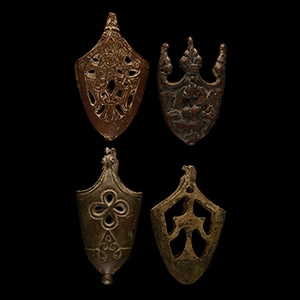
Viking Age Bronze Sword Scabbard Chape Collection
9th-11th century A.D.Sold for (Inc. bp): £715
Comprising: one heater-shaped with openwork raven motif to each face; one similar with openwork raven enmeshed in tendrils; one with fleur-de-lys to the centre of each upper edge and a lobed spur to each side; one with openwork quatrefoil to each face and knop finial to the apex. 145 grams total, 55-85 mm
From the collection of a North American gentleman, formed in the 1990s.
