
Loading, please wait...

LOT 2573
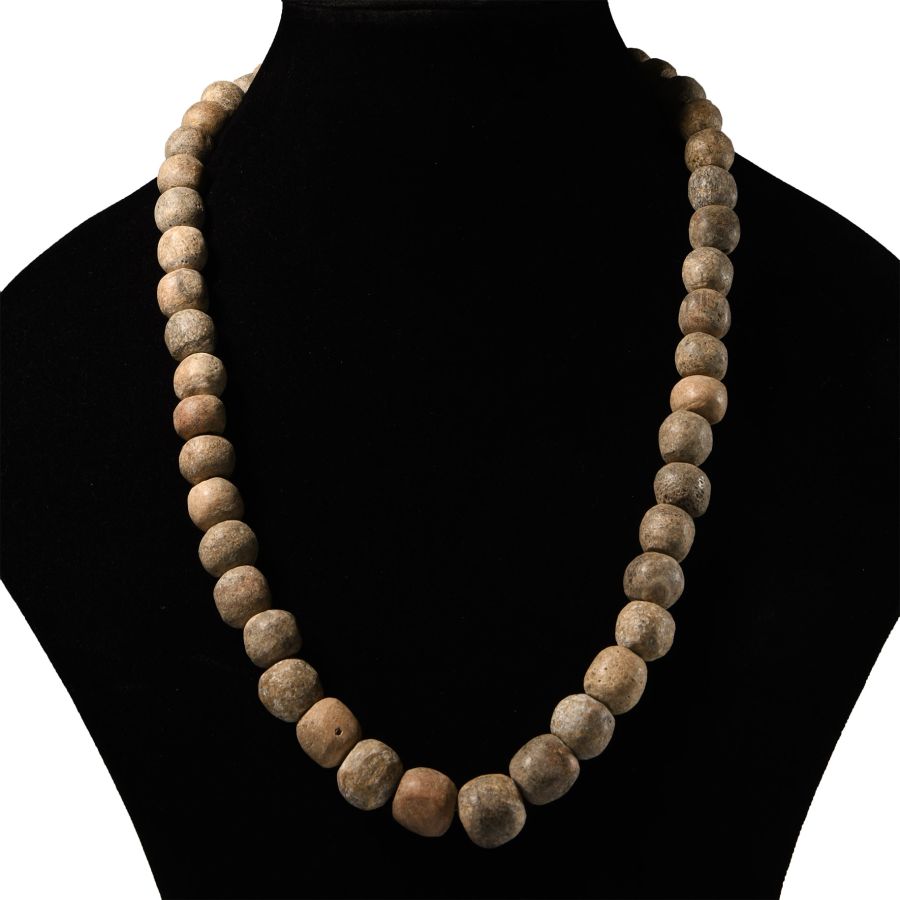
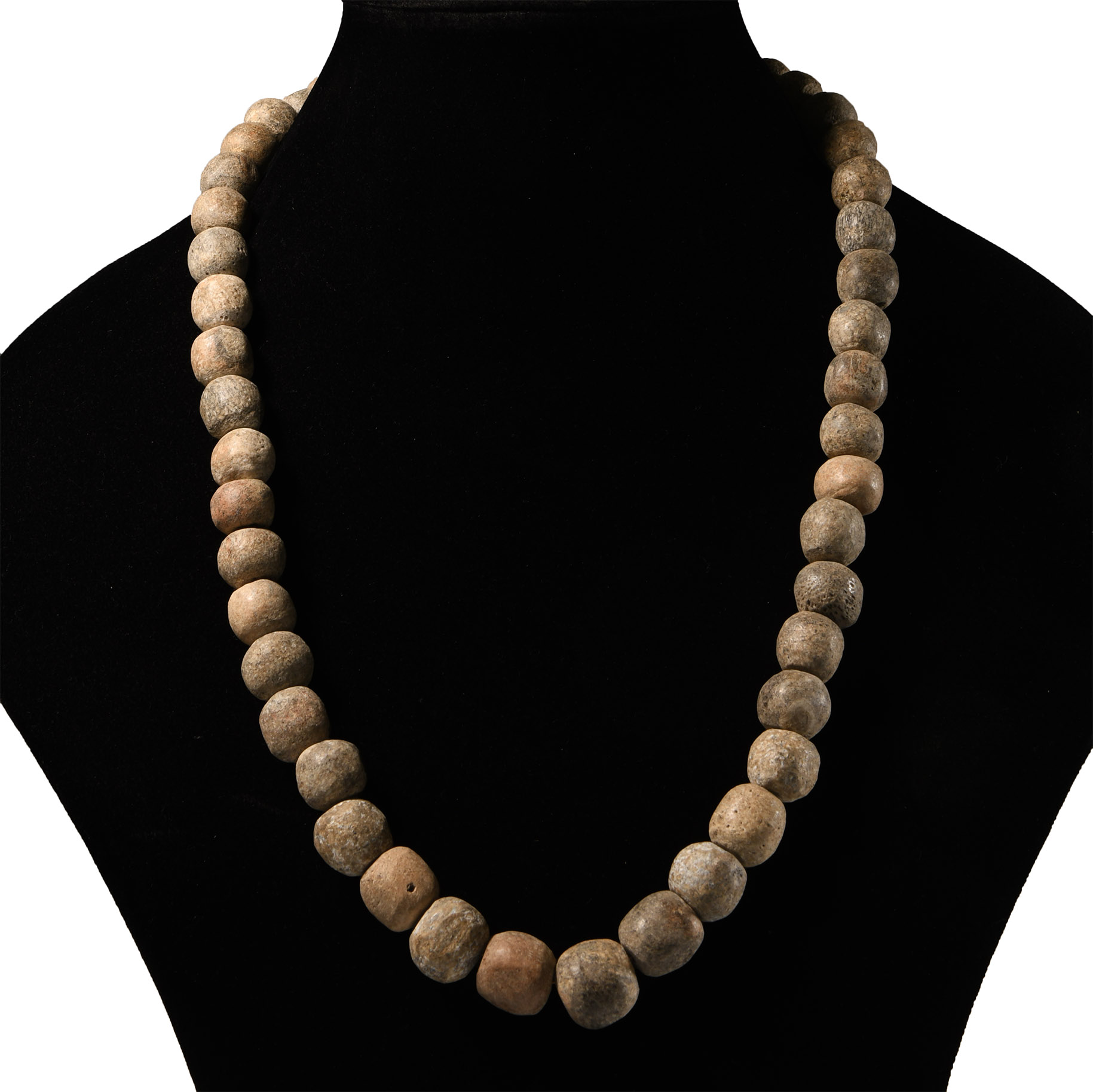
Natural History - Woolly Mammoth Bone Bead Necklace String
DEVENSIAN PERIOD, 110,000-12,000 YEARS B.P.
24 in. (167 grams, 61 cm).
Restrung using recently polished Mammuthus primigenius bone beads. [No Reserve]
ProvenanceEx London collection, 2000s.
CONDITIONTimeLine Auctions follows a vetting process to ensure the authenticity and legality of all items, reinforcing our commitment to integrity and responsible trading. Each antiquity, antique, and coin lot undergoes thorough examination by a vetting committee of at least ten external specialists, professional trade association members, scientists, and archaeologists: Our Vetting Process
AUCTIONS:
TimeLine is a leading auction house specialising in antiquities, ancient art, collectables, natural history, coins, medals, and books. Our auctions offer museums, collectors, historians, and enthusiasts the opportunity to acquire unique and historically significant pieces.
LOT 2573
Natural History - Woolly Mammoth Bone Bead Necklace String
Sold for (Inc. bp): £124
-
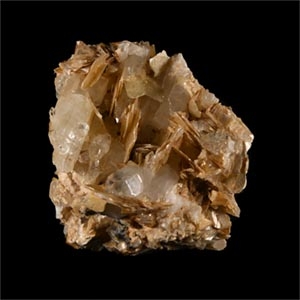
Natural History - Historic 'Brazil' Muscovite with Quartz Crystal Specimen
Sold for (Inc. bp): £20
Displaying creamy-white, white, colourless and yellowish white colours, collection number 271. 299 grams, 96 mm
Acquired on the UK mineral and fossil market, since 1970. From the historic mineral collection of Richard Valentine Cain, London, UK, thence by descent. Accompanied by an original historic index file card. -
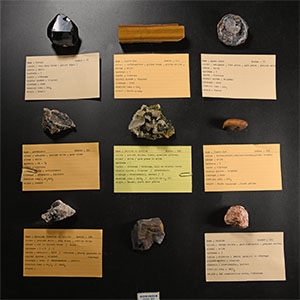
Natural History - Historic Collection of Mineral Specimens
Sold for (Inc. bp): £33
Comprising: cut section of tiger's eye from South Africa, collection number 111; calcite of duftite from Tsumeb, South West Africa, collection number 566; specular hematite on calcite, collection number 300; cut agate geode half from Mexico, collection number 37; andalusite from France, collection number 301; deep brown morion crystal point from Brazil, collection number 97; cut pebble of tiger's eye from North Transvaal, South Africa, collection number 203; calcite from A40 construction works, Middlesex, UK, collection number 509; chalcopyrite from North Transvaal, South Africa, collection number 193. 686 grams total, 3.7-10.8 cm
Acquired on the UK mineral and fossil market, since 1970. From the historic mineral collection of Richard Valentine Cain, London, UK, thence by descent. Eight specimens accompanied by an original historic index file card. -
.jpg)
Natural History - Fossil Metcanthina Trilobite
Upper Devonian Period, circa 419-358 million years B.P.Sold for (Inc. bp): £91
A Metacanthina barrandei trilobite showing shell structure, eyes and side antennae; on a matrix. 177 grams, 70 mm
From Hamar Laghdad Formation, Pragian, (Alnif), Morocco, North Africa. From an old Oxfordshire, UK, fossil and mineral collection.
