
Loading, please wait...
_900x900.jpg "Natural History - Two Glass Display Bases")
_200x200.jpg "Natural History - Two Glass Display Bases")
.jpg "Natural History - Two Glass Display Bases")
LOT 2756
Natural History - Two Glass Display Bases
5 3/4 in. (3.36 kg total, 14.8 cm each).
Formed of thick glass with rounded corners, one labelled as 'Sample 1', the other as 'Sample 2'. [2, No Reserve]
ProvenanceEx Mineral Imports, London, UK.
Gregory, Bottley & Lloyd (Gregory's).
TimeLine Auctions follows a vetting process to ensure the authenticity and legality of all items, reinforcing our commitment to integrity and responsible trading. Each antiquity, antique, and coin lot undergoes thorough examination by a vetting committee of at least ten external specialists, professional trade association members, scientists, and archaeologists: Our Vetting Process
AUCTIONS:
TimeLine is a leading auction house specialising in antiquities, ancient art, collectables, natural history, coins, medals, and books. Our auctions offer museums, collectors, historians, and enthusiasts the opportunity to acquire unique and historically significant pieces.
-
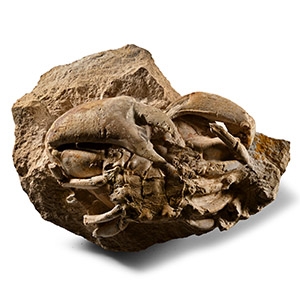
Natural History - Fossil Crab on Matrix
Eocene Period, 56-33 million years B.P.Sold for (Inc. bp): £338
Showing the underside of the carapace and both claws; repaired. 937 grams, 16 cm
From a Lincolnshire, UK, collection. -
.jpg)
Natural History - Fossil Gibbus Trilobite
Upper Devonian Period, 385-359 million years B.P.Sold for (Inc. bp): £65
Cheirurus (Crotalocephalina) trilobite Crotalocephalus gibbus fossil on a matrix. 175 grams, 72 mm
From Hamar Laghdad Formation, Pragian, (Alnif), Morocco, North Africa. From an old Oxfordshire, UK, fossil and mineral collection. -
.jpg)
Natural History - Polished Fossil Goniatite and Orthoceras Stand
Devonian Period, circa 417-354 million years B.P.Sold for (Inc. bp): £59
Set on a textured freestanding matrix and polished to reveal the internal gas chambers. 710 grams, 15.5 cm
From the Atlas Mountains of Morocco, North Africa. From a Cambridgeshire, UK, collection.
