
Loading, please wait...
LOT 2354
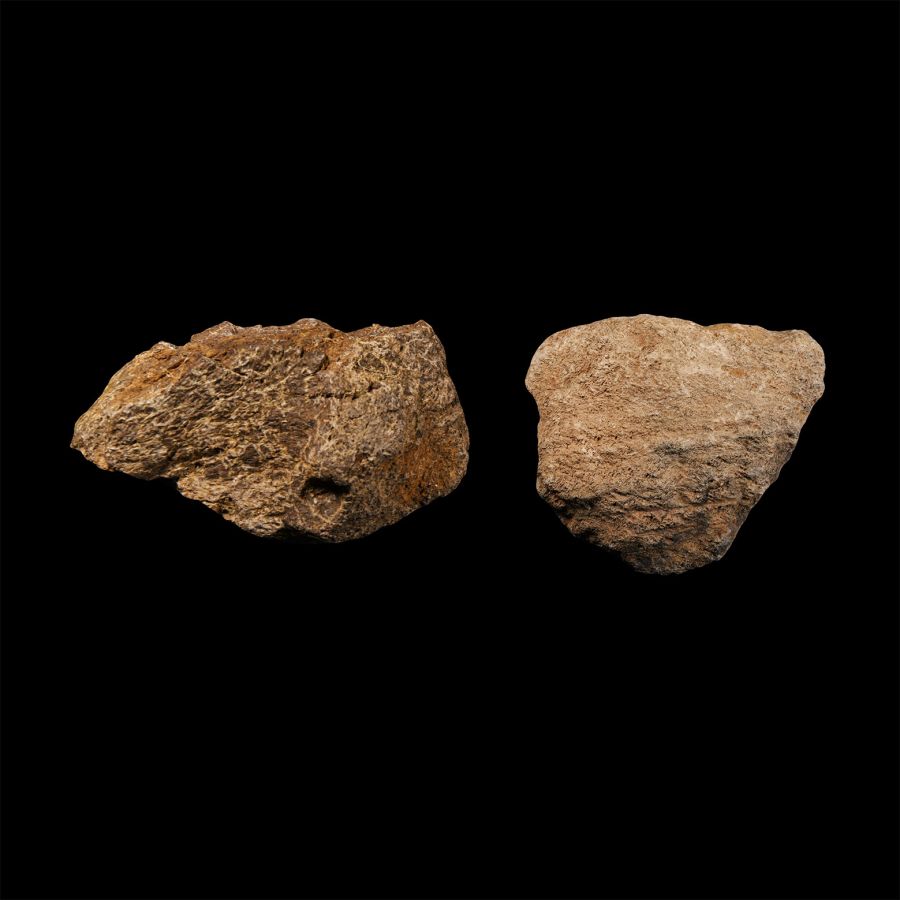
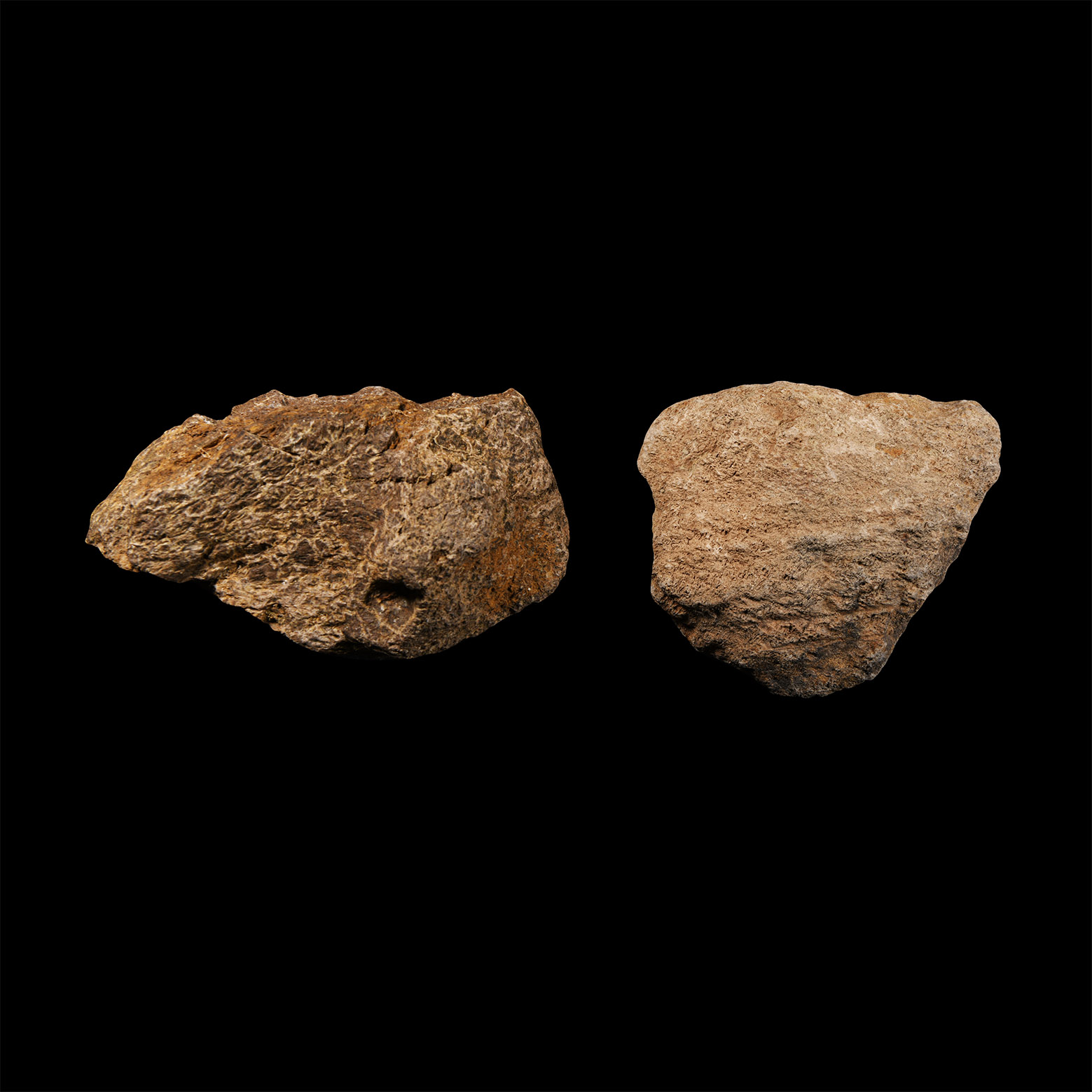
Natural History - Triceratops Fossil Frill Bone Group
UPPER CRETACEOUS PERIOD, CIRCA 70 MILLION YEARS B.P.
3 - 3 3/4 in. (261 grams total, 75-94 mm).
Comprising a pair of frill bone sections. [2, No Reserve]
ProvenanceFrom the Lance Creek Formation, Weston Co., Wyoming, U.S.A.
Collected between 1930 and 1960.
From the collection of the palaeontologist R Gledhill.
TimeLine Auctions follows a vetting process to ensure the authenticity and legality of all items, reinforcing our commitment to integrity and responsible trading. Each antiquity, antique, and coin lot undergoes thorough examination by a vetting committee of at least ten external specialists, professional trade association members, scientists, and archaeologists: Our Vetting Process
AUCTIONS:
TimeLine is a leading auction house specialising in antiquities, ancient art, collectables, natural history, coins, medals, and books. Our auctions offer museums, collectors, historians, and enthusiasts the opportunity to acquire unique and historically significant pieces.
-
Natural History - Fossil Saltasaurus Egg Shell Group
Jurassic Period, 199-145 million years B.P.Sold for (Inc. bp): £20
Comprising four fossilised fragments. 28.4 grams total, 30-34 mm
From Patagonia. From a Cambridgeshire, UK, collection. -
.jpg)
Natural History - Knightia Fossil Fish
Eocene Period, 56-33 million years B.P.Sold for (Inc. bp): £33
In a rectangular matrix. 345 grams, 18 x 12.5 cm
Fine condition.
From Wyoming, Green River Formation, U.S.A. Acquired during the 1980s. From the Pradi Collection, Boston, U.S.A.
Seasonally, some 56 million years ago, in the Green River Region of Wyoming, torrential rains fell on the mountains. The rain flowed down the mountain sides, forming wide shallow lakes in the valley below. During the dry season, these lakes evaporated (similar to certain parts of Africa today). Millions of fish died in this short period of time. This climatic cycle happened over a 20-thousand-year period. Layer upon layer of mud was deposited over these years, entombing huge numbers of fish. At a much later date volcanic activity uplifted this area to expose their fossils. -
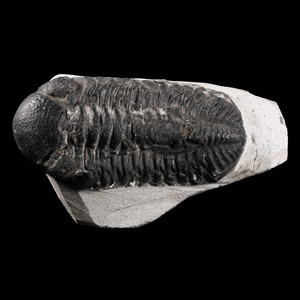
Natural History - Fossil Mesacristata Trilobite
Devonian Period, 417-354 million years B.P.Sold for (Inc. bp): £46
Hollardops mesacristata on a matrix. 130 grams, 78 mm
From the Atlas Mountains, Hamar Laghdad Formation, Prgain, Alnif, Morocco, North Africa. From an old Oxford, UK, fossil and mineral collection.
