
Loading, please wait...
LOT 2316
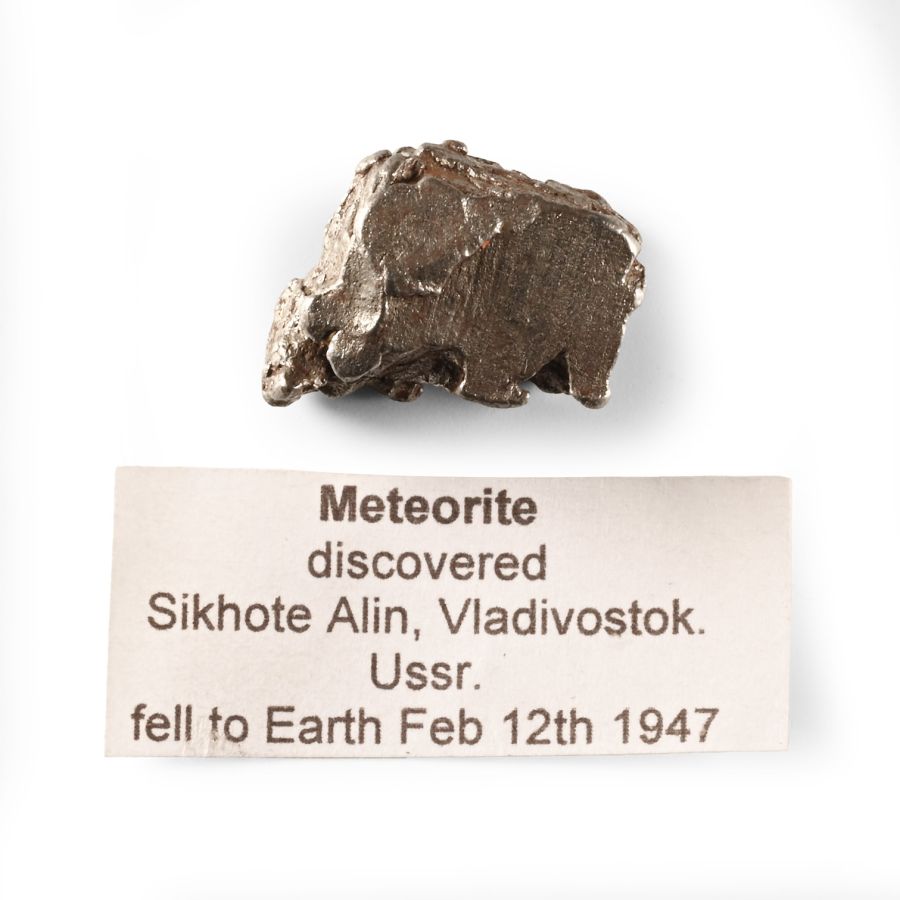
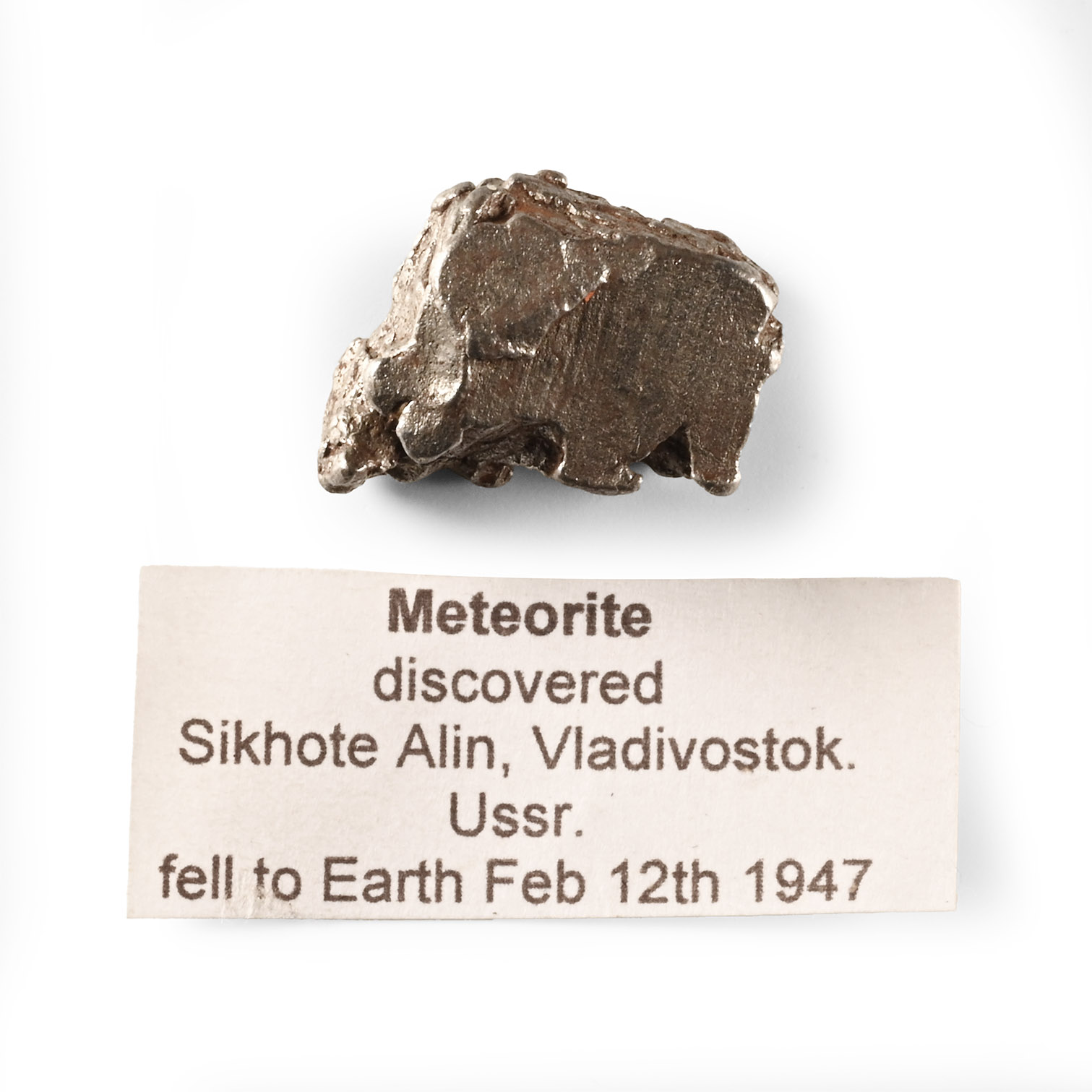
Natural History - Sikhote Alin Meteorite
FELL 12TH FEBRUARY 1947 A.D.
3/4 in. (11.7 grams, 19 mm).
A coarse octahedrite class IIB iron meteorite from a witnessed fall in the former USSR, showing exceptional ablation forms and surface preservation, cleaned. [No Reserve]
ProvenanceAcquired from Steve Arnold, co-star of 'Meteorite Men'.
Ian Wilkinson collection, Nottinghamshire, UK.
Classified as an iron meteorite belonging to the chemical group IIAB and with a coarse octahedrite structure. See Meteoritical Bulletin and database.
FootnotesSikhote-Alin is an iron meteorite that fell on February, 13, 1947 on the Sikhote-Alin Mountains in eastern Siberia. Though large iron meteorite falls had been witnessed previously and fragments recovered, never before in recorded history had a fall of this magnitude been observed. An estimated 70 tonnes of material survived the fiery passage through the atmosphere and reached the Earth. The strewn field for this meteorite covered an elliptical area of about 1.3 km2 (0.50 sq mi). Some of the fragments made impact craters, the largest of which was about 26 m (85 ft) across and 6 m (20 ft) deep. Fragments of the meteorite were also driven into the surrounding trees. The Soviet Union issued a stamp for the 10th anniversary of the Sikhote-Alin meteorite shower and this reproduces a painting by P. J. Medvedev, a Soviet artist who witnessed the fall: he was sitting in his window starting a sketch when the fireball appeared, so he immediately began drawing what he saw.
CONDITIONTimeLine Auctions follows a vetting process to ensure the authenticity and legality of all items, reinforcing our commitment to integrity and responsible trading. Each antiquity, antique, and coin lot undergoes thorough examination by a vetting committee of at least ten external specialists, professional trade association members, scientists, and archaeologists: Our Vetting Process
AUCTIONS:
TimeLine is a leading auction house specialising in antiquities, ancient art, collectables, natural history, coins, medals, and books. Our auctions offer museums, collectors, historians, and enthusiasts the opportunity to acquire unique and historically significant pieces.
-
.jpg)
Natural History - Knightia Multi Fossil Fish Plate
Eocene Period, circa 56-33 million years B.P.Sold for (Inc. bp): £26
The three Knightia alta on a rounded matrix, showing good detail. 81 grams, 10.6 cm
From a Lincolnshire, UK, collection. Property of a Cambridgeshire, UK, gentleman. -
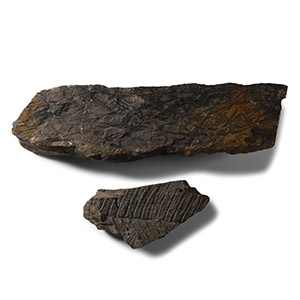
Natural History - British Fossil Fern Group
Jurassic Period, circa 180 million years B.P.Sold for (Inc. bp): £1
Specimens including Alethopteris sp. and Sphenopteris laurenti, and others. 1.41 kg total, 10.7-23.5 cm
Acquired from various sources within the UK. Ian Wilkinson collection, Nottinghamshire, UK, formed since 1985. -
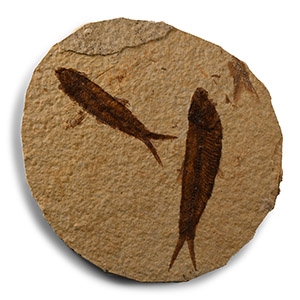
Natural History - Knightia Multi Fossil Fish Plate
Eocene Period, circa 56-33 million years B.P.Sold for (Inc. bp): £33
A round matrix with a pair of Knightia alta fossil fish. 72 grams, 11 cm
From a Lincolnshire, UK, collection. Property of a Cambridgeshire, UK, gentleman.
