
Loading, please wait...
_900x900.jpg "Natural History - 'Onchosaur' Fossil Rostral Spine Group")
_200x200.jpg "Natural History - 'Onchosaur' Fossil Rostral Spine Group")
.jpg "Natural History - 'Onchosaur' Fossil Rostral Spine Group")
LOT 2851
Natural History - 'Onchosaur' Fossil Rostral Spine Group
CRETACEOUS PERIOD, CIRCA 100-66 MILLION YEARS B.P.
1 7/8 - 2 1/8 in. (21 grams total, 47-53 mm).
Comprising three large fossil Onchopristus numidus sawfish rostral teeth. [3, No Reserve]
ProvenanceFrom in the phosphate mine region, Khouribga, Morocco, North Africa.
From a Cambridgeshire, UK, collection.
TimeLine Auctions follows a vetting process to ensure the authenticity and legality of all items, reinforcing our commitment to integrity and responsible trading. Each antiquity, antique, and coin lot undergoes thorough examination by a vetting committee of at least ten external specialists, professional trade association members, scientists, and archaeologists: Our Vetting Process
AUCTIONS:
TimeLine is a leading auction house specialising in antiquities, ancient art, collectables, natural history, coins, medals, and books. Our auctions offer museums, collectors, historians, and enthusiasts the opportunity to acquire unique and historically significant pieces.
LOT 2851
Natural History - 'Onchosaur' Fossil Rostral Spine Group
Sold for (Inc. bp): £39
-
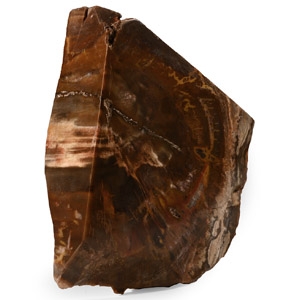
Natural History - Madagascan Fossil Lump Wood
Late Triassic Period, circa 25 million years B.P.Sold for (Inc. bp): £52
A cut freestanding section of wood, polished to show the attractive banding. 604 grams, 11.2 cm
From Madagascar. From a Lincolnshire, UK, collection. -
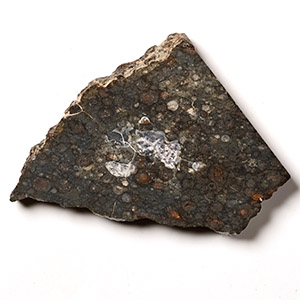
Natural History - Carbonaceous NWA 12590 Meteorite Slice
Found 2018 A.D.Sold for (Inc. bp): £104
A cut slice of carbonaceous chondrite (CV3) recorded as: Northwest Africa 12590; displayed in a Swiss membrane box, inked ' NWA 12590' to the edge. 10.7 grams, 37 mm (58 grams total, 99 x 75 mm including case)
From the Sahara, N.W. Africa. Ex SV-Meteorites, Prague. From a Leicestershire, UK, collection. Accompanied by an original identification card. -
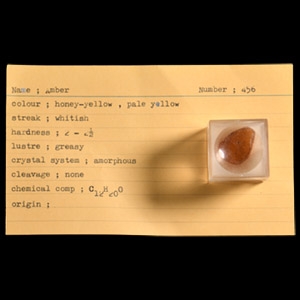
Natural History - Historic Amber Specimen with Fly
Sold for (Inc. bp): £20
Honey-coloured teardrop-shaped specimen with a small fly inclusion, collection number 456; supplied in a small collector's display box with magnifying lid. 0.40 grams, 13 mm
Acquired on the UK mineral and fossil market, since 1970. From the historic mineral collection of Richard Valentine Cain, London, UK, thence by descent. Accompanied by an original historic index file card.
