
Loading, please wait...
LOT 2386
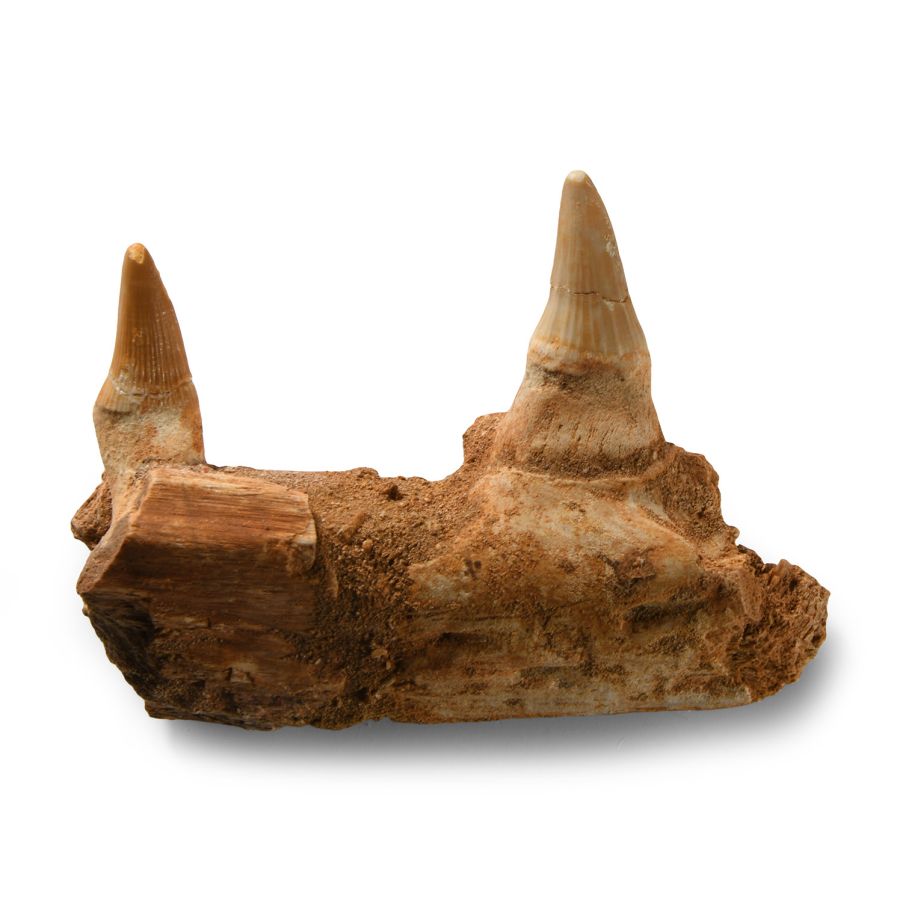
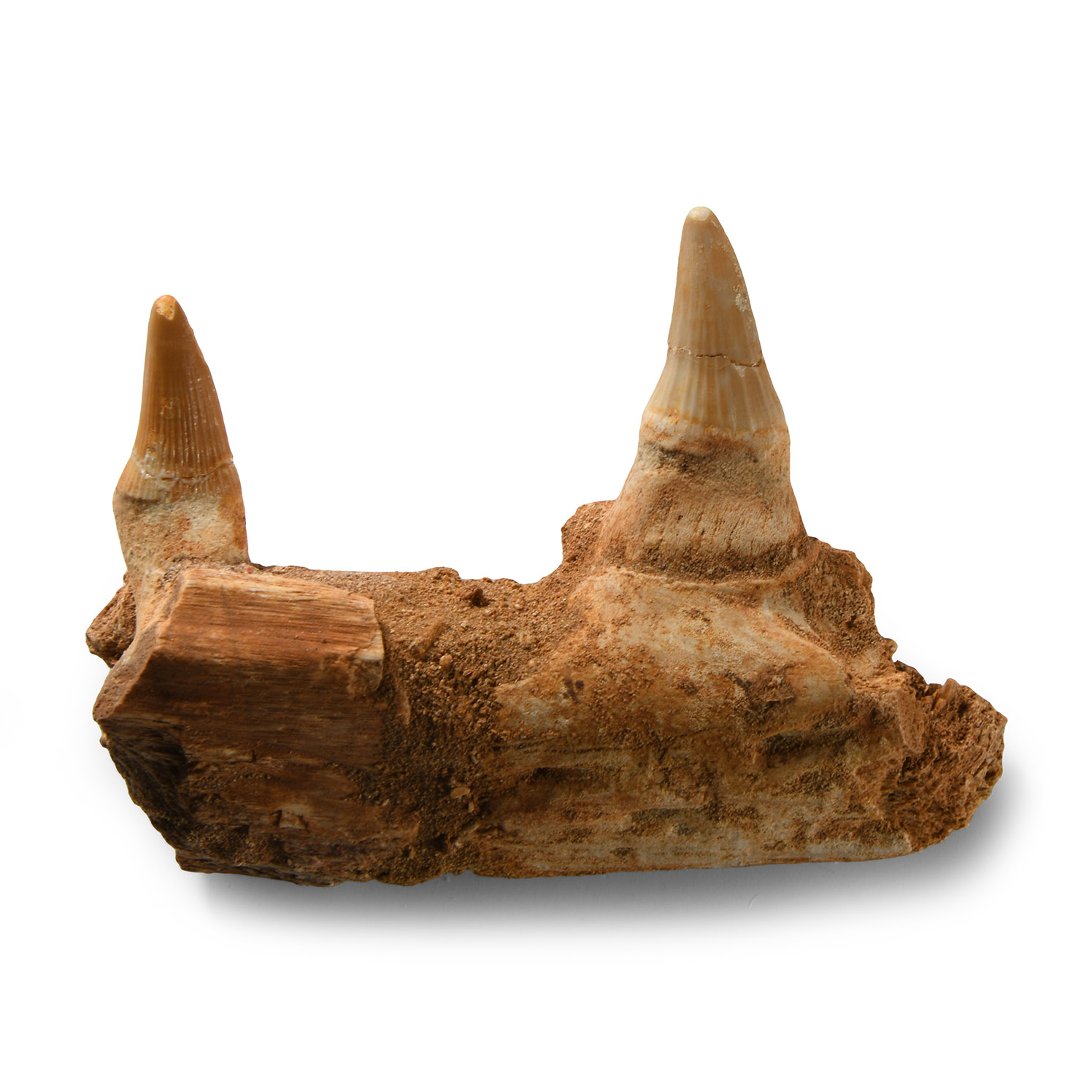
Natural History - Mosasaur Jaw Section
CRETACEOUS PERIOD, CIRCA 145-65 MILLION YEARS B.P.
3 3/8 in. (89 grams, 87 mm).
From the lower jaw, displaying two teeth from Prognathodon sp.; repaired. [No Reserve]
ProvenanceFrom the phosphate mine region, Khouribga, Morocco, North Africa.
Acquired 1950s-1960s.
From an old Bristol, UK, palaeontological collection.
The Mosasaur is an extinct, large marine reptile dinosaur with a snake-like body, long snout and paddle-like limbs. Found worldwide, they competed with other well-known sea predators of the Late Cretaceous, such as plesiosaurs and ichthyosaurs, for food, existing primarily on a diet of ammonoids, cuttlefish and fish.
CONDITIONTimeLine Auctions follows a vetting process to ensure the authenticity and legality of all items, reinforcing our commitment to integrity and responsible trading. Each antiquity, antique, and coin lot undergoes thorough examination by a vetting committee of at least ten external specialists, professional trade association members, scientists, and archaeologists: Our Vetting Process
AUCTIONS:
TimeLine is a leading auction house specialising in antiquities, ancient art, collectables, natural history, coins, medals, and books. Our auctions offer museums, collectors, historians, and enthusiasts the opportunity to acquire unique and historically significant pieces.
-
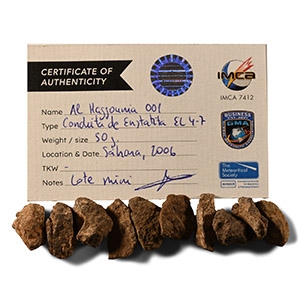
Natural History - Group of Al Haggounia 001 Meteorites
Found Sahara 2006 A.D.Sold for (Inc. bp): £1,040
Comprising ten irregular samples. 18.3 grams, 16-20.5 mm
Ex Adrian Contreras, Crater Meteorites, Spain. Property of an East Sussex, UK, gentleman. Accompanied by a Crater Meteorite certificate of authenticity card.
The Enstatite-rich Al Haggounia 001 meteorite was found in 2006, and some of the material from this meteorite has also been reported under the name of Northwest Africa 2828 (NWA 2828). The material is heavily weathered and appears to be quite old, possibly 20,000 years. The Enstatite is accompanied by iron-nickle metal, sulfides, graphite, and Schreibersite. -
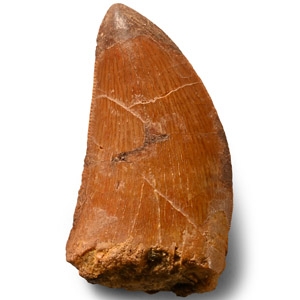
Natural History - Fossil African 'T-Rex' Tooth
Cretaceous Period, circa 145-93 million years B.P.Sold for (Inc. bp): £98
With some serration and good enamel, from Carcharodontosaurus saharicus. 7.38 grams, 37 mm
From the Tegana formation of the Sahara Desert, Morocco, North Africa. Acquired during 1980s. From an old Lincolnshire, UK, collection.
The Carcharodontosaurus saharicus was one of the largest predators (larger than its distant North American T-Rex cousin) of all time and is also related to Allosaurus and the South American Giganotosaurus. -
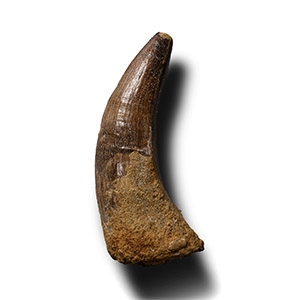
Natural History - Fossil Spinosaurus Dinosaur Tooth
Cretaceous Period, 145-65 million years B.P.Sold for (Inc. bp): £91
From Spinosaurus maroccanus displaying good enamel with some sedimentary rock still present. 32.6 grams, 61 mm
From Morocco, North Africa. Ex Charmouth Fossils, Dorset, UK, circa 2010. From the private collection of Mr A Hills, Kent, UK. Accompanied by an illustrated catalogue printout.
