
Loading, please wait...
LOT 2337
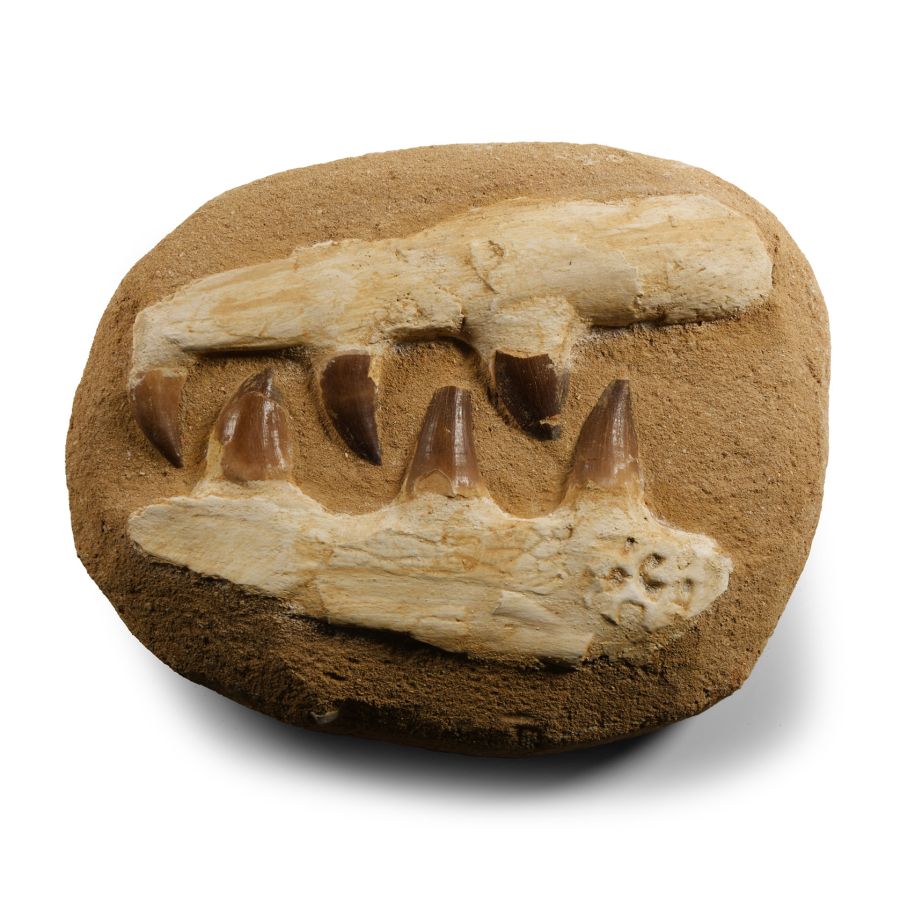
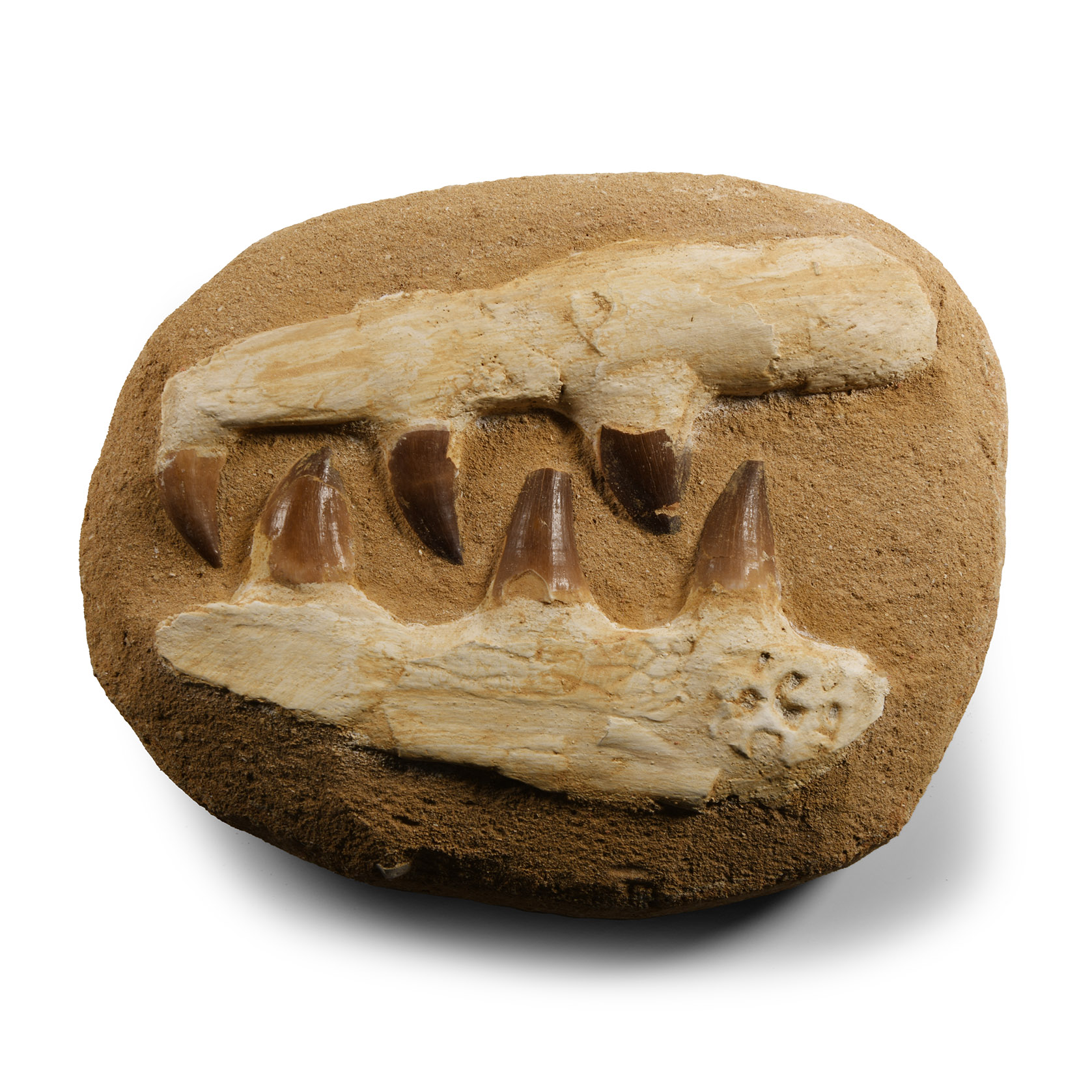
Natural History - Mosasaur Jaw on Composite Matrix
CRETACEOUS PERIOD, 145-65 MILLION YEARS B.P.
7 1/2 in. (1.17 kg, 19 cm).
Comprising a pair of jaw fragments with teeth set on a composite matrix. [No Reserve]
ProvenanceFrom a Cambridgeshire, UK, collection.
Property of a Cambridgeshire, UK, gentleman.
TimeLine Auctions follows a vetting process to ensure the authenticity and legality of all items, reinforcing our commitment to integrity and responsible trading. Each antiquity, antique, and coin lot undergoes thorough examination by a vetting committee of at least ten external specialists, professional trade association members, scientists, and archaeologists: Our Vetting Process
AUCTIONS:
TimeLine is a leading auction house specialising in antiquities, ancient art, collectables, natural history, coins, medals, and books. Our auctions offer museums, collectors, historians, and enthusiasts the opportunity to acquire unique and historically significant pieces.
-
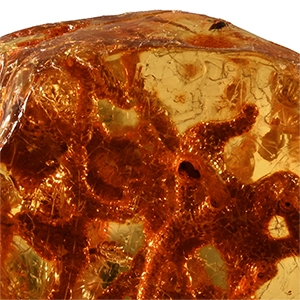
Natural History - Large Polished Copal Amber with Termite Nest and Termites
Over 3 million years B.P.Sold for (Inc. bp): £52
Comprising an irregular block with a number of termite inclusions, and later built tunnel system forming part of the nest. 52.3 grams, 60 mm
From Brazil. Ian Wilkinson collection, Nottinghamshire, UK, formed since 1985. -
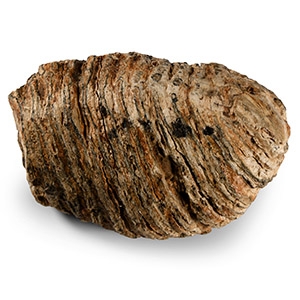
Natural History - 'North Sea' Fossil Woolly Mammoth Tooth
Pleistocene Period, 2.6 million-11,700 years B.P.Sold for (Inc. bp): £104
Showing wear in life to biting surfaces, from Mammuthus primigenius. 2.23 kg, 19 cm
Dredged from the North Sea, probably from Brown Bank, Lowestoft, Suffolk, England, UK. Previously acquired on the UK art market before 2000. Property of a Kent, UK, collector.
Mammoths were animals of the Ice Age; they co-existed with and were hunted by early man. The North Sea basin is a drowned landscape, flooded after the end of the last Ice Age. Fishing trawlers occasionally bring up bones and relics from when the area was inhabited as dry land. -
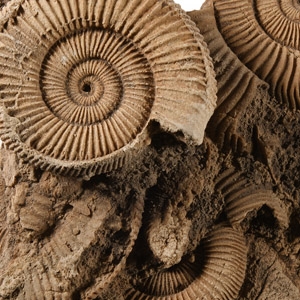
Natural History - Fossil Dactylioceras Ammonite Cluster
Jurassic Period, Toarcian Stage, 174-145 million years B.P.Sold for (Inc. bp): £46
Comprising a number of overlapping Dactylioceras athleticum ammonites in layers. 457 grams, 11.1 cm
From Germany. From a Lincolnshire, UK, collection. Property of a Cambridgeshire, UK, gentleman.
