
Loading, please wait...
LOT 2370
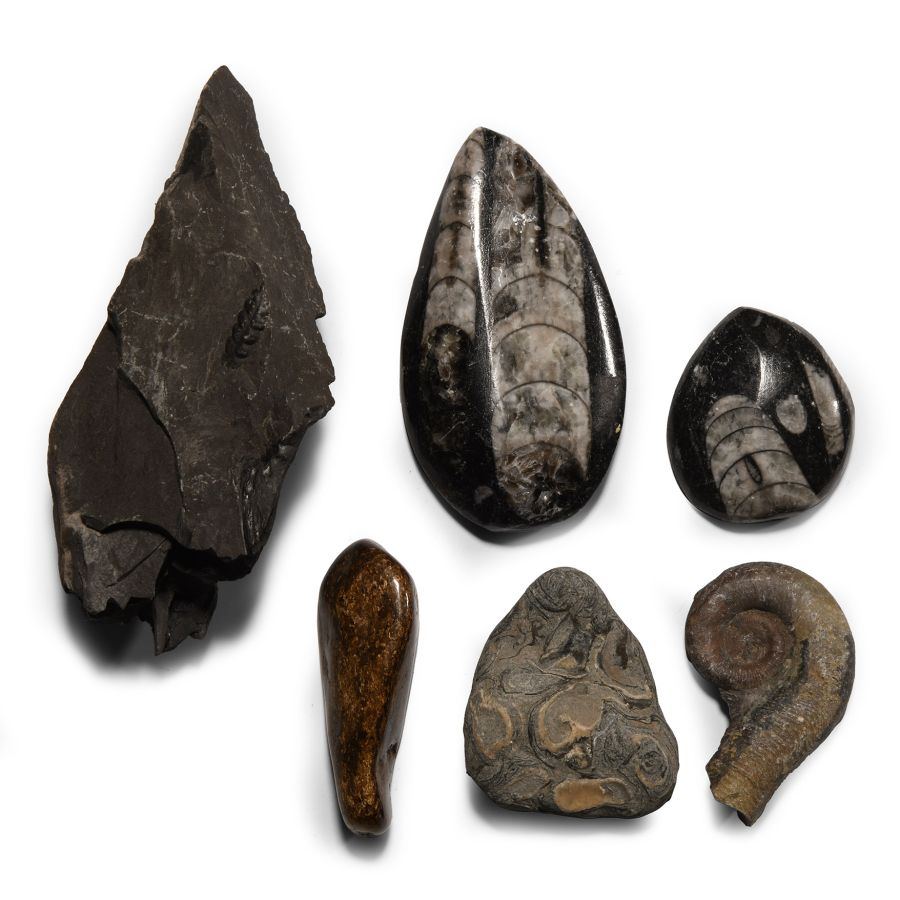
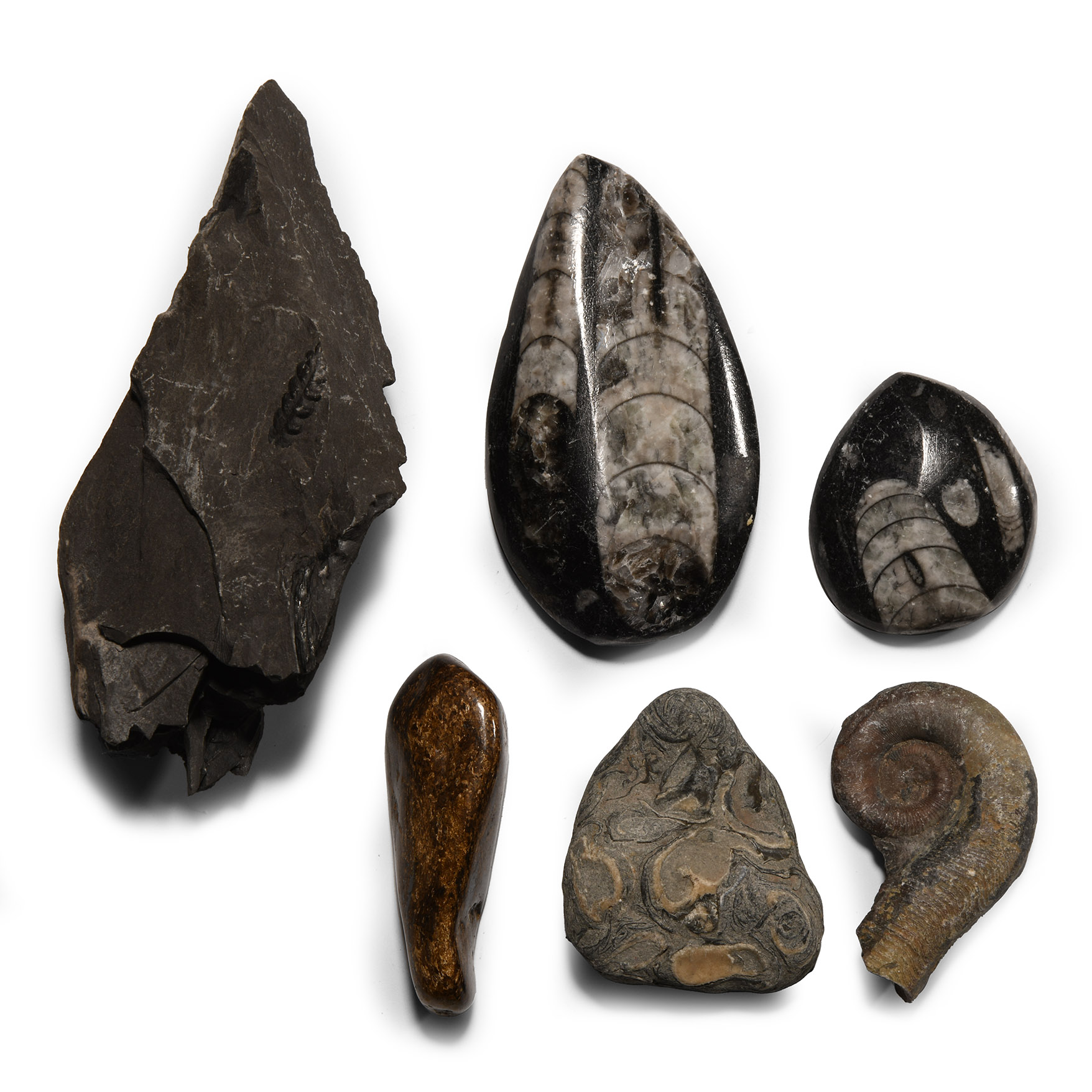
Natural History - Mixed Fossil Group
DEVONIAN PERIOD, CIRCA 417-354 MILLION YEARS B.P.
1 1/2 - 4 1/4 in. (333 grams total, 4-11 cm).
Comprising two polished Orthoceras sp. specimens; an ammonite; a matrix with partial fern fossils; and two others. [6, No Reserve]
ProvenancePreviously acquired on the UK art market before 2000.
Property of a Kent, UK, collector.
TimeLine Auctions follows a vetting process to ensure the authenticity and legality of all items, reinforcing our commitment to integrity and responsible trading. Each antiquity, antique, and coin lot undergoes thorough examination by a vetting committee of at least ten external specialists, professional trade association members, scientists, and archaeologists: Our Vetting Process
AUCTIONS:
TimeLine is a leading auction house specialising in antiquities, ancient art, collectables, natural history, coins, medals, and books. Our auctions offer museums, collectors, historians, and enthusiasts the opportunity to acquire unique and historically significant pieces.
-
Natural History - Historic Mixed Fossil Collection
Sold for (Inc. bp): £33
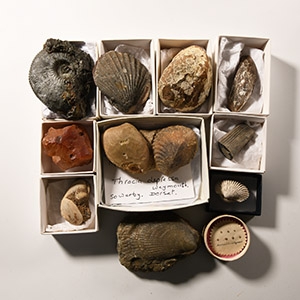
A mixed group comprising: fossil shells on a matrix from England; a partial fish vertebra from England; a large carnelian specimen from Brazil; a matrix with Myophorella clavellata and a Thracia depressa from England; a bivalve from England; a scallop from England; a pyritized ammonite from Peterborough, England; a bivalve; Nummulites elegans specimens in an old specimen box with collection no.E104. 1.12 kg total, 34-95 mm
Acquired from various sources within the UK. Ian Wilkinson collection, Nottinghamshire, UK, formed since 1985. -
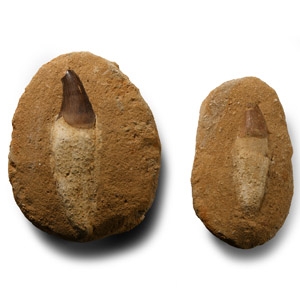
Natural History - Fossil Mosasaur 'Marine Dinosaur' Tooth with Root
Cretaceous Period, 145-65 million years B.P.Sold for (Inc. bp): £20
Comprising two Mosasaur prognathodon teeth and roots set in composite matrices. 763 grams total, 11.4-12 cm
From a Cambridgeshire, UK, collection. Property of a Cambridgeshire, UK, gentleman. -
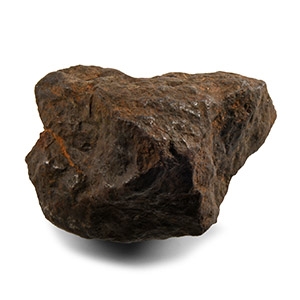
Natural History - Asiatic Chondrite Meteorite
Sold for (Inc. bp): £65
An irregular meteorite of the chondrite type, not modified by melting. 83 grams, 49 mm
Found East Asia. From the personal collection of a West London, UK, gentleman.
