
Loading, please wait...
LOT 2284
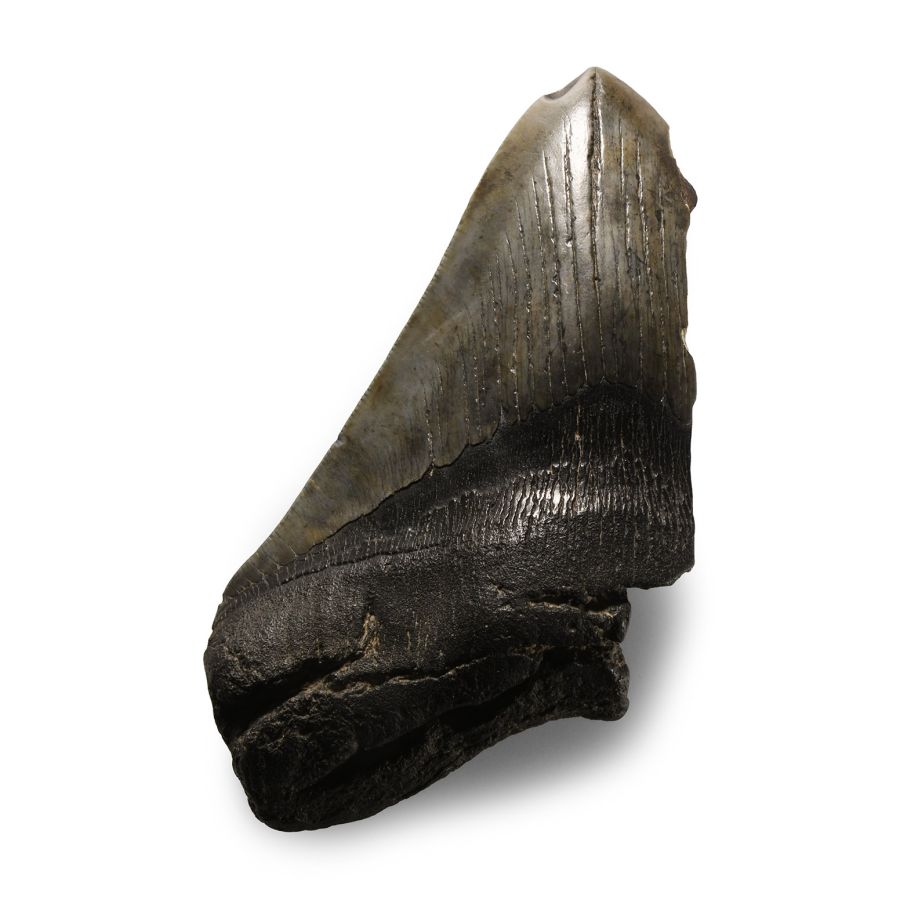
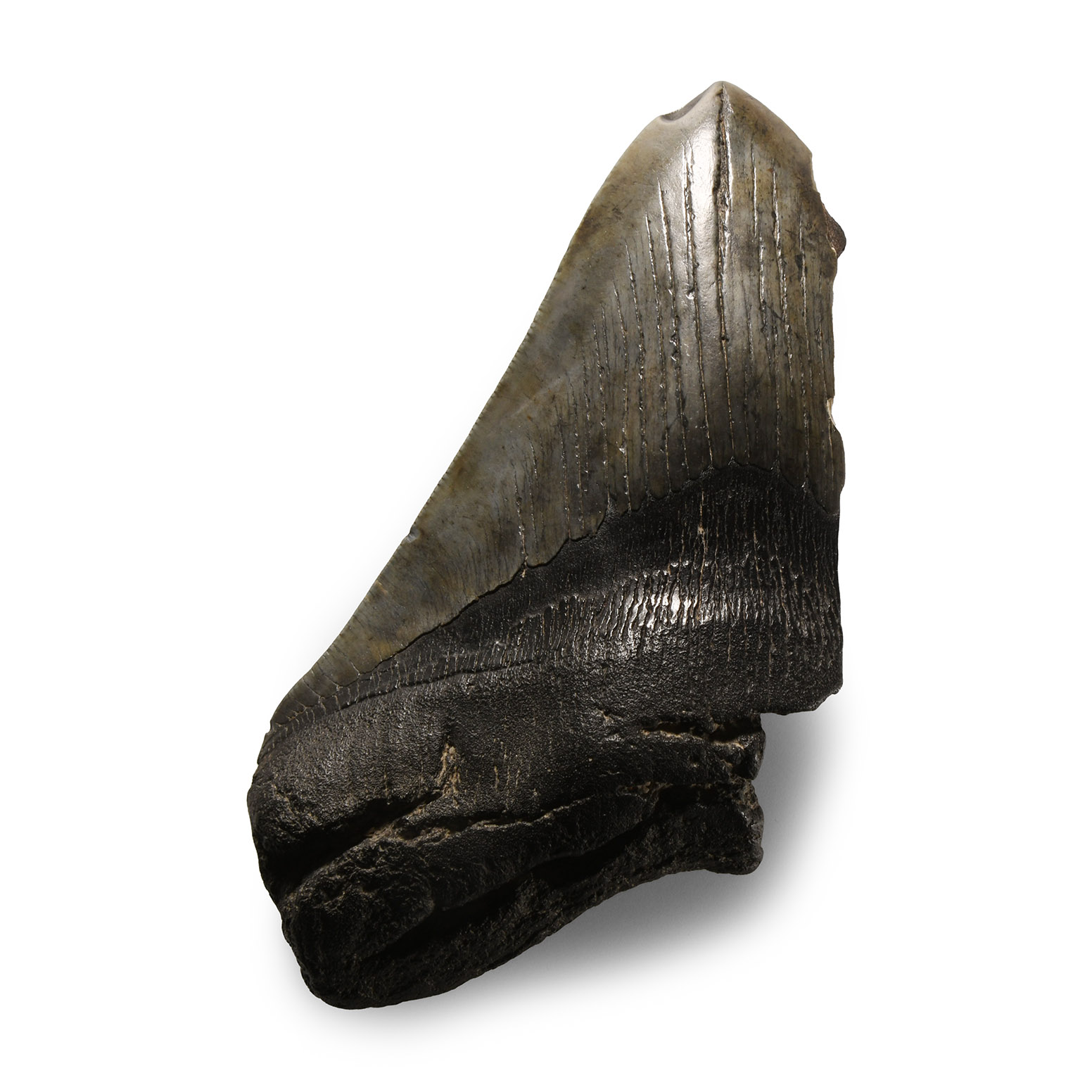
Natural History - Megalodon Giant Shark Partial Fossil Tooth
PLIOCENE PERIOD, CIRCA 5.2-2.5 MILLION YEARS B.P.
5 3/8 in. (268 grams, 13.5 cm).
A partial Carcharocles megalodon tooth displaying good polished enamel. [No Reserve]
ProvenancePreviously acquired on the UK art market before 2000.
Property of a Kent, UK, collector.
Carcharodon megalodon is regarded as one of the largest and most powerful marine predators in vertebrate history and likely had a profound impact on structuring of the marine communities. Fossil remains indicate that this giant shark reached a length of more than 16 metres (52 ft) and also affirm that it had a cosmopolitan distribution. Scientists suggest that in life it looked like a stockier version of the great white shark, Carcharodon carcharias.
CONDITIONTimeLine Auctions follows a vetting process to ensure the authenticity and legality of all items, reinforcing our commitment to integrity and responsible trading. Each antiquity, antique, and coin lot undergoes thorough examination by a vetting committee of at least ten external specialists, professional trade association members, scientists, and archaeologists: Our Vetting Process
AUCTIONS:
TimeLine is a leading auction house specialising in antiquities, ancient art, collectables, natural history, coins, medals, and books. Our auctions offer museums, collectors, historians, and enthusiasts the opportunity to acquire unique and historically significant pieces.
LOT 2284
Natural History - Megalodon Giant Shark Partial Fossil Tooth
Sold for (Inc. bp): £39
-
.jpg)
Natural History - Prehistoric Skull Replica
20th century A.D.Sold for (Inc. bp): £182
With replicated dentition, small eye sockets and broad cheekbones; perhaps Australopithecus. 1.44 kg, 21.5 cm
From a collection acquired on the UK art market from various auction houses and collections mostly before 2000. From an important Cambridgeshire estate; thence by descent. -
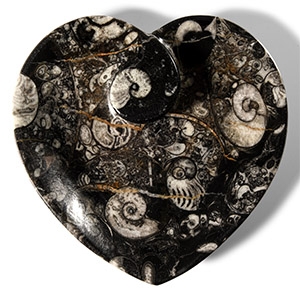
Natural History - Fossil Goniatite Heart-Shaped Trinket Tray
Devonian Period, circa 417-354 million years B.P.Sold for (Inc. bp): £46
The fossiliferous matrix with convex body displaying several fossils with a raised pedestal at the top, set with a single Goniatite sp. fossil. 524 grams, 16.5 cm
From a Cambridgeshire, UK, collection. Property of a Cambridgeshire, UK, gentleman. -
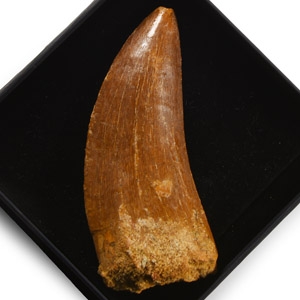
Natural History - Fossil North African 'T-Rex' Tooth
Cretaceous Period, circa 145-93 million years B.P.Sold for (Inc. bp): £247
From Carcharodontosaurus saharicus, displaying good enamel and some serrations; repaired. 42.6 grams, 80 mm
From a Cambridgeshire, UK, collection. Property of a Cambridgeshire, UK, gentleman.
