
Loading, please wait...
_900x900.jpg "Natural History - Mastodon Bone Face Carving")
_200x200.jpg "Natural History - Mastodon Bone Face Carving")
.jpg "Natural History - Mastodon Bone Face Carving")
LOT 2721
Natural History - Mastodon Bone Face Carving
PLIOCENE PERIOD, 5.2-2.5 MILLION YEARS B.P.
2 7/8 in. (106 grams, 72 mm).
Displaying a later carved stylised face with exaggerated facial detailing. [No Reserve]
ProvenancePrivate UK collection formed in the 1980s.
Property of an East Sussex, UK, teacher.
TimeLine Auctions follows a vetting process to ensure the authenticity and legality of all items, reinforcing our commitment to integrity and responsible trading. Each antiquity, antique, and coin lot undergoes thorough examination by a vetting committee of at least ten external specialists, professional trade association members, scientists, and archaeologists: Our Vetting Process
AUCTIONS:
TimeLine is a leading auction house specialising in antiquities, ancient art, collectables, natural history, coins, medals, and books. Our auctions offer museums, collectors, historians, and enthusiasts the opportunity to acquire unique and historically significant pieces.
-
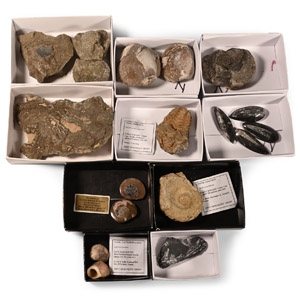
Natural History - Mixed Fossil Collection
Devonian-Late Pleistocene Period, 395 million-125,000 years B.P.Sold for (Inc. bp): £46
A group of fossils comprising: four polished Orthoceras sp. specimens; two polished Goniatite sp. specimens; a Dactylioceras commune trilobite; a Hildoceras bifrons ammonite; two Littorina littorea gastropods; and other fossils. 1.3 kg total, 2.5-12.6 cm
From a Cambridgeshire, UK, collection. -
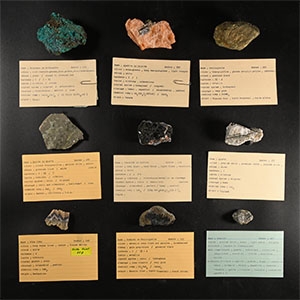
Natural History - Historic Collection of Mineral Specimens
Sold for (Inc. bp): £13
Comprising: dioptase on mottramite from Brazil, collection number 118; granite from adjacent to Ruislip Road, Greenford, Middlesex, England, collection number 467; chalcopyrite from Messini Mine, North Transvaal, South Africa, collection number 207; bornite of chalcopyrite from Massini Mine, North Transvaal, South Africa, collection number 210; quartz from England, collection number 133; Blue John from Derbyshire, England, collection number 148; apatite in calcite from Canada, collection number 388; fluorite in biotite, collection number 103; pyrite in quartz from Darwin, California, USA, collection number 422. 988 grams total, 32-91 mm
Acquired on the UK mineral and fossil market, since 1970. From the historic mineral collection of Richard Valentine Cain, London, UK, thence by descent. Each specimen accompanied by an original historic index file card. -
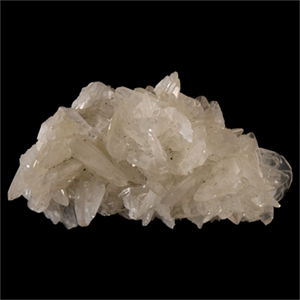
Natural History - Historic 'Kutahya, Turkey' Colemanite Crystal Specimen
Sold for (Inc. bp): £65
Displaying colourless and white crystals; purchased for £42.00 from Gregory, Bottley & Lloyd, in the 1980s, with an old label. 294 grams, 11.5 cm
Acquired on the UK mineral and fossil market, since 1970. From the historic mineral collection of Richard Valentine Cain, London, UK, thence by descent. Accompanied by an original historic index file card.
