
Loading, please wait...
_900x900.jpg "Natural History - Mastodon Bone Face Carving")
_200x200.jpg "Natural History - Mastodon Bone Face Carving")
.jpg "Natural History - Mastodon Bone Face Carving")
LOT 2664
Natural History - Mastodon Bone Face Carving
PLIOCENE PERIOD, 5.2-2.5 MILLION YEARS B.P.
2 3/4 in. (83 grams, 69 mm).
Displaying a later carved stylised face with exaggerated facial detailing. [No Reserve]
ProvenancePrivate UK collection formed in the 1980s.
Property of an East Sussex, UK, teacher.
TimeLine Auctions follows a vetting process to ensure the authenticity and legality of all items, reinforcing our commitment to integrity and responsible trading. Each antiquity, antique, and coin lot undergoes thorough examination by a vetting committee of at least ten external specialists, professional trade association members, scientists, and archaeologists: Our Vetting Process
AUCTIONS:
TimeLine is a leading auction house specialising in antiquities, ancient art, collectables, natural history, coins, medals, and books. Our auctions offer museums, collectors, historians, and enthusiasts the opportunity to acquire unique and historically significant pieces.
-
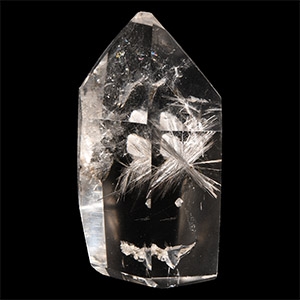
Natural History - Historic 'Brazil' Spectacular Rutile in Quartz Crystal Specimen
Sold for (Inc. bp): £169
Comprising a wonderful star of radiating rutile crystals within a very clear quartz crystal, collection number 600; with an old identification card from Gregory, Bottley & Lloyd, paid £70.00. 80 grams, 67 mm
Acquired on the UK mineral and fossil market, since 1970. From the historic mineral collection of Richard Valentine Cain, London, UK, thence by descent. Accompanied by an original historic index file card. -
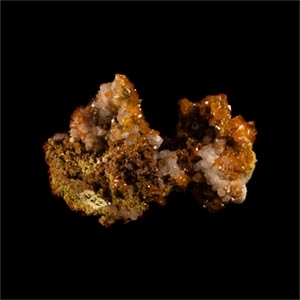
Natural History - Historic 'Hillsboro, Mexico' Wulfenite Crystal Specimen
Sold for (Inc. bp): £59
Well-formed toffee-coloured wulfenite crystals with a small area of pale lemon-yellow small crystals of unknown variety, collection number 522, with an old Gregory, Bottley & Lloyd label. 74 grams total, 70 mm
Acquired on the UK mineral and fossil market, since 1970. From the historic mineral collection of Richard Valentine Cain, London, UK, thence by descent. Accompanied by an original historic index file card. -
.jpg)
Natural History - Cut and Polished Fossil Ammonite
Middle Cretaceous Period, 150 million years B.P.Sold for (Inc. bp): £59
Revealing the distinctive structure of the Cleoniceras sp. chambers, some iridescence to outer surfaces. 245 grams total, 10.2 cm each
Collected 1930-1960. From the collection of the palaeontologist R Gledhill.
