
Loading, please wait...
LOT 0396
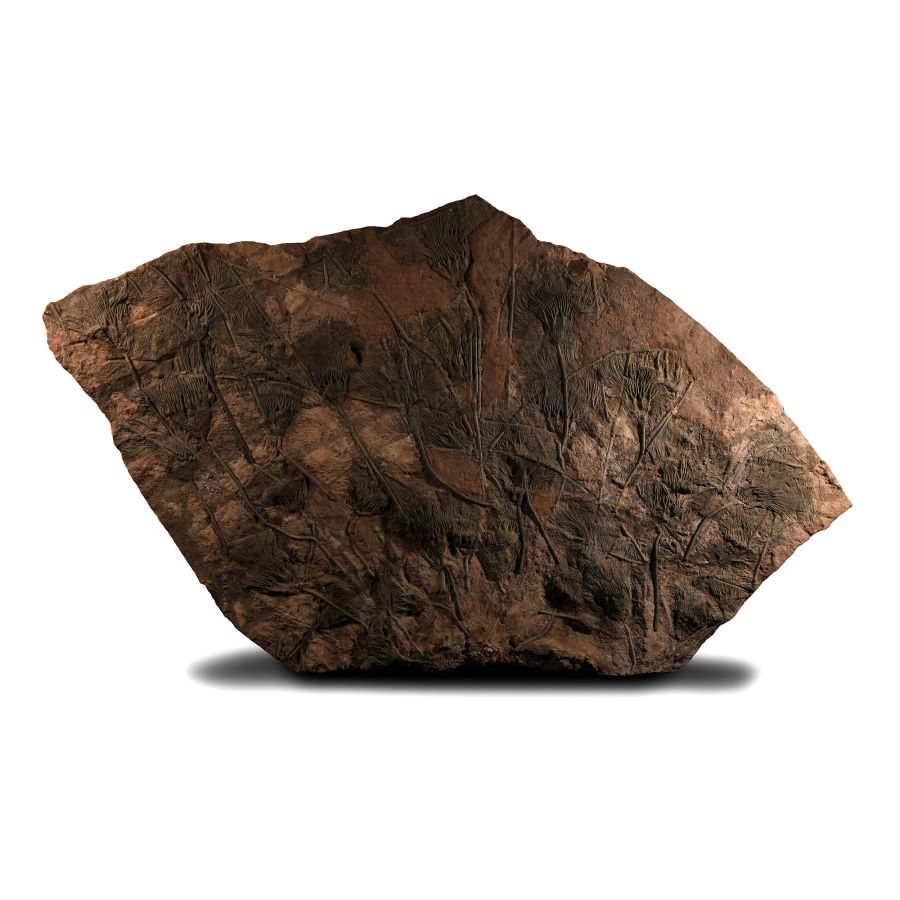
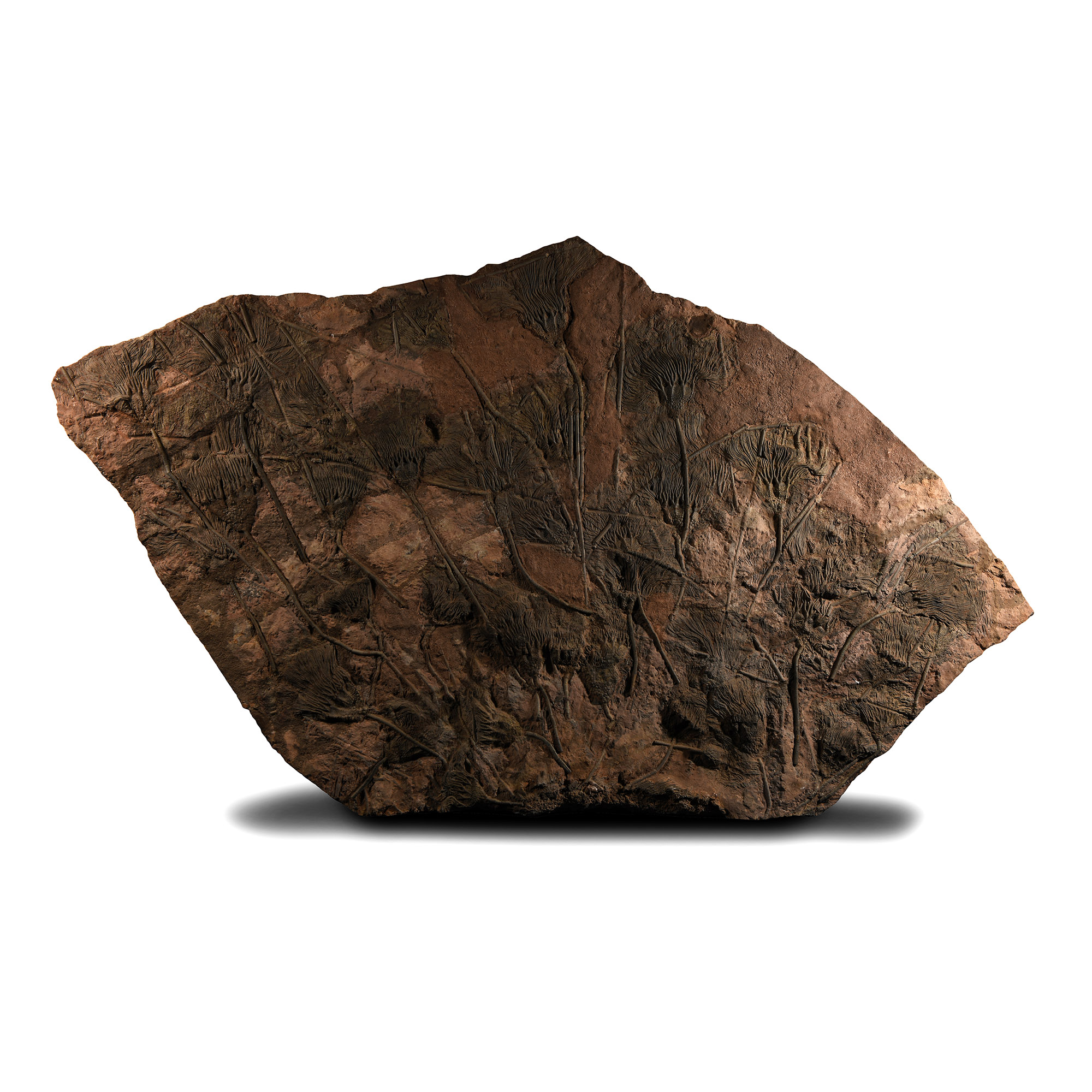
Natural History - Massive Crinoid Plate
DEVONIAN PERIOD, CIRCA 417-354 MILLION YEARS B.P.
68 1/8 in. (90.5 kg, 1.73 m).
An impressive display containing multiple intact Scyphocrinus elegans specimens showing detailed crowns and stalks.
ProvenanceFrom Erfoud, Anti-Atlas Mountains, Morocco, North Africa.
Property of a Cambridgeshire, UK, gentleman.
Crinoids are filter feeding sea animals, which attach themselves to the bottom of the ocean with a stalk. They are echinoderms related to starfish, sea urchins, and brittle stars. Today they are referred to as ‘Sea Lilies’, and are virtually identical to their fossil relatives, making them living fossils.
CONDITIONTimeLine Auctions follows a vetting process to ensure the authenticity and legality of all items, reinforcing our commitment to integrity and responsible trading. Each antiquity, antique, and coin lot undergoes thorough examination by a vetting committee of at least ten external specialists, professional trade association members, scientists, and archaeologists: Our Vetting Process
AUCTIONS:
TimeLine is a leading auction house specialising in antiquities, ancient art, collectables, natural history, coins, medals, and books. Our auctions offer museums, collectors, historians, and enthusiasts the opportunity to acquire unique and historically significant pieces.
-
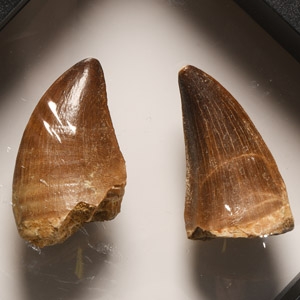
Natural History - Fossil Mosasaur Tooth Display
Cretaceous Period, circa 145-65 million years B.P.Sold for (Inc. bp): £13
Comprising two Mosasaur prognathodon teeth; supplied in a custom display frame. 20.8 grams total, 35-36 mm (57 grams total, 13 cm high including case)
From a Cambridgeshire, UK, collection. Property of a Cambridgeshire, UK, gentleman. -
.jpg)
Natural History - Prehistoric Skull Replica
20th century A.D.Sold for (Inc. bp): £182
With replicated dentition, small eye sockets and broad cheekbones; perhaps Australopithecus. 1.44 kg, 21.5 cm
From a collection acquired on the UK art market from various auction houses and collections mostly before 2000. From an important Cambridgeshire estate; thence by descent. -
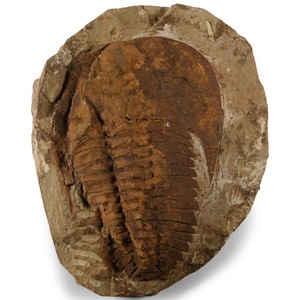
Natural History - Fossil Cambropallas Trilobite
Devonian Period, circa 417-354 million years B.P.Sold for (Inc. bp): £20
The large Cambropallas sp. showing some good detail to the segmented body. 2.2 kg, 24 cm
From a Cambridgeshire, UK, collection. Property of a Cambridgeshire, UK, gentleman.
