
Loading, please wait...
.JPG_900x900.jpg "Natural History - Large Oum Dreyga Meteorite with Full Fusion Crust")
.JPG_200x200.jpg "Natural History - Large Oum Dreyga Meteorite with Full Fusion Crust")
.JPG_900x900.jpg "Natural History - Large Oum Dreyga Meteorite with Full Fusion Crust")
.JPG_200x200.jpg "Natural History - Large Oum Dreyga Meteorite with Full Fusion Crust")
.JPG "Natural History - Large Oum Dreyga Meteorite with Full Fusion Crust")
.JPG "Natural History - Large Oum Dreyga Meteorite with Full Fusion Crust")
LOT 2798
Natural History - Large Oum Dreyga Meteorite with Full Fusion Crust
FELL 16 OCTOBER 2003 A.D., 0200 HRS
4 x 4 in. (157 grams total, 10 x 10 cm including box).
An example of an ordinary chondrite H3-5 stone meteorite displayed in a Swiss membrane box with aluminium identification label; Gour Lafkah, Western Sahara. [No Reserve]
ProvenanceFrom Gour Lafkah, Western Sahara.
Ex French collection.
Accompanied by a certificate of authenticity from Meteoritica dated 2 April 2009.
TimeLine Auctions follows a vetting process to ensure the authenticity and legality of all items, reinforcing our commitment to integrity and responsible trading. Each antiquity, antique, and coin lot undergoes thorough examination by a vetting committee of at least ten external specialists, professional trade association members, scientists, and archaeologists: Our Vetting Process
AUCTIONS:
TimeLine is a leading auction house specialising in antiquities, ancient art, collectables, natural history, coins, medals, and books. Our auctions offer museums, collectors, historians, and enthusiasts the opportunity to acquire unique and historically significant pieces.
LOT 2798
Natural History - Large Oum Dreyga Meteorite with Full Fusion Crust
Sold for (Inc. bp): £182
-
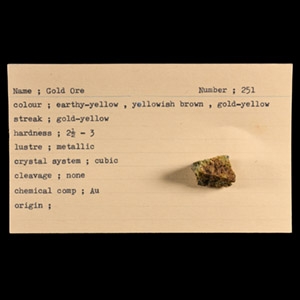
Natural History - Historic Gold Ore Specimen
Sold for (Inc. bp): £46
Displaying earthy-yellow, yellowish brown and gold-yellow colours, collection number 251. 3.4 grams, 21 mm
Acquired on the UK mineral and fossil market, since 1970. From the historic mineral collection of Richard Valentine Cain, London, UK, thence by descent. Accompanied by an original historic index file card. -
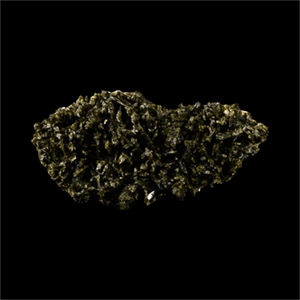
Natural History - Historic Epidote Mineral Specimen
Sold for (Inc. bp): £20
Displaying a bed of prismatic green crystals, collection number 604; acquired from Harrods, London, in 1986. 30 grams, 70 mm
Acquired on the UK mineral and fossil market, since 1970. From the historic mineral collection of Richard Valentine Cain, London, UK, thence by descent. Accompanied by an original historic index file card and an old Harrods invoice. -
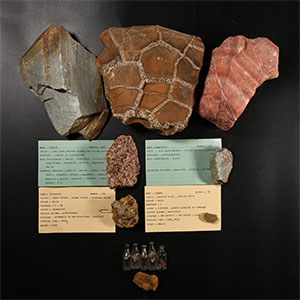
Natural History - Mixed Mineral Specimen Group
Sold for (Inc. bp): £7
Comprising: five mineral specimens in glass bottles; gypsum from Mexico, collection number 79; cerussite from Ireland, collection number 284; granite from England, collection number 406; quartzite from North Transvaal, South Africa; and three large mineral specimens. 5.25 kg total, 2.5-19 cm
Acquired on the UK mineral and fossil market, since 1970. From the historic mineral collection of Richard Valentine Cain, London, UK, thence by descent. Four specimens accompanied by an original historic index file card.
