
Loading, please wait...
LOT 2420
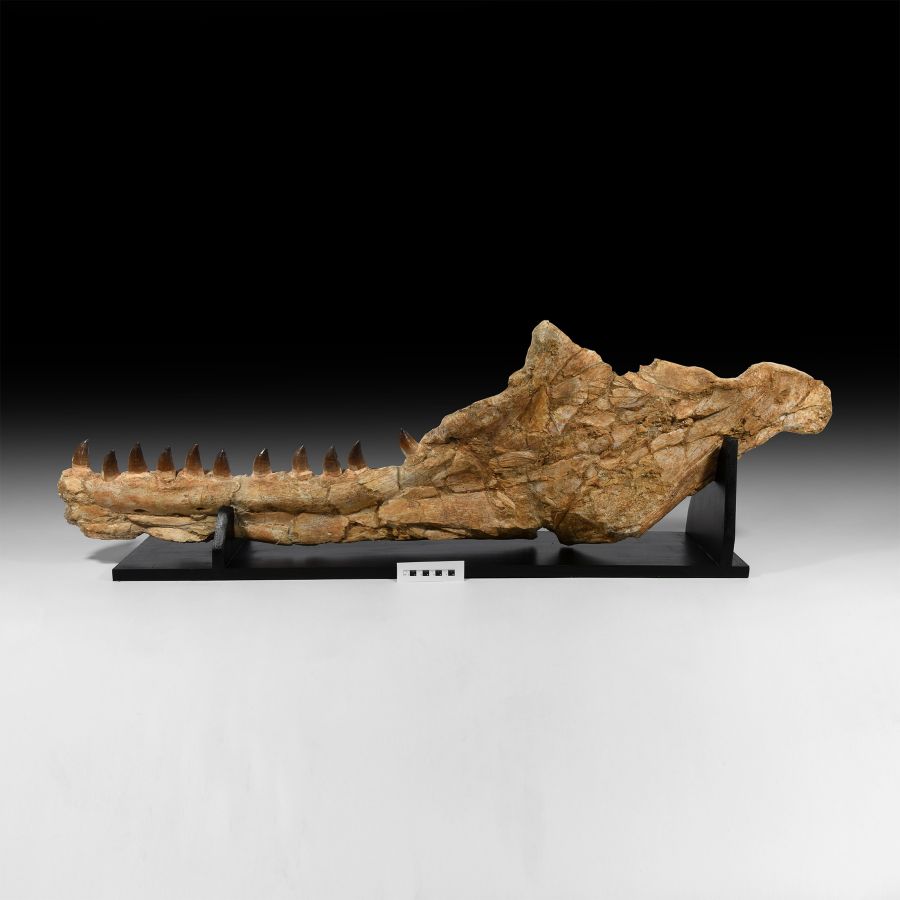
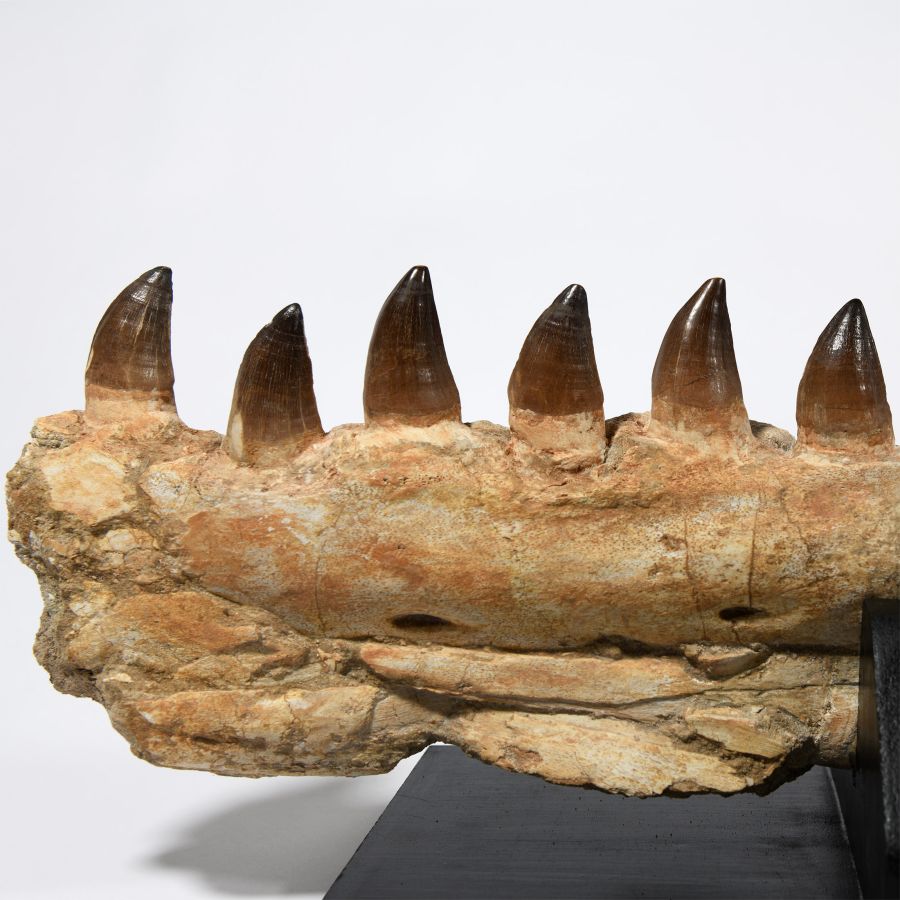
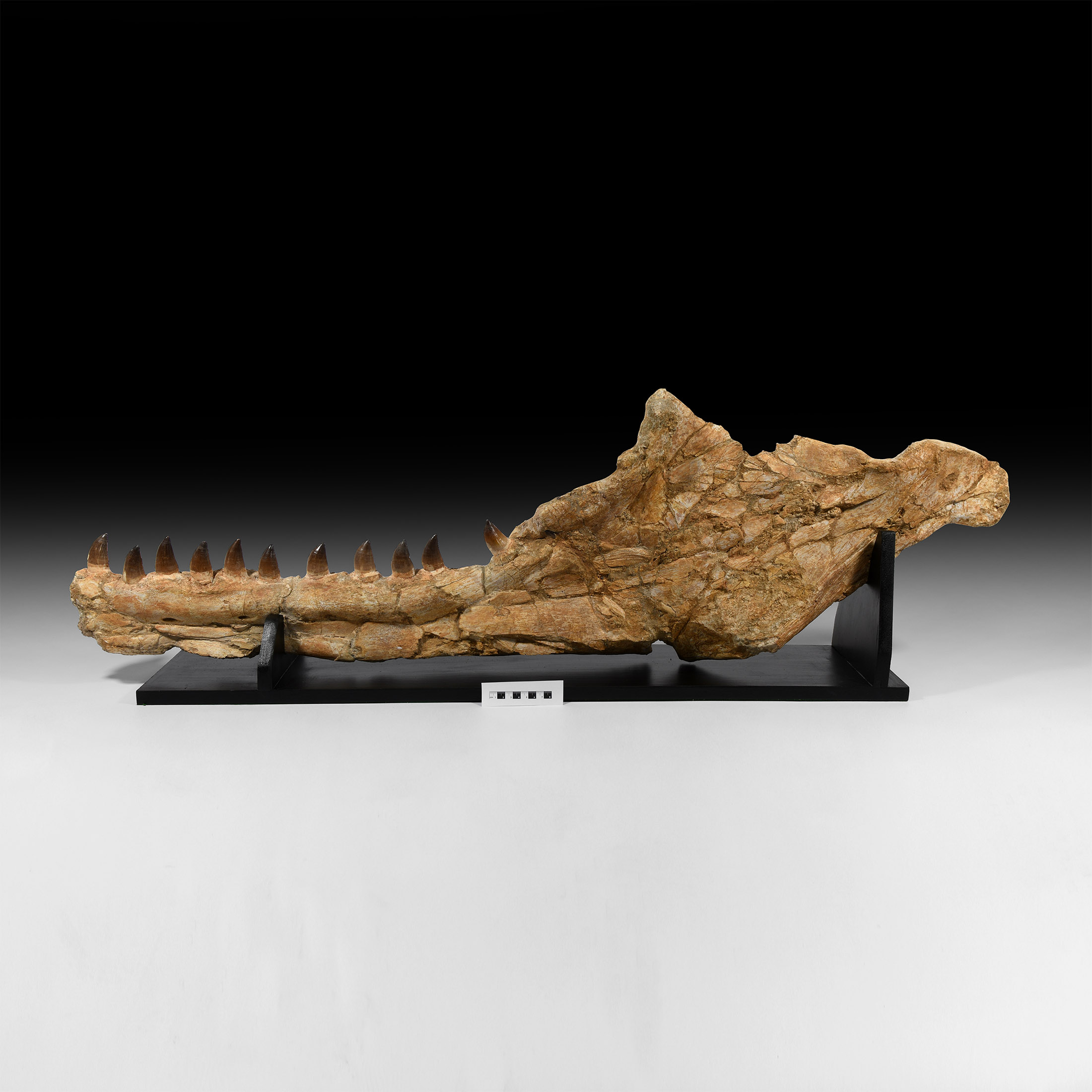
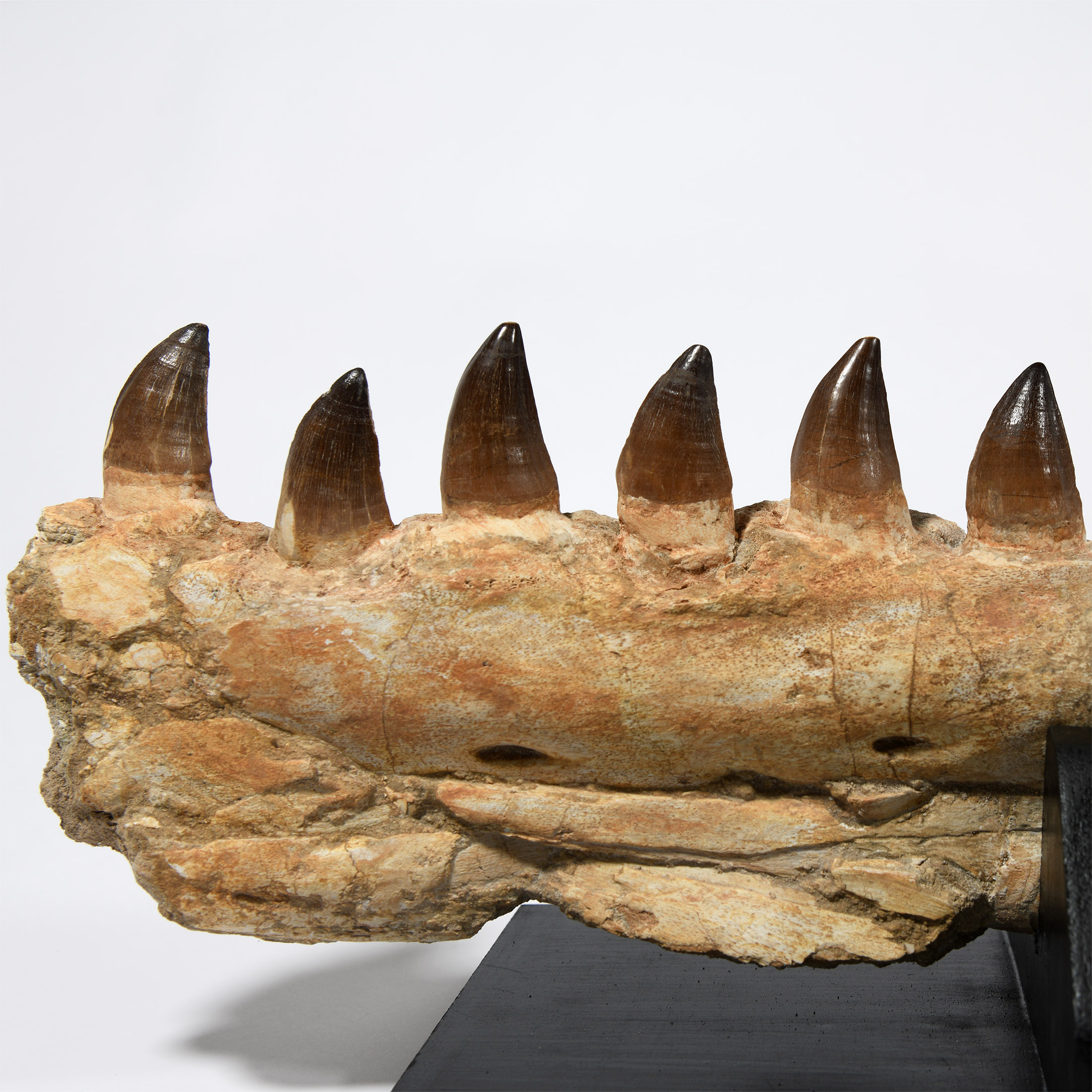
Natural History - Large Mosasaur Fossil Jaw on Stand
CRETACEOUS PERIOD, 145-65 MILLION YEARS B.P.
50 3/8 in. (15.5 kg total, 1.28 m wide including stand).
Displaying eleven teeth, each with good remains of enamelling and some serration; mounted on a custom-made display stand.
ProvenanceFrom a Cambridgeshire, UK, collection.
This lot has been checked against the Interpol Database of stolen works of art and is accompanied by search certificate number no.11723-197546.
TimeLine Auctions follows a vetting process to ensure the authenticity and legality of all items, reinforcing our commitment to integrity and responsible trading. Each antiquity, antique, and coin lot undergoes thorough examination by a vetting committee of at least ten external specialists, professional trade association members, scientists, and archaeologists: Our Vetting Process
AUCTIONS:
TimeLine is a leading auction house specialising in antiquities, ancient art, collectables, natural history, coins, medals, and books. Our auctions offer museums, collectors, historians, and enthusiasts the opportunity to acquire unique and historically significant pieces.
-
.jpg)
Natural History - Large Sphalerite, Chalcopyrite and Galena Crystal Specimen
Sold for (Inc. bp): £33
With clear quartz crystal clusters; supplied in a cardboard specimen tray. 567 grams, 10.9 cm
Very fine condition.
Mineral Imports, London, UK. Gregory, Bottley & Lloyd (Gregory's). -
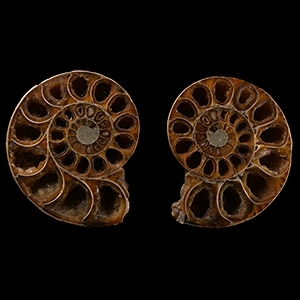
Natural History - Cut and Polished Fossil Ammonite
Jurassic Period, 200-145 million years B.P.Sold for (Inc. bp): £20
The specimen cut through the middle to reveal the dividing gas chambers with crystal formations; some minor iridescence to outer surfaces. 210 grams total, 83 mm each
From a Lincolnshire, UK, collection. -
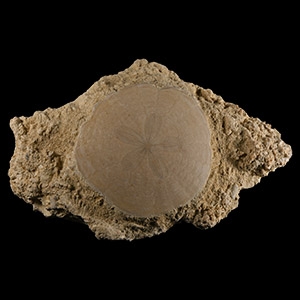
Natural History - Fossil 'Sand Dollar' on Matrix
Jurassic Period, 199-145 million years B.P.Sold for (Inc. bp): £20
Comprising a large specimen on a sandstone matrix. 555 grams, 17 cm
From a Lincolnshire, UK, collection.
