
Loading, please wait...
![Natural History - Large Brown Calcite Specimen Group [10]](https://timelineauctions.com/zoom_images/zoomthumb/2/0/208013(1)_900x900.jpg "Natural History - Large Brown Calcite Specimen Group [10]")
![Natural History - Large Brown Calcite Specimen Group [10]](https://timelineauctions.com/zoom_images/zoommap/2/0/208013(1)_200x200.jpg "Natural History - Large Brown Calcite Specimen Group [10]")
![Natural History - Large Brown Calcite Specimen Group [10]](https://timelineauctions.com/upload/images/items/208013(1).jpg "Natural History - Large Brown Calcite Specimen Group [10]")
LOT 2611
Natural History - Large Brown Calcite Specimen Group [10]
2 1/2 - 3 1/8 in. (2.76 kg total, 64-80 mm).
Comprising large cut chunks. [10, No Reserve]
ProvenanceFrom Mexico.
Ex Mineral Imports, London, UK.
Gregory, Bottley & Lloyd (Gregory's).
TimeLine Auctions follows a vetting process to ensure the authenticity and legality of all items, reinforcing our commitment to integrity and responsible trading. Each antiquity, antique, and coin lot undergoes thorough examination by a vetting committee of at least ten external specialists, professional trade association members, scientists, and archaeologists: Our Vetting Process
AUCTIONS:
TimeLine is a leading auction house specialising in antiquities, ancient art, collectables, natural history, coins, medals, and books. Our auctions offer museums, collectors, historians, and enthusiasts the opportunity to acquire unique and historically significant pieces.
LOT 2611
Natural History - Large Brown Calcite Specimen Group [10]
Sold for (Inc. bp): £7
-
.jpg)
Natural History - Woolly Mammoth Bone Bead Necklace String
Devensian Period, 110,000-12,000 years B.P.Sold for (Inc. bp): £156
Restrung using polished Mammuthus primigenius bone beads. 196 grams, 64 cm long
Private UK collection formed in the 1980s. Property of an East Sussex, UK, teacher. -
.jpg)
Natural History - Fossil Turtle Coprolite Group
Eocene Period, circa 50 million years B.P.Sold for (Inc. bp): £33
Comprising a pair of coprolites. 300 grams total, 75-83 mm
From the Wilkes Formation, Salmon Creek, Lewis County, Washington, USA. Acquired during the 1980s. From an old Lincolnshire, UK, collection. -
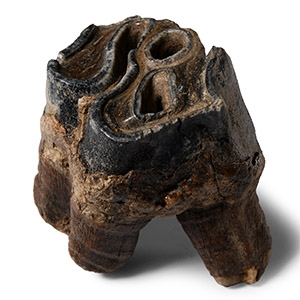
Natural History - Woolly Rhinoceros Upper Rear Tooth
Ice Age, 50,000-20,000 years B.P.Sold for (Inc. bp): £72
With stub roots. 180 grams, 74 mm
From Yakutsk, Permafrost Region, Siberia. Acquired from an old Dutch collection. From the private collection of an East Anglian, UK, collector.
