
Loading, please wait...
_900x900.jpg "Natural History - Large British Woolly Rhinoceros Fossil Leg Bone Group")
_200x200.jpg "Natural History - Large British Woolly Rhinoceros Fossil Leg Bone Group")
.jpg "Natural History - Large British Woolly Rhinoceros Fossil Leg Bone Group")
LOT 2195
Natural History - Large British Woolly Rhinoceros Fossil Leg Bone Group
PLEISTOCENE PERIOD, 2.58 MILLION-11,700 YEARS B.P.
14 1/2 - 15 3/4 in. (5.65 kg total, 37-40 cm).
Comprising three leg bones (radius, tibia) from Coelodonta antiquitatis. [No Reserve]
ProvenanceFound Oxfordshire, UK, clay pits.
Ian Wilkinson collection, Nottinghamshire, UK, formed since 1985.
The woolly rhinoceros inhabited northern Eurasia and mostly fed on grasses and sedges that grew in the mammoth steppe. An adult typically stood at 1.45-1.6 metres high with a large front horn that would have measured 1-1.35 metres long.
CONDITIONTimeLine Auctions follows a vetting process to ensure the authenticity and legality of all items, reinforcing our commitment to integrity and responsible trading. Each antiquity, antique, and coin lot undergoes thorough examination by a vetting committee of at least ten external specialists, professional trade association members, scientists, and archaeologists: Our Vetting Process
AUCTIONS:
TimeLine is a leading auction house specialising in antiquities, ancient art, collectables, natural history, coins, medals, and books. Our auctions offer museums, collectors, historians, and enthusiasts the opportunity to acquire unique and historically significant pieces.
LOT 2195
Natural History - Large British Woolly Rhinoceros Fossil Leg Bone Group
Sold for (Inc. bp): £7
-
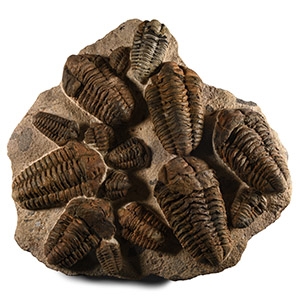
Natural History - Fossil Flexicalymene Trilobite Plate
Ordovician Period, 485-443 million years B.P.Sold for (Inc. bp): £208
The mortality plate comprising fifteen variously sized Flexicalymene specimens. 2.78 kg, 25 cm
From a Cambridgeshire, UK, collection. Property of a Cambridgeshire, UK, gentleman. -
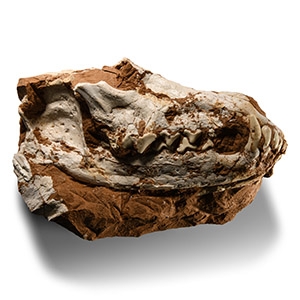
Natural History - Fossil Wolf Skull in Matrix
Late Pliocene-early Pleistocene Period, circa 5.3 million-60,000 years B.P.Estimate: £700 - 900 (+bp*)
Opening Bid: £200
The majority of Canis teilhardi skull in matrix with some other bone fragments. 1.28 kg, 19 cm
From the private collection of a London gentleman formed since 2003. -
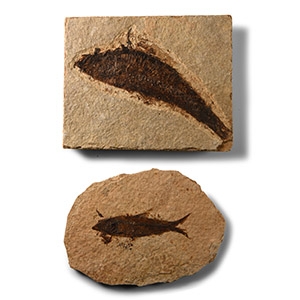
Natural History - Knightia Fossil Fish Group
Eocene Period, circa 56-33 million years B.P.Sold for (Inc. bp): £13
Comprising two Knightia alta fossil fish on matrices. 268 grams total, 11.6-12.2 cm
From a Lincolnshire, UK, collection. Property of a Cambridgeshire, UK, gentleman.
