
Loading, please wait...
LOT 2233
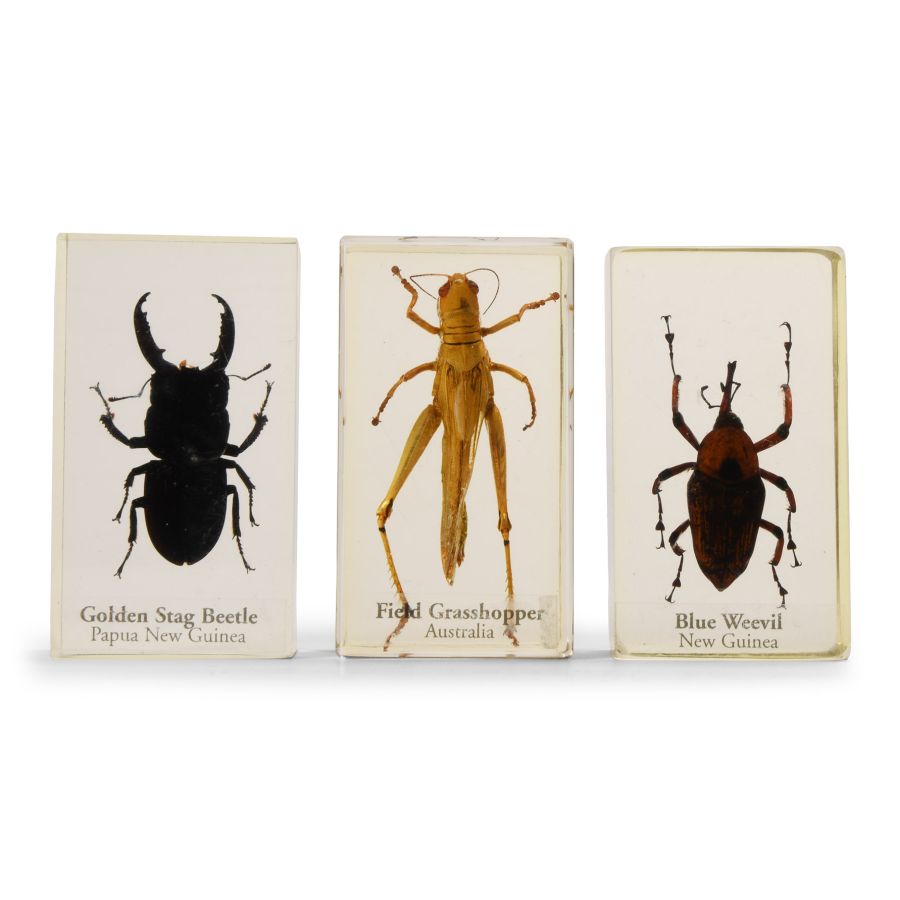
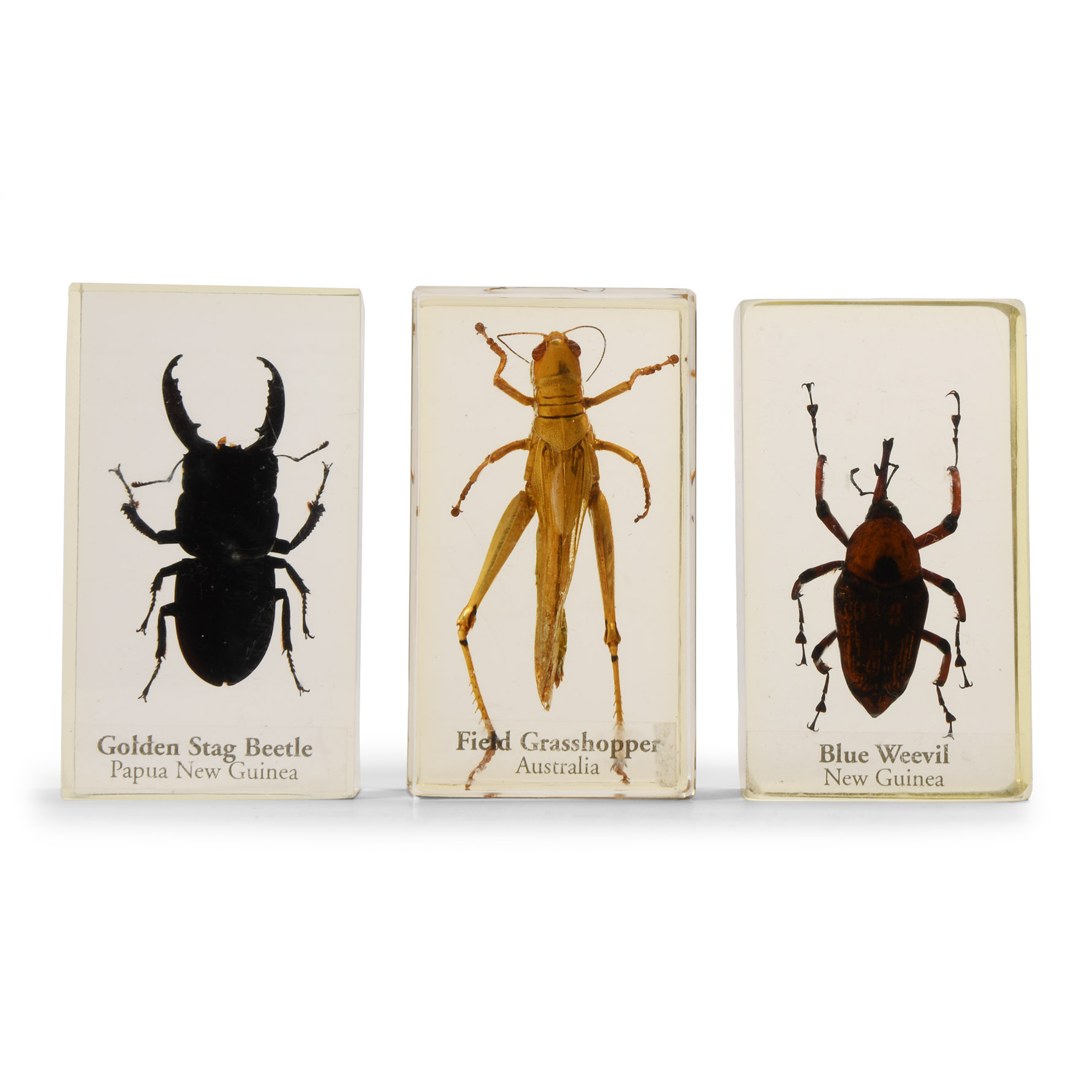
Natural History - Insect Paper Weight Group
20TH CENTURY A.D.
2 7/8 x 2 5/8 in. (259 grams total, 73 x 41 mm each).
Comprising three labelled resin display blocks with a field grasshopper from Australia, a blue weevil from New Guinea, and a golden stag beetle from Papua New Guinea. [3, No Reserve]
ProvenanceAcquired from Newark Fossil and Gem Fair, circa 2012.
Ian Wilkinson collection, Nottinghamshire, UK.
TimeLine Auctions follows a vetting process to ensure the authenticity and legality of all items, reinforcing our commitment to integrity and responsible trading. Each antiquity, antique, and coin lot undergoes thorough examination by a vetting committee of at least ten external specialists, professional trade association members, scientists, and archaeologists: Our Vetting Process
AUCTIONS:
TimeLine is a leading auction house specialising in antiquities, ancient art, collectables, natural history, coins, medals, and books. Our auctions offer museums, collectors, historians, and enthusiasts the opportunity to acquire unique and historically significant pieces.
-

Natural History - Massive Spinosaurus Dinosaur Tooth
Cretaceous Period, circa 125-113 million years B.P.Sold for (Inc. bp): £286
From Spinosaurs maroccanus with partial root; repaired. 124 grams, 13.3 cm
From a Lincolnshire, UK, collection. Property of a Cambridgeshire, UK, gentleman.
The Spinosaurus was both a beachcomber type scavenger and an active hunter taking small stranded Plesiosaurs, Pterosaurs, turtles and large fish. -

Natural History - Massive Crinoid Plate
Devonian Period, circa 417-354 million years B.P.Sold for (Inc. bp): £3,380
An impressive display containing multiple intact Scyphocrinus elegans specimens showing detailed crowns and stalks. 90.5 kg, 1.73 m
From Erfoud, Anti-Atlas Mountains, Morocco, North Africa. Property of a Cambridgeshire, UK, gentleman.
Crinoids are filter feeding sea animals, which attach themselves to the bottom of the ocean with a stalk. They are echinoderms related to starfish, sea urchins, and brittle stars. Today they are referred to as ‘Sea Lilies’, and are virtually identical to their fossil relatives, making them living fossils. -
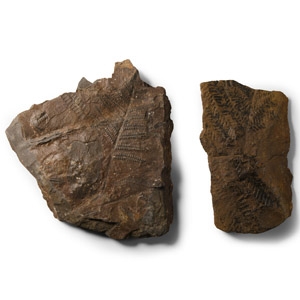
Natural History - Fossil Permian Plants and Ferns on Matrix
Permian Period, 298-252 million years B.P.Sold for (Inc. bp): £33
Comprising two irregular matrices, each with multiple plant and fern fossils. 318 grams total, 10.6-20 cm
From Saxony, Germany. From a Cambridgeshire, UK, collection. Property of a Cambridgeshire, UK, gentleman.
