
Loading, please wait...


LOT 2633
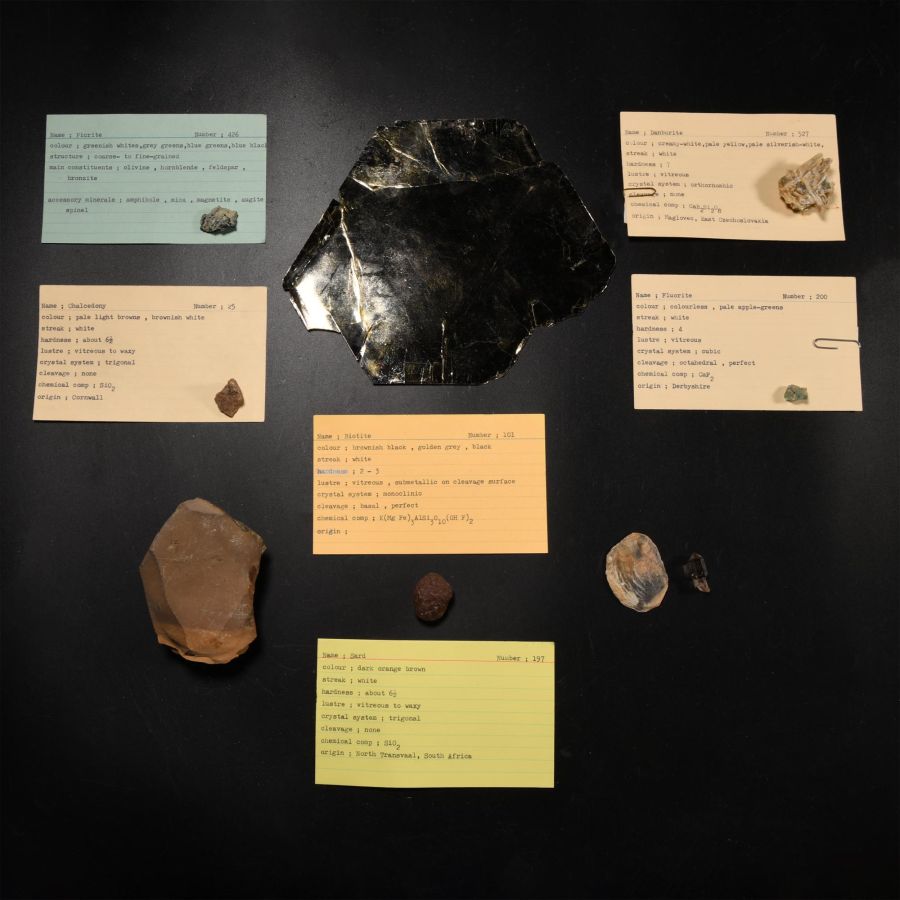
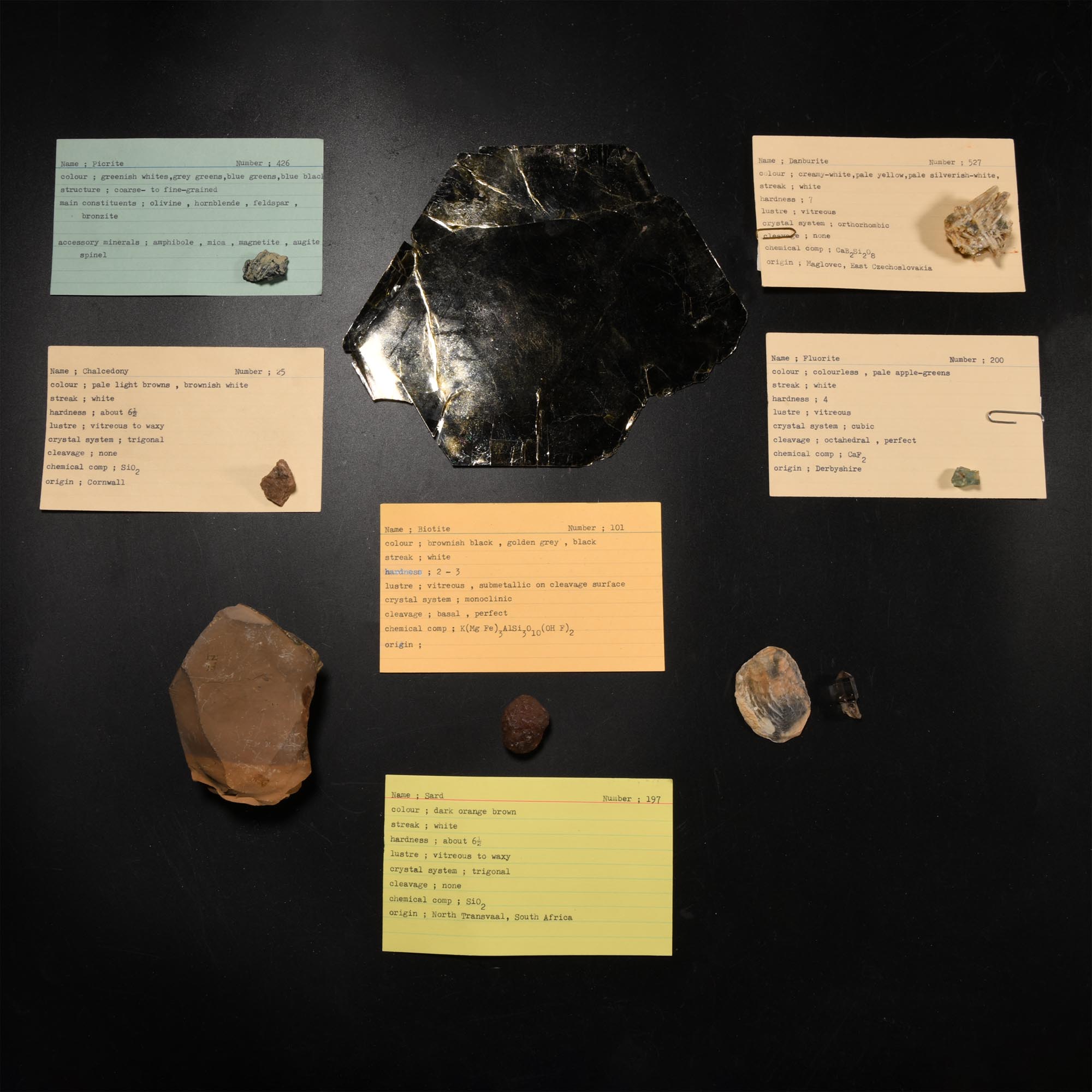
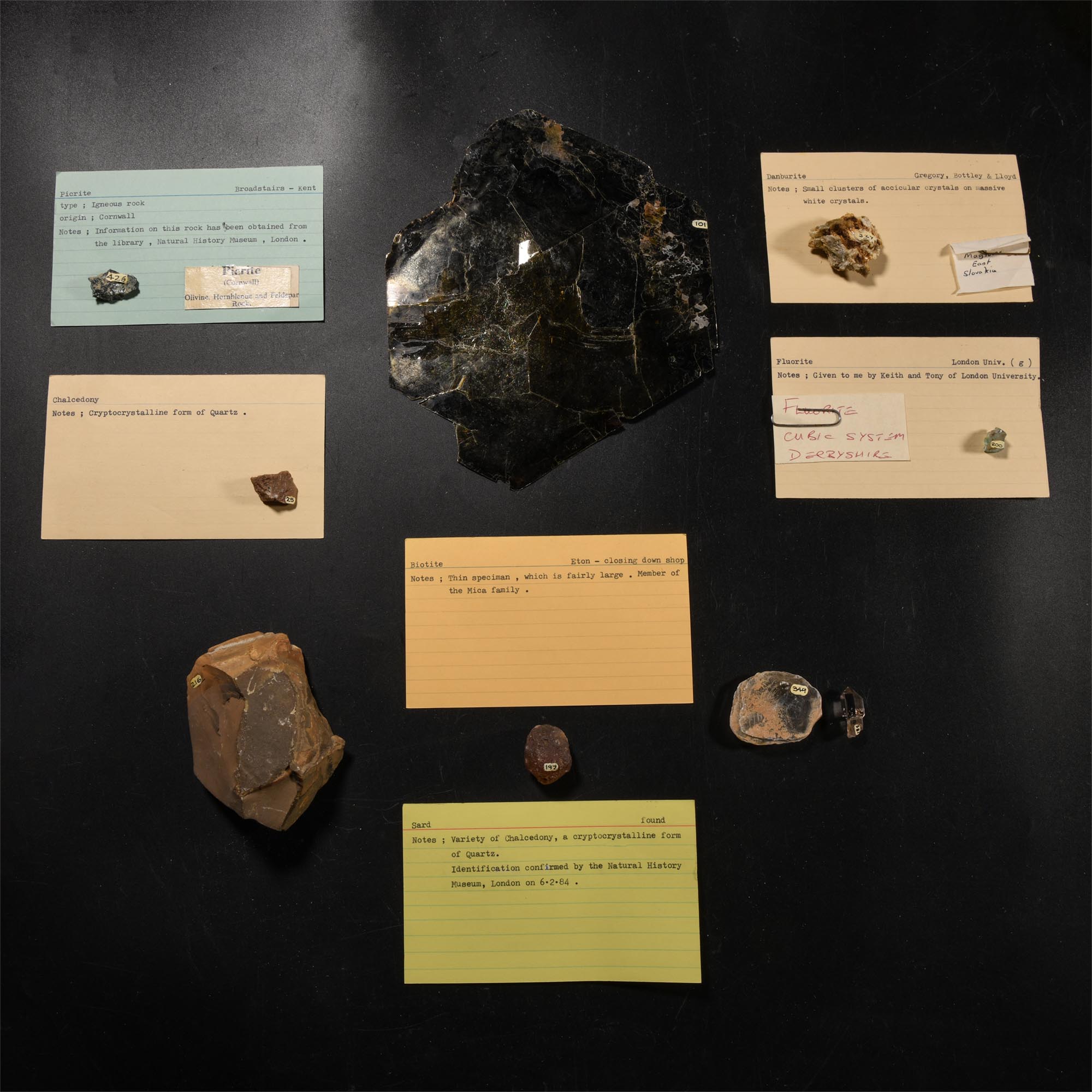
Natural History - Historic Mineral Specimen Collection
1/2 - 7 3/8 in. (292 grams total, 1.1-18.8 cm).
Comprising: a large biotite specimen, collection number 101; septarian nodule fragment from Horsenden Hill, Ealing, Middlesex, England, collection number 216; picrite from Cornwall, England, collection number 426; sard from North Transvaal, South Africa, collection number 197; danburite from Maglovec, East Czechoslovakia, collection number 527; fluorite from Derbyshire, England, collection number 200; chalcedony from Cornwall, England, collection number 25; translucent from selenite from Sahara Desert, Libya, collection number 349; quartz 'sceptre' from Beaverhead County, Montana, USA, collection number 581. [9, No Reserve]
ProvenanceAcquired on the UK mineral and fossil market, since 1970.
From the historic mineral collection of Richard Valentine Cain, London, UK, thence by descent.
Six specimens accompanied by an original historic index file card.
TimeLine Auctions follows a vetting process to ensure the authenticity and legality of all items, reinforcing our commitment to integrity and responsible trading. Each antiquity, antique, and coin lot undergoes thorough examination by a vetting committee of at least ten external specialists, professional trade association members, scientists, and archaeologists: Our Vetting Process
AUCTIONS:
TimeLine is a leading auction house specialising in antiquities, ancient art, collectables, natural history, coins, medals, and books. Our auctions offer museums, collectors, historians, and enthusiasts the opportunity to acquire unique and historically significant pieces.
-
![Natural History - Mixed Polished Mineral Specimen Pebble Group [100]](https://timelineauctions.com/upload/images/items/small/211396-s.jpg)
Natural History - Mixed Polished Mineral Specimen Pebble Group [100]
Sold for (Inc. bp): £13
Comprising: haematite, quartz, amethyst, aventurine, dalmatian jasper and others. 722 grams total, 15-33 mm
Ex Mineral Imports, London, UK. Gregory, Bottley & Lloyd (Gregory's). -
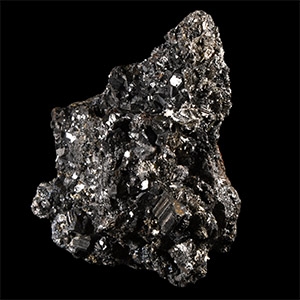
Natural History - Historic 'Cornwall' Bournonite and Arsenopyrite or Sphalerite Mineral Specimen
Sold for (Inc. bp): £52
Displaying the characteristic 'cog-wheel' shaped twins of bournonite, collection number 420. 135 grams, 62 mm
Acquired on the UK mineral and fossil market, since 1970. From the historic mineral collection of Richard Valentine Cain, London, UK, thence by descent. Accompanied by an original historic index file card and an old Gregory, Bottley & Lloyd label. -
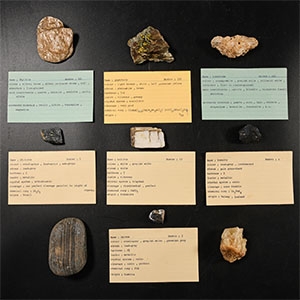
Natural History - Historic Mineral Specimen Collection
Sold for (Inc. bp): £26
Comprising: stibnite from Brazil, collection number 5; phyllite from England, collection number 181; galena from Cumbria, England, collection number 3; amphibole, collection number 170; calcite from Yorkshire, England, collection number 52; a banded stone from Iraq; bornite from Galway, Ireland, collection number 2; limestone from Cornwall, England, collection number 452; calcite from North Transvaal, South Africa, collection number 316. 583 grams total, 21-80 mm
Acquired on the UK mineral and fossil market, since 1970. From the historic mineral collection of Richard Valentine Cain, London, UK, thence by descent. Seven specimens accompanied by an original historic index file card.
