
Loading, please wait...


LOT 2836
Natural History - Historic Mineral Specimen Collection
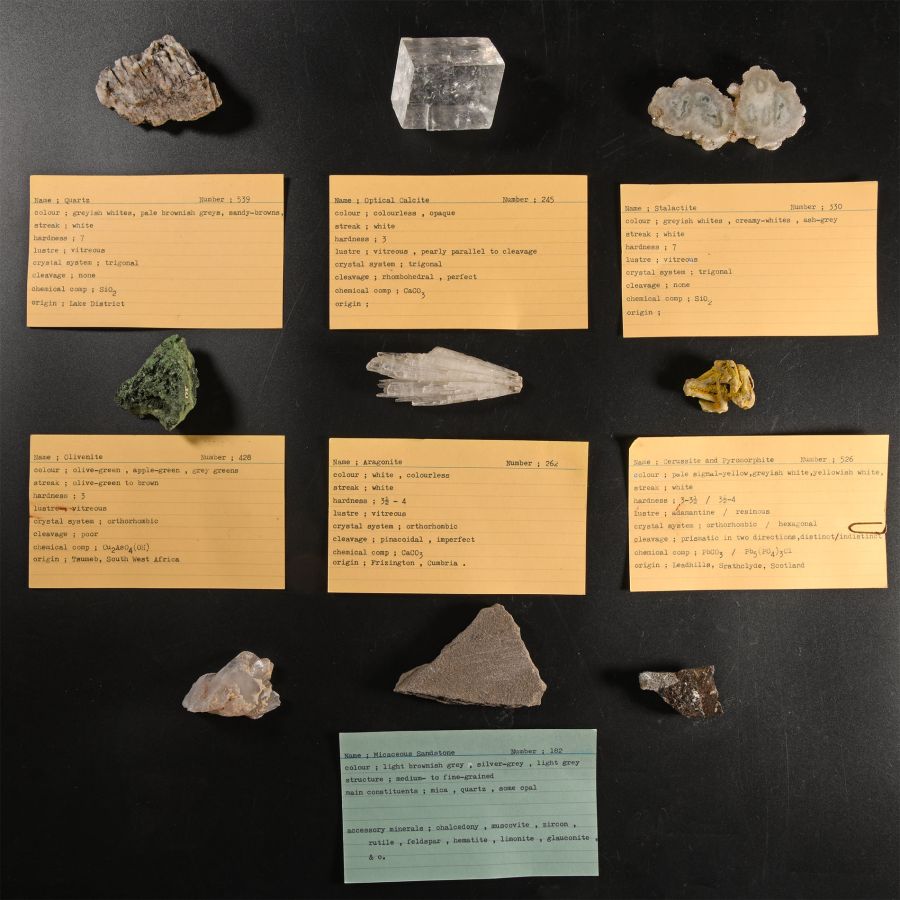
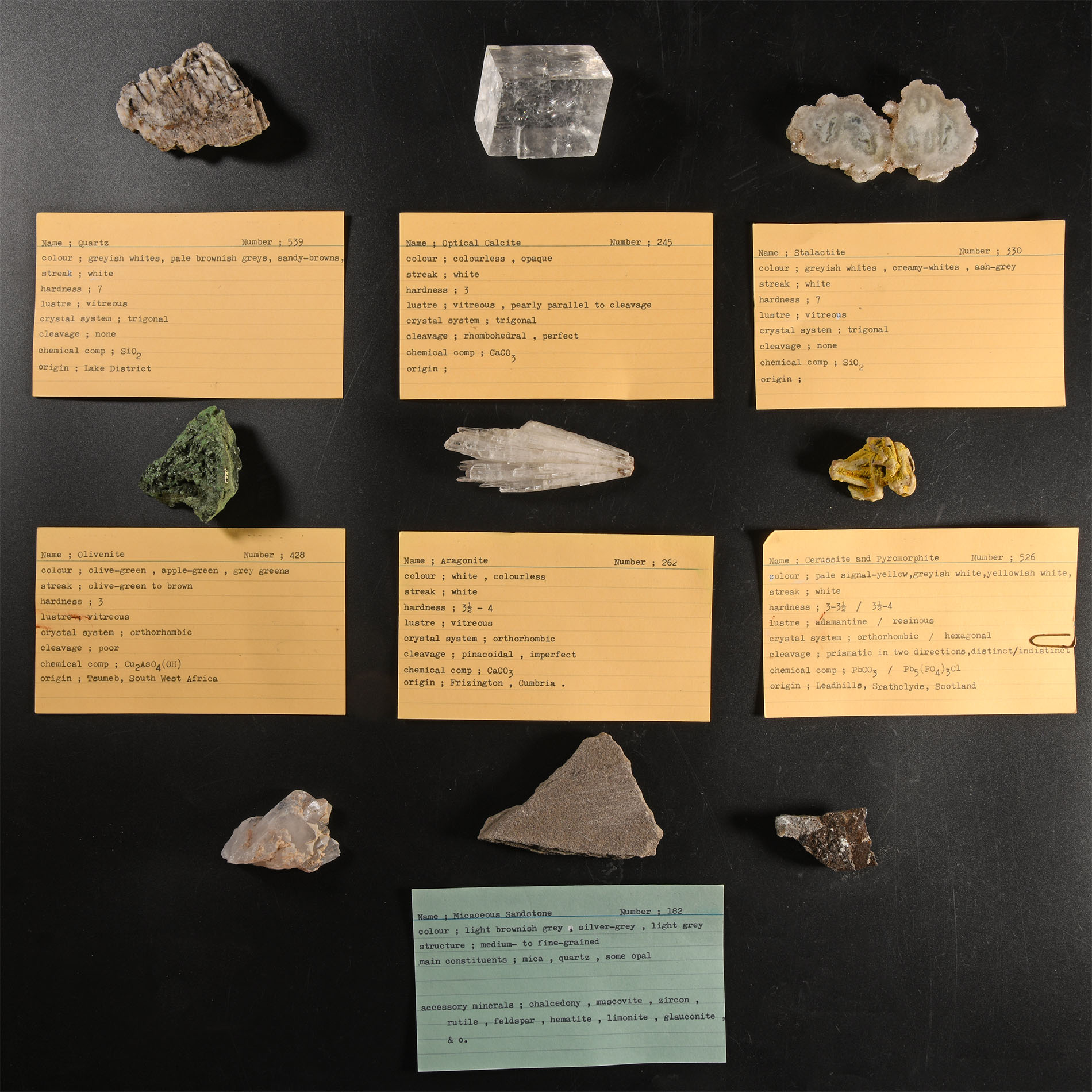
1 1/8 - 3 in. (394 grams total, 33-77 mm).
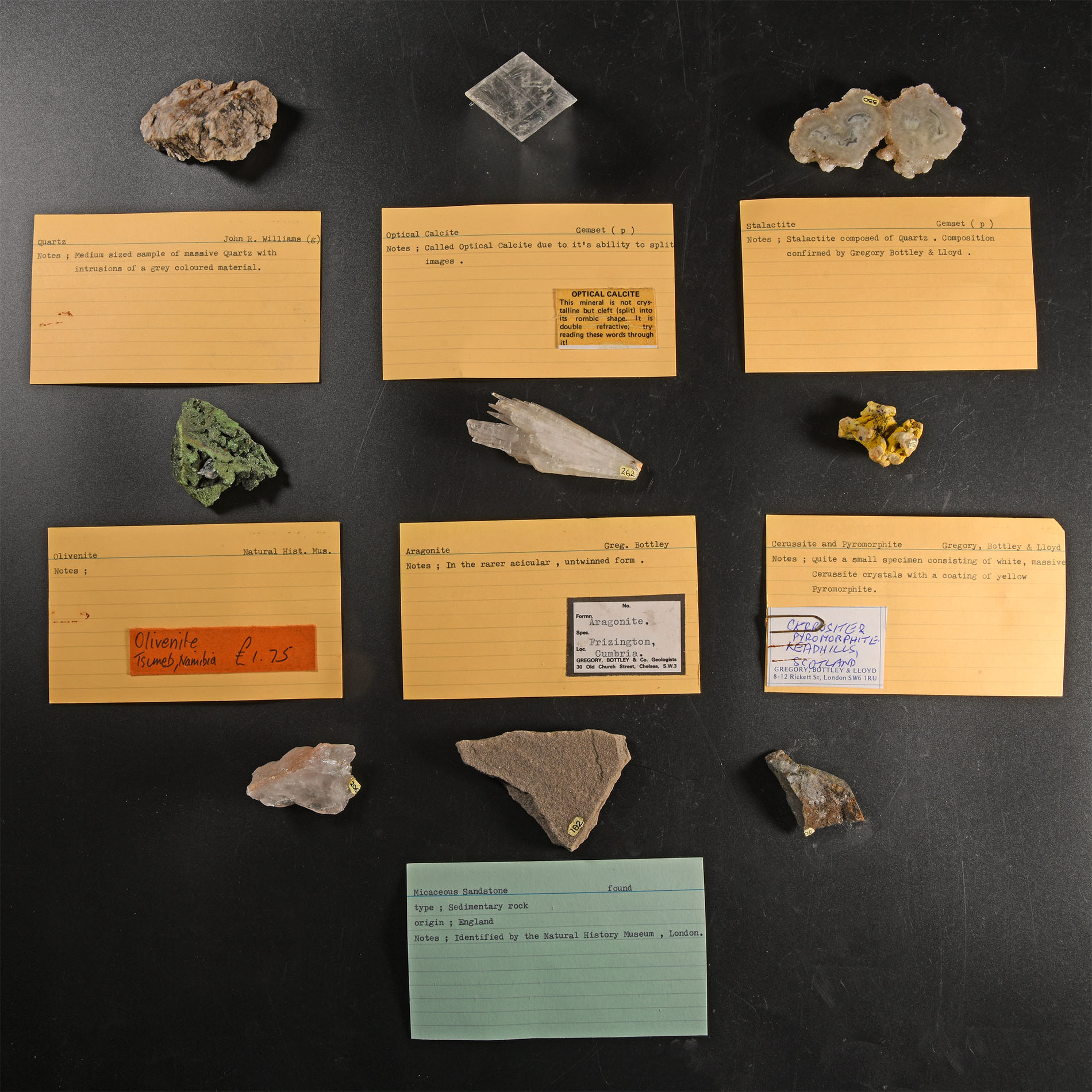
Comprising: quartz from Lake District, England, collection number 539; colourless optical calcite, collection number 245; acicular aragonite from Frizington, Cumbria, England, collection number 262; a cut slice of twinned stalactite, collection number 330; micaceous sandstone from England, collection number 182; quartz from North Transvaal, South Africa, collection number 206; siltstone(?) with partial collection number 05; olivenite from Tsumeb, South West Africa, collection number 428; cerussite and pyromorphite from Leadhills, Strathclyde, Scotland, collection number 526, with an old Gregory, Bottley & Lloyd label. [9, No Reserve]
ProvenanceAcquired on the UK mineral and fossil market, since 1970.
From the historic mineral collection of Richard Valentine Cain, London, UK, thence by descent.
Seven specimens accompanied by an original historic index file card.
TimeLine Auctions follows a vetting process to ensure the authenticity and legality of all items, reinforcing our commitment to integrity and responsible trading. Each antiquity, antique, and coin lot undergoes thorough examination by a vetting committee of at least ten external specialists, professional trade association members, scientists, and archaeologists: Our Vetting Process
AUCTIONS:
TimeLine is a leading auction house specialising in antiquities, ancient art, collectables, natural history, coins, medals, and books. Our auctions offer museums, collectors, historians, and enthusiasts the opportunity to acquire unique and historically significant pieces.
-
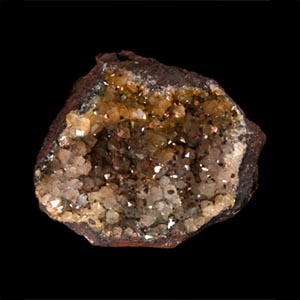
Natural History - Historic 'Cumbria' Anilite on Quartz Mineral Specimen
Sold for (Inc. bp): £52
Small pinkish coloured anilite crystals on quartz on a matrix of hematite, collection number 530. 204 grams, 74 mm
Acquired on the UK mineral and fossil market, since 1970. From the historic mineral collection of Richard Valentine Cain, London, UK, thence by descent. Accompanied by an original historic index file card and an old Gregory, Bottley & Lloyd label. -
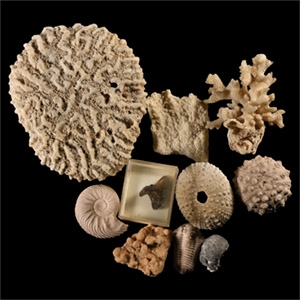
Natural History - Mixed Natural History Group
Sold for (Inc. bp): £13
Comprising: two sea urchins, corals, a shark tooth, a replica trilobite and ammonite, and others. 388 grams total, 2.7-10.6 cm
Acquired on the UK mineral and fossil market, since 1970. From the historic mineral collection of Richard Valentine Cain, London, UK, thence by descent. -
.jpg)
Natural History - A Collection of Fossils
Devonian to Jurassic Period, circa 417-145 million years B.P.Sold for (Inc. bp): £39
Mixed group including Perisphinctids indogermanus ammonite, Goniatite and Orthoceras. 584 grams total, 7.4-15.5 cm
From a collection acquired on the UK art market from various auction houses and collections mostly before 2000. From an important Cambridgeshire estate; thence by descent.
