
Loading, please wait...


LOT 2518
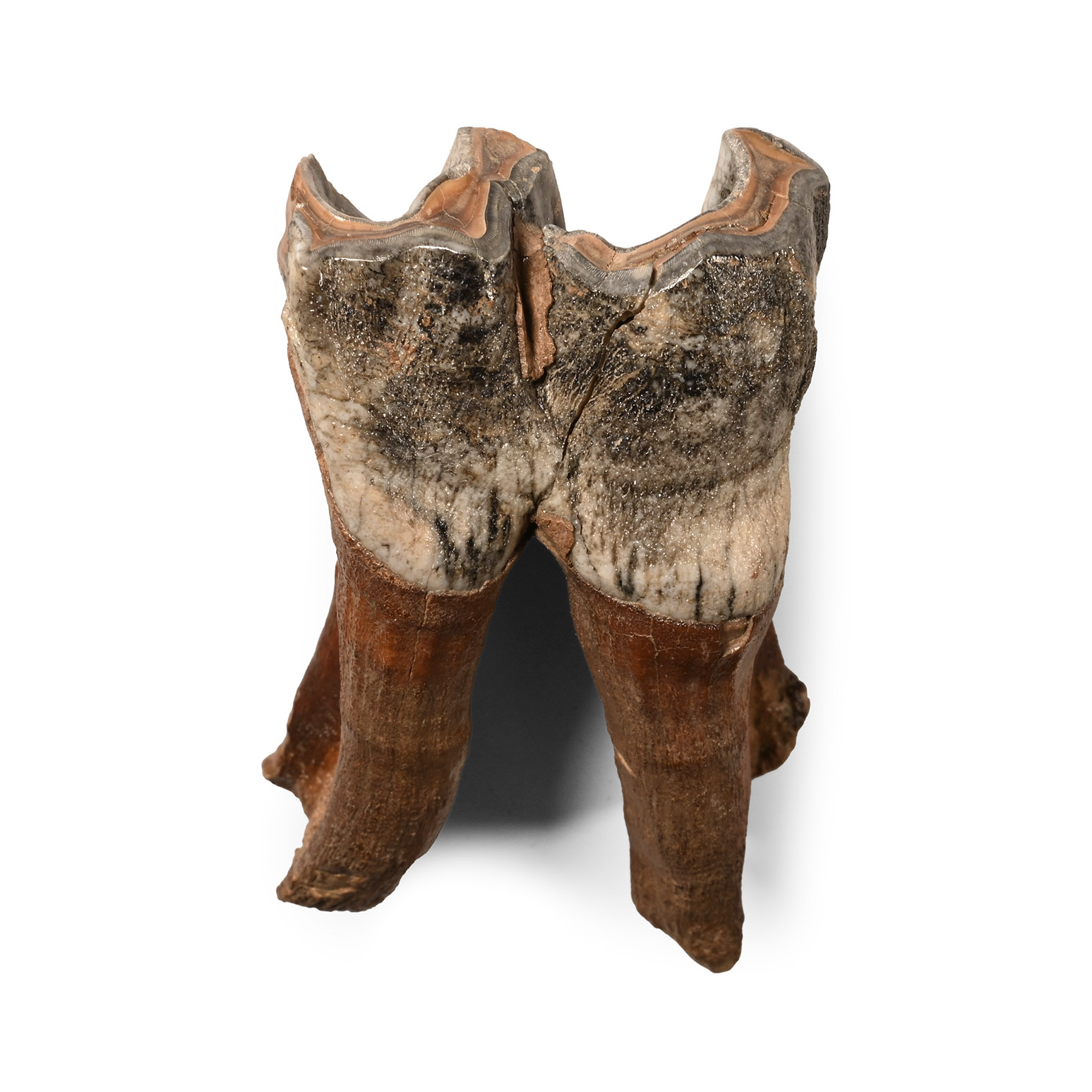
Natural History - Fossil Woolly Rhinoceros Tooth
DEVENSIAN PERIOD, CIRCA 110,000-12,000 YEARS B.P.
3 in. (74 grams, 78 mm).
A molar from Coelodonta antiquitatis with root. [No Reserve]
ProvenanceEx J. Shaul collection.
FootnotesThe form of the woolly rhino’s skull and teeth had evolved to support its grazing lifestyle with its head dipped downwards towards the ground, even in its relaxed attitude. The skull is unusual in having both an extensively ossified nasal septum, probably evolved as a result of the heavy pressure on the horn and face when grazing, and a down-turned anterior region on the premaxilla that contacts the edge of the upper jaw. The shoulders were raised with a powerful hump, used to support the animal's massive front horn and also used for storing fat.
CONDITIONTimeLine Auctions follows a vetting process to ensure the authenticity and legality of all items, reinforcing our commitment to integrity and responsible trading. Each antiquity, antique, and coin lot undergoes thorough examination by a vetting committee of at least ten external specialists, professional trade association members, scientists, and archaeologists: Our Vetting Process
AUCTIONS:
TimeLine is a leading auction house specialising in antiquities, ancient art, collectables, natural history, coins, medals, and books. Our auctions offer museums, collectors, historians, and enthusiasts the opportunity to acquire unique and historically significant pieces.
-
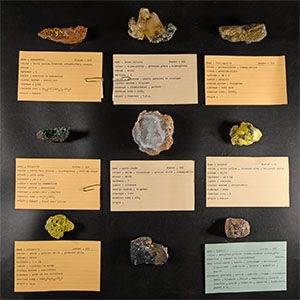
Natural History - Historic Mineral Specimen Collection
Sold for (Inc. bp): £39
Comprising: scolecite from Peru, collection number 437; granite from the A40 construction works, Middlesex, England, collection number 507; sulphur from Mexico, collection number 65; chalcopyrite, collection number 317; green calcite from Missouri, USA, collection number 241, with old James Walker label and invoice dated 1977; legrandite from Mexico, collection number 490, with an old Gregory, Bottley & Lloyd label; malachite from Tsumeb, South West Africa, collection number 448, with an old Gregory, Bottley & Lloyd label; bornite on chalcopyrite, collection number 210; agate geode half, collection number 385. 675 grams total, 37-74 mm
Acquired on the UK mineral and fossil market, since 1970. From the historic mineral collection of Richard Valentine Cain, London, UK, thence by descent. Eight specimens accompanied by an original historic index file card. -
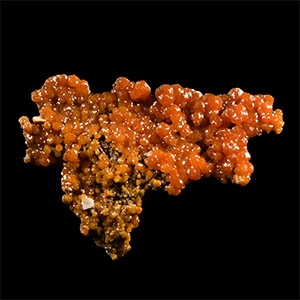
Natural History - Historic 'Bunker Hill Mine, Idaho' Pyromorphite Mineral Specimen
Sold for (Inc. bp): £234
Displaying rich toffee-brown and yellow colours, collection number 529, with an old Gregory, Bottley & Lloyd label. 100 grams, 84 mm
Acquired on the UK mineral and fossil market, since 1970. From the historic mineral collection of Richard Valentine Cain, London, UK, thence by descent. Accompanied by an original historic index file card. -
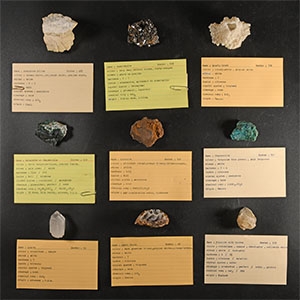
Natural History - Historic Mineral Specimen Collection
Sold for (Inc. bp): £20
Comprising: amorphous silica from Italy, collection number 483; malachite on chrysocolla from 79 Mine, Gila County, Arizona, USA, collection number 590; cut agate geode half from Mexico, collection number 49; quartz geode from Mexico, collection number 308; cassiterite from Viloco Mine, Bolivia, collection number 602; colourless quartz point from Arkansas, USA, collection number 34; limonite from A40 construction works, Middlesex, England, collection number 508; fluorite with galena from England, collection number 139; chrysocolla from Mexico, collection number 357. 444 grams total, 32-63 mm
Acquired on the UK mineral and fossil market, since 1970. From the historic mineral collection of Richard Valentine Cain, London, UK, thence by descent. Each specimen accompanied by an original historic index file card.
