
Loading, please wait...
LOT 0460
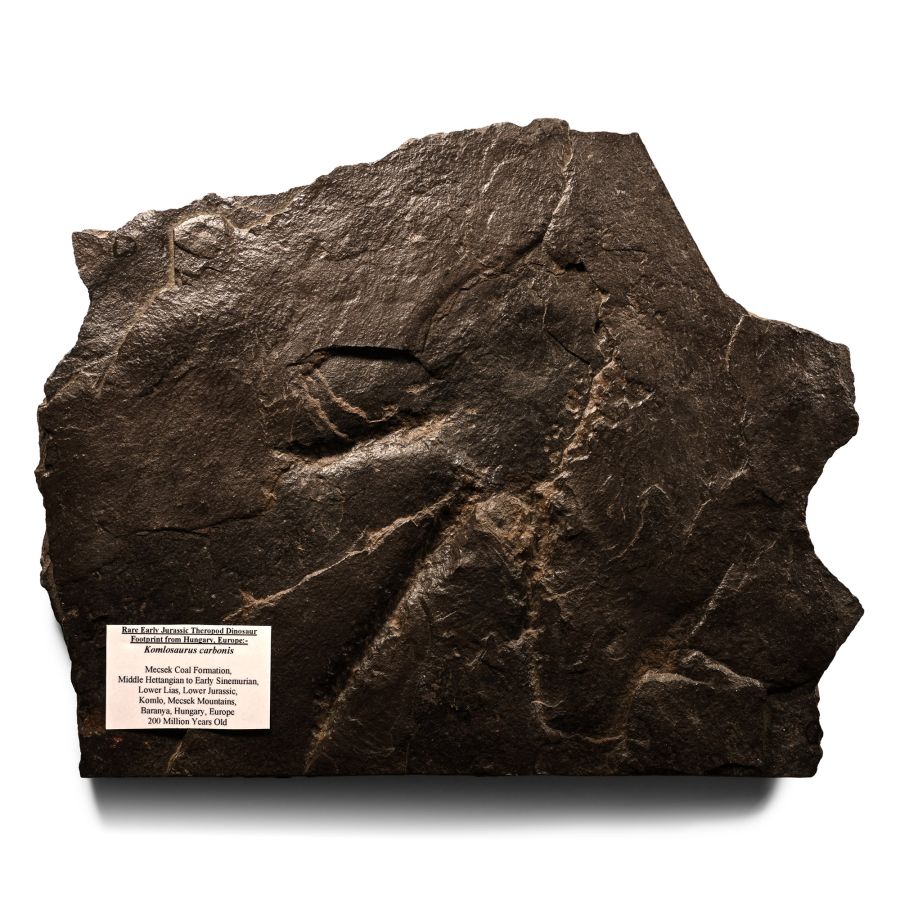
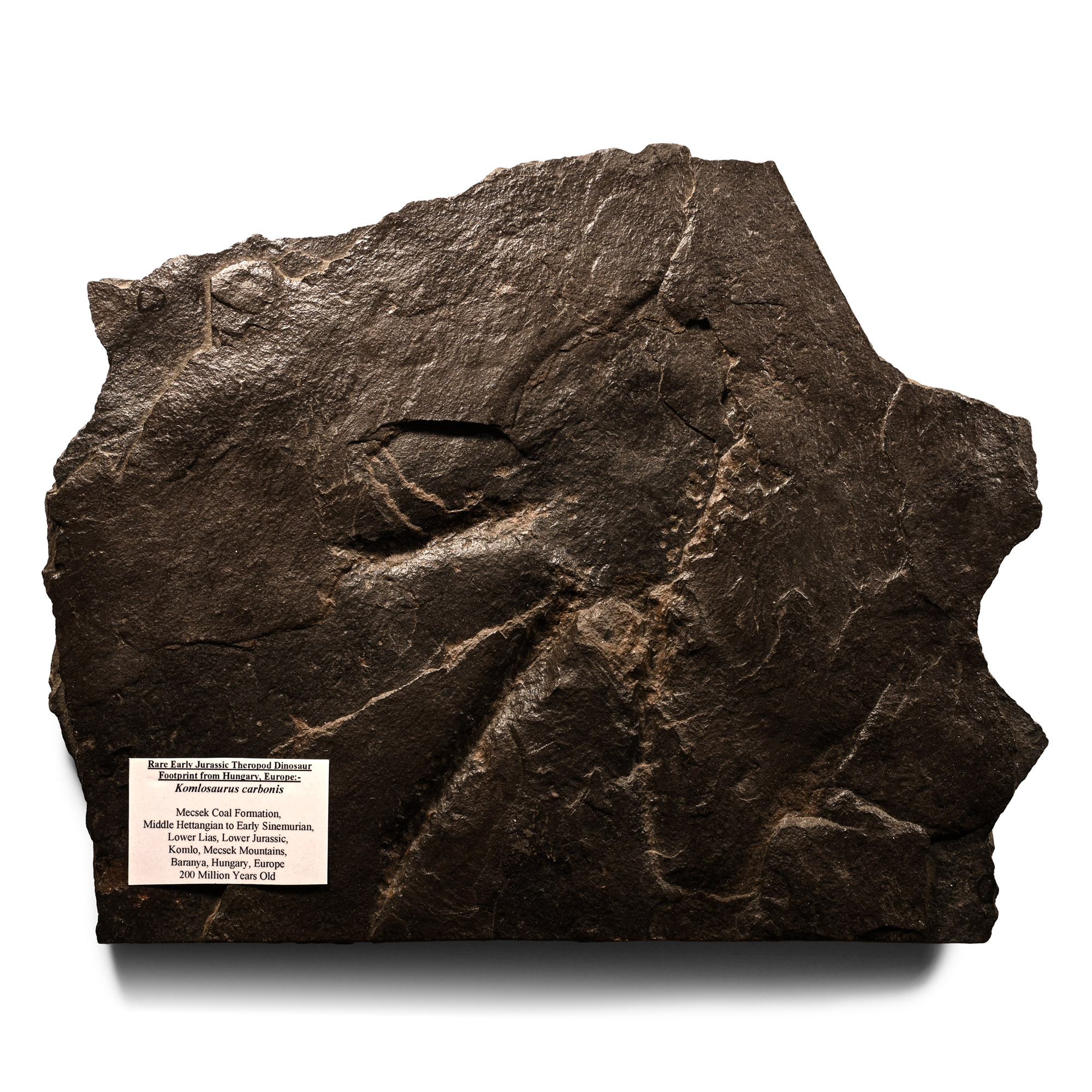
Natural History - Fossil Theropod Dinosaur Footprint
LOWER JURASSIC PERIOD, CIRCA 200 MILLION YEARS B.P.
13 3/8 in. (2.79 kg, 34 cm).
Komlosaurus carbonis footprint on an irregular matrix with information ticket. [No Reserve]
ProvenanceFrom the Mecsek Coal Formation, Middle Hettangian to Early Sinemurian, Lower Lias, Lower Jurassic, Komlo, Mecsek Mountains, Baranya, Hungary.
From the private collection of Mr J S, Northamptonshire, UK.
Property of a Cambridgeshire gentleman.
TimeLine Auctions follows a vetting process to ensure the authenticity and legality of all items, reinforcing our commitment to integrity and responsible trading. Each antiquity, antique, and coin lot undergoes thorough examination by a vetting committee of at least ten external specialists, professional trade association members, scientists, and archaeologists: Our Vetting Process
AUCTIONS:
TimeLine is a leading auction house specialising in antiquities, ancient art, collectables, natural history, coins, medals, and books. Our auctions offer museums, collectors, historians, and enthusiasts the opportunity to acquire unique and historically significant pieces.
-
.jpg)
Natural History - Polished Copal Pair with Insects
Over 3 million years B.P.Sold for (Inc. bp): £39
Comprising two polished specimens containing several insects and other inclusions. 39 grams total, 7.8-11.2 cm
From Madagascar. Acquired 1950s-1960s. From an old Bristol, UK, palaeontological collection. -
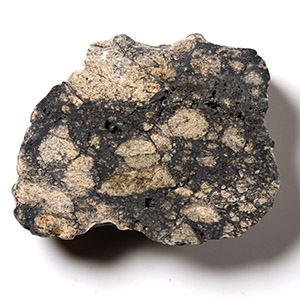
Natural History - Eucrite-Melt Breccia NWA 11576 Meteorite Slice
Found 2017 A.D.Sold for (Inc. bp): £98
A rare eucrite meteorite slice recorded as: Northwest Africa 11576; displayed in a Swiss membrane box, inked inscription ' NWA 11576' to one edge. 20 grams, 38 mm (76.3 grams total, 99 x 75 mm including case)
From North West Africa (Mali). Ex SV-Meteorites, Prague. From a Leicestershire, UK, collection. Accompanied by an original identification card.
Eucrites are achondritic stony meteorites thought to have originated from the surface of the giant asteroid (or minor planet) 4 Vesta. Vesta is the second largest body in the asteroid belt, with a mean diameter of 525 kilometres. Like Earth, it has the differentiated layers of crust, mantle, and core common to rocky planets: this may mean that 4 Vesta is the remnant of a larger destroyed planet. -
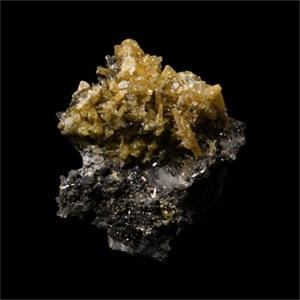
Natural History - Historic 'Tsumeb, South West Africa' Mimetite on Tennantite Crystal Specimen
Sold for (Inc. bp): £39
Small yellowish mimetite crystals on ash-grey tennantite matrix, collection number 595. 28.4 grams, 39 mm
Acquired on the UK mineral and fossil market, since 1970. From the historic mineral collection of Richard Valentine Cain, London, UK, thence by descent. Accompanied by an original historic index file card and an old Gregory, Bottley & Lloyd label.
